| OCR Text |
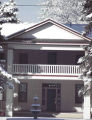
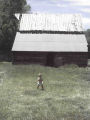
Show Mj Ov/n <3VosSin% uf In Tv;>tor/c Spr/ng Ci¥f b^ "Lou/^q B&nn/on Y > / f ^ \£/ f V I was a little girl growing up in an old house in Spring City. I knew of only two kinds of politics: the politics of water and the politics of historic preservation. Water was half in our hands and half in God's, and because we didn't farm for a living, it was not a defining issue for my family. Historic preservation, however, was half in our hands and half in the hands of the locals, most of whom didn't seem to appreciate the old buildings the way we did, so it was mostly up to people like us to make sure that the old houses and barns were saved. "Being Demolished" by Ella Peacock Left: My first steps as a 10-month-old were taken in this Spring City barnyard. Top Right: Our neighbor, renowned Utah artist Ella Peacock, captured the image of the burned-out shell of the "Spook House" the day after it was practici by the local fire department. She shook her fist at them in frustration on the day it was burned. One of my early moral lessons came when we watched the old Spook house on the corner burn down. It was an adobe house, melted down to the lathe in many spots, and full of the evidence of sheep having been its only recent inhabitants. The people who had inherited the property lived far away, and were worried the house would fall down on kids sneaking into it (l had, and found some old playing cards before I got spooked and ran home), so they let the fire department H A n n her it was a lovely, soulful old house, and it could have been saved. U T A H P R E S E R V A T I ON •Ato^t oS tTve, Ivou^e^ on tTve tour v/e,r& ov/n&d by "income/' esten more recent tTvan my pffi&nW, and man^ o£ tTve«?e people, JyVed up nortTv and came, to Spr/n$ C/t-y to ^pend tTve/r x^eeT^end? «?MnJJ uf> tTve/r o7d Tvou^e,?. 1 SIT-gb W"Ud tKat K,/nd of indignation for myself when my parents told me that, in its heyday early in the century, Spring City had boasted a theater, a candy store and an ice cream parlor. Now the only store, and the only place where I could buy candy, was the little gas station. I walked down Main Street horrified after that; every empty block represented a building that had been torn down, and any one of them could have been the ice cream parlor itself. The people here had torn down their own buildings, my parents told me, not because the buildings were falling down, but because the people had heard of Preservationists from the city who would come in and tell you what you could and couldn't do with your own property. The people would say, "But my great-grandmother was born in this house, and it's been in our family all these generations. We can tear it down if we want to and build us a nice new home." They were cutting off their nose to spite their face, my parents said. They were throwing their great-grandmother and all those generations out with the bath water, just to prevent anyone from coming in and trying to save some building. My parents bought property in Spring City on their honeymoon and moved there in 1977, right around the time of my birth. Spring City was officially a ghost town in the seventies. It was off the highway, appeared only on the most detailed of maps, and couldn't keep its young people from leaving when they grew up. By the time I was ten, I could find my home on most of the maps where I looked for it. The Spring City of my childhood was no longer a ghost town, though it hadn't yet decided what kind of a town it was going to be. By then it had been declared a National Historic District, thanks to the efforts of some of the people who had come to town around the same time as my parents. Old buildings were still being torn down and new ones put up, but Historic Spring City was attracting more attention from the outside. There was the Home Tour every May, when a dozen or so restored houses, ours included, were open to the public from Provo and Salt Lake and beyond. Most of the houses on the tour were owned by "Incomes" even more recent than my parents, and many of these people lived up north and came to Spring City to spend their weekends fixing up their old houses. Some of the people buying property in Spring City lived far away and came only once or twice a year to wade through the tall grass and envision what they would do someday with the poor house they had saved from destruction like a decrepit pony at an auction. My mother watered their lots and used them as pasture for our horses, and we "kept an eye" on various properties all over town. I took it upon myself to keep an eye on "Hamblin," the quarter-block territory across the street from our house, and that's where I spent most of my time between school and nightfall. The Hamblins were the first of my parents' friends from school to fall in love with Spring City and want their own little piece of it. They had children a little younger than my sister and I, but they lived out of state and we hardly knew them. I stayed away from the locked-up house and kept to the barn and the other outbuildings, which I shared with my younger sister and the boys from the two inhabited lots on the block. The barn was our castle, sometimes Arthurian and sometimes Samurai, but in actuality it was more like a pirate ship, the way we climbed around its lofts and rafters. One of the weekend kids broke his wrist when he stepped on a wrong plank in the loft, and we found his little sister hanging by her shorts on a nail in the wall of the weapons room, after she made a mistake trying to climb down. But I knew every board in that place, which ones you could trust and which ones you should lead your enemies across. One of the lodge pole beams was covered in intricate wormlike inscribings, an ancient history in a language whose Rosetta Stone I would discover someday, I believed. It would not be the history of the people who had built the barn and lived in the house, about whom I spent very little time thinking. They were not my ancestors, and they were not the ancestors of my imagination. It would be a history of myself and of own making, spanning centuries and dynasties and prophecies. There was also a barn on the lot next to Hamblin, where the Spook had been, but this barn was all one open hall and the roof was half gone so it was like a ruined church inside, full of light and melting snow and the sounds of pigeons. I could never speak out loud there and had to sneak to and from it, for the old sheepherder across the street was keeping an eye on that place. The boys from 74 U T A H P R E S E R V A T I ON Graveled streets and open ditches were part of Spring City's cultural landscape through the mid-1980s (c.1979 photos). Pavement and pressurized, piped irrigation have now replaced these decades-old features. the joining lots had more of a right to be there than I did, since they'd been in Spring City for generations and therefore shared a sort of implicit kinship with the owners and the old sheepherder. But at Hamblin there was a tension between us that arose from the fact that they were always trespassers, even when they were there with me. The Hamblins were Incomes who came to Spring City to fix up old houses and I was too, though I'd been there all my life, so Hamblin belonged more to me than it did to the boys. I think I also believed it belonged more to me than to the Hamblins, in those days, for I was the one who loved all those splintering gray boards and rusted nails better than the walls of my own bedroom. The summer I turned twelve I spent a month in Japan, and there were many nights when I lay with my eyes shut on the tatami floor, walking slowly through every room of every building in Hamblin. I was trying to keep from losing them, for I had a fear that when I turned twelve something in me would change and I would no longer want to spend my time in old barns and sheds. By this time the Hamblins had moved back to Utah and become weekenders. They were building an addition that would double the size of the house, but still hadn't paid much attention to any of the outbuildings. However, while I was in Japan they decided to fix up one of the sheds as a bunkhouse for all of us kids. It was one room with a peaked roof and log-cabin walls. The floor had been hardened dung and straw that was shown to be over a foot thick in one corner where I dug a little tunnel under the wall to make a hiding-place for weapons. The door was a rickety gate one of the boys and I had wired onto the old hinges, and if you stood on the remains of the manger along the back wall you could climb out a hole in the roof. This little cabin was much less exciting than the barn, and I was the only one who spent much time there, imagining things to myself when there was no one else at Hamblin. When I returned from Japan there was a new tin roof on the little cabin, and the dung floor had been dug up and dumped in a large mound off to one side. The cabin was jacked up on blocks and before the summer was over it would have a new rough-pine floor, wide bunks along two walls, a cast-iron stove with a chimney, a porch, a real door, and a window with glass. It was a beautiful little bunkhouse, charming enough now to be included on the Home Tour. And with its natural resemblance to a gypsy caravan, it was a much better place to play than it had been before. For the rest of that summer my sister and all the weekend kids and I slept every night in the bunkhouse and played all day at Hamblin. I was the oldest, and the leader of everything we did. The boys from the other lots stayed away, though I saw them lurking along their fences sometimes. We outnumbered them now, and the fixed-up bunkhouse was no place for them anyway. I decided I must have been wrong about turning twelve-I hadn't turned grownup overnight after all. But when I lay awake in the bunkhouse, surrounded by the sounds of younger sleepers, I thought of that day when I came back from Japan and found everything I loved piled on the backside of the dungheap: the broken manger, the scavenged half-door, the handmade weapons I'd hidden under the wall before I left. It would do no good to say, "But this little shed was mine, there were generations of me in it like layers of straw and dung;" for anyone could see the bunkhouse was better off now than it was before. I knew what nostalgia was: something adults were supposed to feel for the place and time where they had been children. It was, in a way, the benign opposite of the innocence that made them children in that far-off time and place. My parents had told me stories of their childhoods among the almond trees and cherry orchards of Merced, California, and Orem, Utah, where everything was strip-malls and parking lots now. Spring City now was like what those places were then, and they were extremely lucky people to have stumbled again upon what U T A H P R E S E R V A T I ON ga n izciti on supgoi t ed ainly by membersiup ul private re screes. M P •ct. and promote Utah's histoHa ft built environ men t through public a\varlq ness, advocacy, and active preservation. UHF fulfills its mis-ion through a wide of progf""" -3 ^ ormation on programs, services or membership: (801) 533-0858 r information "garding the use of Memorial House as a reception or conference center: (801) 521-796 Utah Heritage Foundation P.O. Box 28 Salt Lake City, UT 84110-0028 801-533-0858 www.utahheritagefoundation.com i fonev/ v/F\,at no^tcfJ|/c[ v/q^: <?ome-tTw'n| qduJt^ v/ere ^Uppo^ed t o jeeJ jbr t"Ke pjqce qnd t/me v/Fvere tKey Tvqd been cTv/Jdren. they thought had been lost, to be given another chance to preserve it. These stories meant that I must lose Spring City someday, just as they had lost Merced and Orem. I considered the creeping blight of malls and parking lots, but despite the new houses continuing to go up all over town I had a hard time imagining massive commercial development in Spring City during my lifetime. We were, after all, a National Historic District and a long way from anywhere. When winter came, though, I found I'd been right in Japan. Winter had always been my time to have Hamblin to myself. There were no weekenders, and when the boys from the other lots slipped through the fences to join me we were friends again, with no need to speak. Bur now I didn't feel like going to Hamblin, for it wasn't mine anymore. Instead I spent the short dark afternoons walking all over town. There were barns everywhere, and most of them were down on their knees, in much worse shape than the one at Hamblin. T knew that if no one restored them soon, there would be nothing to do but drag them away. And if the Hamblins didn't restore their barn, it too would eventually fall down. But if they did, the "saved" barn would be like the bunkhouse, a stranger that hardly resembled the place I'd known so intimately. The roads I walked were paved, but I could remember when most of them had been washboard gravel. I went looking for the unpaved roads and found them here and there at the margins of the town, two-rut dirt lanes that gently dipped and skirted along. I walked them over and over, as if by keeping my feet on them I could stave off the inevitable paving. Someday I would wish that I could return to the way things were just now, and I realized that in thinking that thought I was granting my own wish. Suddenly I was my future grown-up self, magicked back to the past to stand in the middle of a dirt track. This thought made me shiver with excitement, but I felt as though I knew too much for my own good. I'd known too much when I named my own little land Hamblin. Everyone thought it was after the Hamblins, but really in the back of my mind was Hamelin, where the Pied Piper led all the children away into the mountain, never to grow up or come back, leaving a ghost town behind them. The children followed him because of their innocence, because they didn't know better. But if I'd been there I'd have followed him knowing full well what he was all about, because I was nostalgic before my time for things I hadn't yet lost. Maybe, by telling the stories and leading the games, I was trying to be the Pied Piper myself for all the other kids, for my sister and the Hamblin girls and the weekender's kids. (But not for the boys from the adjoining lots, for though we met on the common ground of Hamblin, they lived in a different Spring City than the one I wanted to preserve for myself.) Why then did I feel like the crippled kid in the story, the one who had to stay behind in Hamelin after he watched all the others disappear into a crack in the mountain? Because I'd been afraid to turn twelve. The inside of the mountain was a place for the innocent, not the nostalgic. It was too late for me to follow from the first moment I ever began to suspect that, even if my parents and the other advocates for historic preservation did succeed in ensuring that not one more stick of Spring City barn wood ever fell to ruin, my own Spring City would still be lost. I would still have to grow up and leave to look for Spring City somewhere else. • LOUISA BENNION IS A WRITER, RIVER GUIDE AND IRISH MUSICIAN. CURRENTLY SHE AND HER HUSBAND CHRIS ARE ON FOOT SOMEWHERE ON THE MEDIEVAL PILGRIMAGE ROUTE BETWEEN LE PUY, FRANCE, AND SANTIAGO DE COMPOSTELA IN NORTHWESTERN SPAIN. Life's Too Short To Miss This Train. DAILY STEAM TRAINS :OR RESERVATIONS PLEASE CALL Salt Lake (801) 581-9880 www.hebervalleyrr.org l hour & 3 1/2 hour excursions Round Trip Service From Vivian Park, Blue Grass, Murder Mystery and BBQ Dinner Trains Call(A^) (2^^(2J}\ | PRESERVATION MARKETPLACE HISTORICAL ARTS & CASTING, INC. 5580 WEST BAGLEY PARK ROAD WEST JORDAN, UTAH 84088-5642 ph (801)280-2400 fx (801)280-2493 CREATIVE GLASS Intermountain Art Glass Headquarters Custom Studio Repair & Restoration • Art Glass Gallery 2265 So. Highland Dr. SLC, UT 84106 (801) 487-4088 1-800-799-4088 Experts at Cleaning, Repairing fi Preserving Brick 8 Stone O l d M a s o n r y C l e a n i ng P a i n t S t r i p p i ng . . M a s o n r y S e a l i ng M o r t a r A n a l y s i s €J C u s t o m M a t c h i ng T u c k p o i n t i n g / M o r t a r R e p a ir B r i c k S S t o n e R e p l a c e m e n t , P a t c h i n g S S t a i n i ng M a s o n r y R e s t o r a t i o n C o n s u l t i ng C h i m n e y R e p a ir Specializing in National 8 State Historical Register Projects CONSCIENTIOUS, EXPERIENCED CRAFTSMEN , ; ; • • • • • • •. 6530 South 400 West SLC, Utah 84107 (8oi) 262-6344 Visit our Web site at www.masonry-restoration.com ATTEMTIOM ANTIQUE SHOPPER lionest Jon s I I ills Mouse Antique (j^allerij I lit? Antique o n c p in ;i museum sellinq i n m f r U r t o f JownUni." 126 South 2 0 0 West Across lromtl,e Salt Palace next In the Uxpomarf Telephone 3 5 9 - 4 8 5 2 r^ FfVESTAR, ln^T\ ft Winners of the Prestigious "Giant Step Award" Publisher's of the Utah Preservation Magazine 78 U T A H P R E S E R V A T I ON PRESERVATION MARKETPLACE Architects Projects Deserve the Number One Paint in the Mountain West! With more than 50 locations, KWAL-HOWELIS is now the largest retail I*WSJBM»I and commec ial paint manufacturer fc^rf and distributor in the Rocky Moun- L S f j tain region. KWAL-HOWEUS of- 1 \ ; ~ S ^ I fers a complete line of all types of interior and exterior paints and painting supplies. So chances are whenever you see an especially nice-looking paint job in Utah or any other Rocky Mountain state there's a strong possibility it's from a KWAL HOWELLS store near you. To those of you who use our products regularly, we thank you for your loyalty, to others, please call us. We know we can add to your success! KWflLvffifMINT 58 STORES CONVENIENTL Y LOCATED TO SERVE YOU 11 stores in Colorado, 16 in Utah, 2 in Idaho, 6 in New Mexico, 2 in Kansas, and 10 in Texas (see the white pages for the location nearest you) STAINED GLASS RESTORATION Powell Brothers & Sons Glass Art Utah's Only Stained Glass Association of America Accredited Full Service Studio Member A.A.I.A., I.ER.A.A., I.G.G.A 801.262.4002 4050 Howick St. #10, SLC, UT America's Master Craftsmen in Building Restoration & Preservation since 1915 Our Specialty Contracting Services Include: • Masonry Restoration • Caulking & Sealants • Building Cleaning • Parking Structure Restoration • Expansion Joint Systems • Chemical Grout Injection • Gunite • Exterior Wall Coatings • Stadium Restoration • New Construction - Above Grade Waterproofing Systems JG CO, INC. C O N T R A C T O R S A Member of t h e Western Group 1899 S. REDWOOD ROAD SUITE A-8 SLC, UT 84104 ph(801)886-9540 fx(801)886-9695 Rick Brodersen Manager Professional Office Cleaning Wood Floor Restoration Fine Metal Restoration Specializing in Marble and Stone Restoration 111 E. Broadway Street, Suite 300 Salt Lake City, UT 84111 801.532.6733 fax 801.359.1515 E:mail: jkslc@uswest.net ARCHITECTURE / LANDCAPE ARCHITECTURE/ INTERIOR DESIGN / PLANNING thereisnobsatgsbs 801.521..8600 / WWW.GSBS-PC.COM GILLIES STRANSKY BREMS SMITH U T A H P R E S E R V A T I O N 79 £%*? &LL<o<wMmaJ Qf?w am*? rMfiJTfk w 041 a m to Roofing *• Waterproofing •*• Sheet Metal •»• Exterior Restoration Innovative Solutio National Re Contractors As ' fArAiWll ction •** Service •*• Installation •*• Consulting •*• Design ind out what we can do for you i »«Mm .VAVAVAl I I I Ktl • J111 silt 0 / ^ g E«VC • II N • :: ' . - -r B fiKi ill n uK^S»7 oiing, Inc. * 555 West 3900 South Building C * Salt Lake City, UT 84123 • Phone (801) 266-9694 design with a purpose HISTORICAL RENOVATION AND LIGHTING DESIGN For over 35 years BNA Engineering has committed itself to providing solutions that meet the needs and vision of its customers. Our team has been involved with a broad scope of projects, ranging from modern educational facilities and office headquarters to historical renovations. It is this experience that enables us to meet our customer's highest expectations widi the practicality of purpose. New offices in the historic Circa Building at 635 South State Street. a S N # m Consulting Engineers II 8 0 1 . 5 3 2 . 2 1 9 6 w w w . b n a i i . c o m |