| OCR Text |
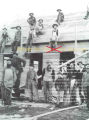
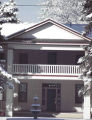
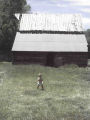
Show w^ Or' ; | t | ^ s t o r e d ChaWHouse has maintained a calm presence in the heart of what is now Libe ost,150 yeans. . . • ' : A miiiiii " IIIIUIIIIIIIIIIIIIHIIlii THE CHASE HOUSE BY ELIZABETH I hen you think of Liberty Park, what comes to mind? Playing tennis or walking the dog? Strolling under an impressive canopy of trees and admiring the lovely green space in the middle of the city? If you've spent time in Salt Lake City, you've probably pursued a variety of activities in the city's largest park, but you've most likely never given much thought to the historic features associated with the man who called Liberty Park home long before it became a public space: the Isaac Chase house and mill. If you have observed the house in recent years, you have noticed that it was becoming increasingly dilapidated. The peeling paint and buckling stucco made the house an eyesore; vegetation obscured its graceful proportions and was most likely causing damage to the very structure of the house. Fortunately, the condition of the house inspired a Salt Lake Tribune writer, Chris Jorgensen, to inquire why the city had allowed this historic edifice to fall into such a dismaying state. His 1993 article caught my attention. As the city's preservation planner I felt a twinge of responsibility, even though it is not my job to monitor the condition of city-owned buildings such as the Chase home. I suddenly felt an urgency to step in and try to do something for this ailing historic building. My first step was to raise money for a historic structure report in order to determine what needed to be repaired, what preservation approach should be taken, and what it would cost. Although the initial cost estimate was almost a million dollars, I found a great deal of support within City Hall. The people at the Utah Folks Arts Program, the tenants of the house, were also enthusiastic. Carol Edison, Folk Arts Coordinator, was especially helpful and dedicated to the cause, and Utah Arts Council director Bonnie Stephens proved to be a tireless lobbyist. Today, after years of fundraising and more than a year of construction, Isaac Chase's home is looking fine. It will continue to serve as a reminder of this early settler, and it will continue to serve as an exhibit space and performance venue for the arts of "just plain folks" from around the state. HISTORICAL BACKGROUND Located in the center of the park, the Chase home and mill are the last remnants of what was once an early agricultural and industrial complex of great significance to the new community of Great Salt Lake City. Isaac Chase, a miller by trade, arrived in the fledgling city in September 1847 with his milling equipment. Like most early Mormon pioneers, Chase owned both a city lot (100 S. State Street) and a farm lot, a five-acre parcel in what is now Liberty Park. With nearby springs and converging streams to provide waterpower, the property seemed promising for a milling operation, and by December 1847 Chase had a primitive, upright sawmill in operation. He then constructed his first home, described in historical records as a "shanty,"on his farm. U T A H P R E S E R V A T I ON 67 The Chase House served as home to several generations of park superintendents. Note that the porch depicted in this c.1910 photo is much less dominant than the c.1918 porch that characterizes the house today. The landscaping, however, is more exotic and lush than what the house has enjoyed in recent decades. «-- I •£m$&& ^•ft?«!v.<n sBMte Chase continued to make improvements to the property in the early 1850s. By 1853 he had completed a log home for his family and started construction of both a large adobe flourmill (still standing but currently "mothballed") and this adobe house. The mill was likely finished in 1854, and the house was probably completed in 1856. The Chase house is typical of early Utah residential architecture. Its "central passage" plan features a wide hall that sepa-where the Forest Dale golf course now sits. Photographs taken in the early 1900s show a simple one-story porch across the front of the house. It is not known when this porch was built or if was part of the original construction, but it was replaced in the late teens or the twenties by the two-story portico that is now the hallmark feature of the house. Chase's partner in the mill was Mormon leader Brigham Young, who also happened Young's family lived in the Chase house for a time, but after Young's death in 1877 the entire property was sold to Salt Lake City for $27,000, for use as a public park. This sale coincided with a national movement to acquire large tracts of land in urban centers for park use, providing a respite from city life as well as recreational opportunities. The park opened for public use in 1883, and the Chase house served as the park caretaker's residence for the next 81 years. I H L CHASE HOME AND MILL ARE THE LAST REMNANTS OF WHAT WAS ONCE AN EARLY AGRICULTURAL AND INDUSTRIAL COMPLEX OF GREAT SIGNIFICANCE. rates the house into two rooms on either side. In style, it is closely associated with the classical revival architecture the early Mormon pioneers favored. Such homes, in both one- and two-story versions, used to be found all over the state and are as closely tied to early Mormon settlement as are irrigation ditches and rows of poplar trees. Sadly, most have been demolished because of development pressures. Chase, along with Phares Wells, a carpenter, and Jacob Hofheins, a mason, constructed the home out of adobe brick made to be Chase's son-in-law. While the terms of that partnership are not fully understood, one thing is clear: Chase moved to Centerville in 1860. Young apparently offered the Centerville property in exchange for Chase's interest in the mill. Various accounts indicate that Chase was so bereft at having to leave his beloved farm and mill that he languished and died the following year at the age of 70. By the time Chase left his farm, it encompassed the 100-plus acres that now represents the park. Members of Brigham For several years, beginning in 1964, the Daughters of the Utah Pioneers used the house as a museum. In 1983 the Utah Arts Council, in partnership with Salt Lake Parks and Recreation, remodeled the interior of the house for an exhibit showcasing the work of contemporary Utah crafts artists. Three years later, the Utah Arts Council's Folk Arts Program moved its offices into the Chase home; it has used the house as exhibit and performance space ever since. 68 UTAH P R E S E R V A T I ON WHAT THE HISTORIC STRUCTURE REPORT REVEALED In 1994 the firm of Smith Balle Hyatt Architects (SBH) was hired to thoroughly examine the house. Their historic structure report outlined a preservation plan, described the work needed to repair the house, prioritized projects, and provided estimated costs. Architect Kim Hyatt was most closely involved with the report; his firm partnered with Gil Sanchez, an experienced adobe-restoration specialist from California, to assess the condition of the adobe. Small grants from the State Historic Preservation Office and the National Trust for Historic Preservation covered a third of the cost of the $12,000 report; the city's Public Services Department paid the remaining two-thirds. As suspected, the house was in decent shape, but years of neglect and earlier uninformed actions had taken their toll. Most of the problems were related to three issues. First was the heavy coat of pebbledash Portland cement stucco that had been applied over the adobe in the 1930s. Unlike the traditional mud and lime stucco, this impermeable coating trapped moisture within the walls. Moisture is lethal to adobe, causing it to compress and settle, and the walls to lose their structural strength. Compression in turn causes the protective stucco to buckle and crack, exposing the adobe bricks to even more deterioration. Second, inappropriate landscaping and hard-surfacing around the building concentrated moisture at the base of the house. The water required for the foliage near the house invited more damage, as did the raised flowerbeds and the Virginia Creeper vines that covered the entire south wall. Finally, basic maintenance on the house's exterior had been neglected for many years. Gutters were not cleaned, paint was left to peel, and roof coverings and flashings were deteriorated, allowing water and moisture to penetrate the adobe walls and wood components. The good news was that despite all the neglect the house had suffered, it did not appear to lack structural stability, and no "immediate priorities" were identified. The "urgent" priorities included site work to eliminate sources of water damage, replacement of the pebbledash stucco, and re-roofing of the house. The report also suggested that the "lean-to" additions at the rear be either rebuilt or repaired, that structural alterations to improve seismic resistance be undertaken, and that the chimneys be rebuilt and reinforced. But first, some basic preservation questions needed resolution. PRESERVATION DILEMMA: EARLY RESTORATION VERSUS REHABILITATION? The historic structure report presented two scenarios: restore the house to its original appearance, which would involve removal of later changes, or retain the house in its current configuration to acknowledge the evolution of the building and site. Deliberation on these approaches raised many issues. Should the grand portico be removed and replaced with the earlier, although maybe not original, one-story porch? Would taking the house back to an earlier time necessitate leaving the adobe walls uncovered and therefore exposed to the elements? Should the pebbledash texture on the exterior walls be replicated, as it represents a phase of the house's evolution, or should a smooth-surfaced stucco be applied? And should the landscaping be appropriate to a nineteenth-century farmhouse or an early twentieth-century park caretaker's residence, or should it simply be part of the overall landscaping in Liberty Park today? In the end, the rehabilitation approach that reflected the evolution of the house was used. It seemed impractical to attempt to take the house back to an earlier phase without definitive documentation of what it looked like, and it seemed foolish to try to re-create a historically accurate farmstead in the middle of a city park. This would also have meant the removal of elements, most notably the portico, that had achieved his-torcal significance in their own right. Also, the Utah Arts Council would lose its performance space in front if the portico was removed, and it would lose office space in the rear if the later lean-tos were taken off in the name of historical accuracy. It just made more sense, from both preservation and functional perspectives, to rehab the building "as is" rather than "as it once was." HOW TO FIND THE MONEY While the unusual landlord/tenant relationship between the city and the state had made decision-making cumbersome in the past, it proved to be a constructive partnership in terms of raising money. After reviewing the structure report, the city made the commitment to earmark some of its capital improvement project (CIP) funds for part of the work. This good faith effort encouraged U T A H P R E S E R V A T I ON 69 yifc£J_J (top left) Replacement adobes were made on site the old-fashioned way. (top right) The "central-passage" floor plan features a hallway and stairs behind the front door; this was a common plan for the more well-to-do in 19th-century Utah. (middle left) Contractors Gerhard Koenig and Wells Van Wagoner pause behind the house to review the restoration plans. Koenig spent some growing-up years in the house when his father was employed by the city parks department. (middle right) The sidelights and transom framing the doorway add a dignified character to the entrance. *»t* #f - 1-xV The winter serenity of the Chase house gives way to the bustle of activities hosted here during the i U T A H P R E S E R V A T I ON CHASE WAS SO BEREFT AT HAVING TO LEAVE H IS BELOVED FARM AND MILL THAT HE LANGUISHED AND DIED THE FOLLOWING YEAR AT THE AGE OF 70. the Utah Arts Council to lobby the legislature for funding. Like many renters, they had been uninspired to put effort into a building they did not own, but with a commitment from the city, they enthusiastically embraced the idea. It was hoped that the house's close ties to Brigham Young and early pioneer life would induce the LDS Church to contribute money for the project as well. In the end, the city and the state each contributed about $333,000, and the LDS Church donated $100,000. The state's share was initially limited to $75,000, so Utah Arts Council director Bonnie Stephens approached Representative Dave Jones to sponsor a bill for the remaining funding. House Bill 268, requesting $258,000, passed at the end of the 1999 legislative session and saved the project. The overall cost of the rehab turned out to be about $500,000, with the balance going toward landscaping and site improvements. WORK BEGINS Although we did not obtain all the funds necessary to complete extensive site improvements adjacent to the house, we had sufficient funds to stabilize the house, solve the most pressing drainage and landscaping problems around the house, and provide tenant improvements for the Folk Arts Program. Kim Hyatt, who has since left SBH, was hired as the architect. Steve England, architect for the Salt Lake City Engineering Division, was project coordinator. Gerhard Koenig of Koenig Construction was selected as the contractor. Work began late in the fall of 1999. Unlike many old-house renovation projects, work on the Chase house went amazingly well, with few expensive surprises. The difficulty in finding replacement adobe brick was resolved by making some of the adobes on site and by the lucky acquisition of matching adobes from a salvage yard. The lead paint abatement turned out to be less costly than originally thought, which left more money for landscaping. The two most problematic elements turned out to be the southwest lean-to and the chimney. The lean-to, it turned out, had marginal structural stability: the foundation was non-existent, the framing members suffered dry rot, and the attachments to the adobe wall were inadequate. Koenig and his crew simply took it down and rebuilt it to match the original. The west chimney also had no foundation, and its stuccoed adobe bricks were crumbling. Fired brick had been scabbed onto the adobe, as it had been on the corners of the house, but that "solution" had actually accelerated the deterioration of the surrounding adobe. We discussed removing the chimney altogether, but in the end we felt it was too important a feature to remove, and thus it was rebuilt with adobe and re-stuccoed. Work on the house also involved reversing some changes that had been made over the years, changes that were thought to be inappropriate or that threatened structural stability. Two of the original double-hung windows on the south elevation had been replaced with larger casements. Returning them to their original appearance preserved elements of the house that defined its classical revival character and had very practical implications as well, as it allowed more exhibit space for the Folk Arts Program. In this instance, it was deemed more appropriate to replicate original features rather than keep their replacements, even though the replacements represented part of the house's evolution. Eloise Sahlstrom, a landscape architect with Landscape Architects, Inc., worked to balance the home's early role as a farmhouse with the existing park environment. She also devised planting schemes that would provide pleasant surroundings without damaging the adobe. Her solutions were simple but effective. The removal of flowering plum trees around the fountain in front of the Chase home opened up an entirely new vista of both the park from the house, and vice versa. Photographs of the house from the early part of the twentieth century portray a formal planting arrangement, showing a circular drive and exotic foliage. These plantings would be impractical for the city to maintain, but a circular drive, using asphalt overlaid with a red chip coat, was created. Bulbs and non-invasive ground cover were planted near the house, as these will require the least amount of moisture that could harm the foundation and adobe walls. A drip irrigation system will be used to minimize damaging spray. A HAPPY OUTCOME Now that the Chase house is finished, I find its transformation amazing. It came in under budget and on time. There were no disasters, and the weather was cooperative. Government agencies who rarely cross paths worked closely and harmoniously to ensure the project's success. As a city employee who frequently endures comments about "hysterical preservation," it has indeed been heartening to discover so many people committed to rehabilitating this house. What are the lessons that can be learned from this project? First, people will support you if you take the initiative. My efforts to obtain grants for the historic structure report made the Public Services Department far more willing to participate since they didn't have to divert a lot of their time from their other responsibilities to initiate the effort. Second, never underestimate the power of a small amount of seed money. Our funding from the National Trust and the State Historic Preservation Office for the report totaled only $4,000, but it grew into more than $600,000, enough to complete the house and much of the surrounding landscaping. And third, the historic structure report provided a workable outline, laying out alternative approaches that made it easier to procure funding. Many public and private entities ignore this step, but it proved crucial in this instance. This summer the Folk Arts Program will again host a variety of programs designed to spotlight the vernacular and folk arts of Utah's population. Passers-by will stop in and realize that the crafts their grandparents made have artistic merit and are treasured. People using the park will hear the music from concerts held under the portico and will take a seat on the grass. As they look up at the house, they will notice its clean lines, not its peeling paint, and they might wonder who was lucky enough to have lived in this beautiful house. • ELIZABETH GIRAUD IS A PRESERVATION PLANNER WITH SALT LAKE CITY. U T A H P R E S E R V A T I ON 71 |