| OCR Text |
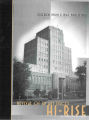
Show OGD[N MUNICIPAL BUILDING Ogden is a quirky town, architecturally, as those who have wandered its streets know. Sure, it's got its share of expressionless shops and stoplights and malls, but connoisseurs of communities will easily become absorbed in its smattering of remarkable old buildings. Unique shops and quaint restaurants line 25th Street; on Washington Boulevard you'll see an Egyptian Theater, once in danger of demolition, but now restored, complete with hieroglyphics and an old fashioned ticket window; just to the north sits the historic Eccles Building; and dispersed throughout are houses and hotels said to have hosted U.S. presidents as they traveled to California, and Billy the Kid as he fled the law and flirted with local girls. Besides these, Ogden boasts three of the most significant Art Deco-style buildings in the Mountain West, all of them depression- It's easy for people to say that renovation is not the most financially feasible of the options, as that route often costs even more than building from scratch would. And it's also common to hear that old buildings aren't particularly practical, since new structures are supposedly designed to better accommodate modern technology. But in reality the overall costs and upgrades were reasonably priced, and despite these potential drawbacks, Comarell says, "We got an immediate response from the survey. People told us, 'You've got to be kidding-we don't want to tear this building down!'" Dutifully, the Ogden City Council, along nomination form for the building, "Ogden was the center for avant-garde architecture in Utah." "There's a lot to be proud of in this town, and a lot of that has happened in the last fifteen years," says Comarell, referring to a growing, almost community-wide consciousness. "People are a lot more excited and positive about preservation and beauti-fication than when 1 arrived here in f 982." What exactly does a disproportionate number of preservationists do for a town? Generally speaking, explains Kim Hyatt, architect of the Municipal Building rehab, a city's structures play a uniquely vital role in determining overall atmosphere. "In any city in the world, what characteristic is there that's as public and visible as its buildings?" he asks. Accordingly, as any Ogdenite will aver, the Art Deco giant is no minor ingredient in the overall flavor of downtown Ogden. Hyatt asserts that the Municipal Building is of national significance as a quality-and rare-Mountain West example of Art Deco -you cfln oo TO A LIBRARY AIID READ ABOUT HISTORY, BUT IT'S HOT HEflRLY SO HOTICEflBLE HI1D POWERFUL AS fin ACTUAL STRUCTURE". era masterpieces from one of Utah's foremost architectural firms of the early twentieth century, Hodgson and McClenahan. Of these three Art Deco gems, the most visibly prominent is an angular twelve-floor monolith of downtown Ogden, the Municipal Building. Home to both city and county offices for decades after its dedication in 1940, its outdated facilities brought it to a junction between demolition or renovation six years ago. Pat Comarell, now the executive director of the Ogden city council, was involved in mailing information pamphlets to the citizenry describing the situation. Here was a building, an architectural and historical landmark, whose number had come up. We're left with three options, proposed the flyer: we can board the windows and wait for something else to come along, we can tear it down, or we can renovate it. with other concerned individuals, trooped out to crusade for the bond that was to foot the cost of the enterprise-which was expected to top $13 million, to be paid for with twenty years of increased property taxes. On election day 1996 the crusaders themselves were pleasantly surprised with the fruits of their labor: the bond issue had passed in the polls with a landslide 73 percent support. "It's uncommon for a bond issue to pass by that margin," says Ogden public works director John Ruiz. "That in itself bodes well for the importance of preservation to this community." The preservationist sentiment revealed in the election is simply another chapter in Ogden's continuing story of commitment to revitalizing what has been a rather glamorous architectural history. "During the first four decades of the twentieth century," notes the National Register of Historic Places K im HYATT, ARCHITECT architecture, a style en vogue between 1925 and 1940 that was known for its geometric design, ornamentation, and use of glass and color. "It's one of the best Art Deco buildings between Missouri and California," Hyatt affirms. "Art Deco just wasn't designed and built much out West." Ogden voters' decision to preserve the Municipal Building is also a decision to do homage to a significant chunk of history. The structure, which was listed on the National Register of Historic Places in 1983, is itself a very tangible documentation of the Public Works Administration's impact on 1930s Utah. President Franklin D. Roosevelt's program, in the end, helped provide hundreds of temporary jobs by picking up no less than 43 percent of the original $952,668 cost. Architecture, then, can bring history to life-history, in this case, rich with such When this photo was taken c.1972, the building was "middle-aged," about halfway between its 1940 opening and its 2000 rededkation. Though the exterior is virtually unchanged from its original appearance, the interior "working elements'-electrical, plumbing, HVAC, telecommunications, and so forth-have been brought up to current standards. U T A H P R E S E R V A T I ON episodes as depression and government intervention; the rise and fall of decorative fads; and the heyday of businesses like Hodgson & McClenahan or George A. Whitmeyer & Sons, the building's original contractors. Hyatt sums up the concept: "You can go to a library and read about history, but it's not nearly so noticeable and powerful as an actual structure." But like many non-restored structures deserving of the title "historic," the Municipal Building of six years ago had seen better days. Its exterior bricks needed cleaning. Seismic performance needed updating. The original steel jail cells on the upper four floors needed to be removed to accommodate new offices and building systems. The building's basic amenities-plumbing, heating, cooling, and electricity- needed to be modernized-a problem not easily solved, since the ceilings of 60 years ago were not built high enough to accommodate all of today's utilities. What's more, the building's piece de resistance-^ large ornamental grate featuring Art Deco designs (musical notes, geometric shapes, and other motifs) and hung over the main entryway-was soiled and covered from view. The grille, now restored to the prominence of its east-facing position above the main doors, begs attention even from across the street. Its intricately sliced steel, like an enormous collection of cookie cutters, is a stark standout from the surrounding brick. Since the grille is nowhere near matched in intricacy and flamboyan-cy by anything else on the building's exterior, including the subtle terra cotta trim, it almost looks out of place-a spiral-cut radish on a gourmand plate of pork n' beans. The grille cleaning and unveiling was not the most ambitious project of two years of renovation, but it is one of the most popular-it seems to engender continual compliments from residents visiting the building. The grille presides today over renovated granite stairs and a landscaping makeover, trees and planter plots and grass strips that flow naturally from the adjacent park. In fact, the whole park-building complex has been in flux; as if surrounding shops and bus routes didn't already draw enough crowds, the next point on the construction agenda is the addition of an amphitheater to one corner of the park, which will effectively make the place a sort of multi-use hub. Aless visible but equally significant metamorphosis was the incorporation of seismic upgrades into the building. The original brittle concrete frame construction wasn't exactly resistant to the movement an earthquake might have caused: "It could have failed with very little provocation," says Kim Hyatt. So huge steel I-beams, columns and diagonal braces were hoisted by cranes, maneuvered through twelve floors and the penthouse, and then connected to the existing concrete supports. One can appreciate the difficulty of this task knowing that the new steel members weighed as much as 370 pounds per lineal foot. Steel beams of such monstrous proportions present their own challenges, true, but they proved more feasible than the alternative, which was to brace the existing structure with new concrete "shear walls." An initial investigation revealed that the building would require an excessive number of shear walls; plus, the construction of those walls would dramatically alter the edifice's characteristic Art Deco lobbies and other significant interior features. Although the interior of the municipal building, with the exception of the lobbies, was not conserved to the extent that the exterior was-work inside was geared toward "adaptive reuse," Hyatt points out, as opposed to "preservation"-it has not abandoned its Art Deco (above and right) The focal point of the east facade is the intricate metal grille at the entrance. Its vibrant design and luster had been masked by decades of dirt and exposure to the elements. (below) The interior of this Depression-era building was never fancy; the subtly styled renovated spaces provide a dignified yet welcoming home for city employees and the visiting public. 28 U T A H P R E S E R V A T I ON Seismic stabilization of the building was a major part of its renovation. Interlacing heavy steel beams were inserted throughout the structure (above), angle bracing was added to parapets (left), and the unenforced masonry of the upper tower was connected to interior supports with strategically placed tie rods (below). Note the original terra cotta parapet caps, which were carefully crafted with angled horizontal surfaces to shed water off roots. Ornamentation is an integral clement of the building's interior atmosphere; floral designs, geometric motifs and art deco colors grace everything from the elevator to bathroom tiles to chairs. The ubiquitous light fixtures, no less, are replicas of a single original light fixture that had survived years of remodeling of the building's interior. But function has not been sacrificed to make way for form, Ruiz explains; the building is very much geared toward meeting the public's needs. New with the rehabilitation is a "one-stop customer service desk"-a facility equipped to (almost) painlessly process permits, approvals, and all sorts of other business requests. "We're able to provide much better service," observes Ruiz. So the building is good for the public, and it's proven good for the workers since they moved in on October 3, 2000. "The employees that had worked in the building before it was renovated were pleasantly surprised with the changes that had been made," Ruiz points out. "There's an open feel to it, and that's conducive to a positive work environment." The offices, in fact, hardly seem such. The window-heavy, cubicle-light design gives one the feel of strolling in open air, not through office space. One minor complaint from employees who deal regularly with colleagues on other floors is the amount of stair-climbing (or elevator riding) the vertical layout of the building requires. Apparently, the years-long, multimillion-dollar investment in the future of Ogden City's administration and atmosphere is starting to pay off. And even the rehabilitation project's initial opponents seem to have been won over. At the Municipal Building's rededication last October Ogden city council chairman John Wolfe confessed that, years ago, he was partial to the wreck-that-old-thing-and-build- a-ncw-onc plan. Now, however, a converted Wolfe recognizes the building as Ogden's "heart and soul." Ogden Mayor Matthew Godfrey spoke at the same ceremony, calling the re-opening of the Municipal Building "the dawning of a new day." True enough-in terms of revamped technology, enhanced safety specifications, and convenient public sendee. But as for commitment to preserving history through preserving architecture? To the credit of Ogclenites, the city's "new day" of old buildings dawned years ago, and it continues bright and strong even today. « SPENCER ROGERS IS A FREELANCE WRITER AND STUDENT WHO CURRENTLY LIVES IN PROVO. s t • ' UNION POINTE OitiHAl CONTRACTORS 1132 South 500 West Salt Lake City, UT 84101 Voice: (801)977-8000 FAX: (801)975-1103 fxceedMS iff futl$er$ce Firm Get*era! Contracting Construction Management besigit-Buitd Services U T A H P R E S E R V A T I ON *>£'?>'. $ Profile COOPER ROBERTS SIMONSEN ARCHITECTS 700 Nvdk 200 Wed Salt lake, Gity, Utah fduuux (SOI) 355-5915 {a*.: (SO/) 355-9885 welt tik: cn4GHckitech.com Utah State Capitol Restoration Study, Gold Room Photo Mike Moore. THE YEAR 2 0 0 0 WAS A TIME OF GROWTH, diversity and exciting new projects for Cooper/Roberts Architects, long known as a leading historic preservation design firm in the western states. The firm celebrated its twenty-fifth anniversary during the year and also received the prestigious " 2 0 0 0 Firm of the Year Award" from AIA Utah. The award was given "In recognition of significant leadership and accomplishment in the art and science of preserving Utah's architectural heritage." The firm has doubled its size in the last two years and has added a new partner, Soren Simonsen, AIA, causing the firm name change to Cooper Roberts Simonsen Architects, or CRSA. Among the significant projects completed by CRSA in 2000 was its six-volume, 1,800-page comprehensive restoration study of the Utah State Capitol building. The study analyzes existing conditions and deficiencies, calls for a return to the original floor plan and the restoration of deteriorated, damaged, covered or missing design features. This year, the Capitol Preservation Board will tackle the first of eight phases of work proposed for the Capitol-the design and construction of two new, architecturally compatible buildings behind the Capitol. Other historic preservation projects designed by the firm in the past year include the renovation of Columbus School to become the South Salt Lake City Community and Senior Center, the restoration of two 1 875 stone buildings at Ft. Douglas for re-use as conference centers for the Olympics and the University of Utah, restoration of the turn-of-the-century Huber Homestead near Midway, Phase I renovation of the 1930s Riverton Elementary School/Community Center, and renovation and addition to the historic Alladin Theater in Parowan. The firm is currently completing studies of the historic Maeser School in Provo and Draper's historic conservation area. CRSA recently completed similar studies of the historic Cache County Courthouse and Bingham High School. As it has expanded its size and services, CRSA has developed several specializations in new building types. In the past year the firm has designed two major transit centers (in Park City and Ogden), the Liberty Senior Center in Salt Lake City, the expansion and re-imaging of the visitor center at Bryce Canyon National Park, a new wellness center in Torrey, along with several library, church, commercial and office building projects. A core value of the firm and its slogan is "Creating better communities through planning and design excellence." The firm also believes in making its services accessible to clients with smaller, non-urban projects. An example of this commitment is CRSA's work on several historic preservation projects along the Heritage Highway-historic Highway 89. Among these (from north to south) are the Logan and Brigham City Tabernacle restorations, Peteetneet School renovation, Mt. Pleasant Main Street and City Hall renova-f^^^^\ tions, Ephraim Co-op and Art Center restorations, Manti and Richfield Tabernacle restorations, and Elsinore "White Rock School" renovation. Even further south, the firm designed a new, architecturally compatible fire station in Panguitch and an environmentally contextual new city hall in Springdale. In addition to these A /E projects, CRSA has completed numerous historic building surveys, main street projects, historic district consulting, history writing projects, and volunteer service in such historic communities as Park City, Spring City, Parowan, Lehi, and St. George. CRSA looks forward to even greater diversify in its work as it develops its new planning, programming and design departments, while maintaining a strong foothold in historic preservation work. Ephraim Co-op Restoration Brigham City Tabernacle Restoration 30 U T A H P R E S E R V A T I ON • • • • it's in the ^ast, it's our usiness. * We are expert archaeologists, ethnographers, and historians. *Our services are your solutions: • Archaeological survey & data recovery • Tribal consultation • Historic research and interpretation • CIS Services ENVIRONMENTAL CONSULTANTS 801.322.4307 www.swca.com MP w \ \ Salt Lake • Phoenix • Tucson • Reno • Albuquerque • Austin • Houston • San Antonio • Denver |