| OCR Text |
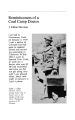
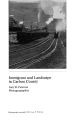
Show Introduction Carbon County, from its birth as a separate entity in 1894 to the present, has occupied a unique place in the image of Utah. Its vast, rich coal lands, mining and railroading economy, and ethnically diverse population, consisting largely of southern and eastern Europeans, produced a strong contrast to the agrarian regions of the state. Carbon also provided a contrast to the gold and silver mining boom regions where silver queens and the rich strike created a history and lore different from that of coal mining. Seeming to relish these differences, residents of the county, despite ethnic diversity, have become Carbonites, exhibiting a profound loyalty to their eastern Utah county. With heightened awareness, historians, many of whom have ties to the area, have in recent years begun to research and publish studies of Carbon County's historical development and themes important in that process. More remains to be done. Carbon's rich history and its importance to the state, especially in light of the current energy crisis, deserve extensive scrutiny. Energy and diversity, legacies of the past, continue as Carbon County assumes a significant role in the solution to a national problem. Out of the need for more knowledge and awareness of the county's past came a lecture series held in Helper, Price, and East Carbon during early 1980 under the sponsorship of the Utah State Historical Society, the College of Eastern Utah, and the Carbon County Historical Society, funded by a grant from the Utah Endowment for the Humanities. The articles in this volume are products of that popular series. Their publication was made possible through the interest and effort of the Carbon County Historical Society and the generosity of the Carbon County Commission which allocated funds for the printing. The publications section of the Utah State Historical Society edited and prepared the Introduction volume for publication, aided in part by funds from the Heritage Conservation and Recreation Service, Department of the Interior, which administers the historic preservation program. Special thanks are due to Craig Fuller who prepared grant applications, transported speakers, and coordinated the lecture series; Leonard Miller of the College of Eastern Utah who handled the local arrangements with skill and care, and Mrs. Frances Cunningham and Mrs. Pruda Trujillo who urged that the lectures be published. The editor also wishes to thank personally Miriam B. Murphy of the Society's publications staff for her enthusiasm and energy in this project and Floyd A. O'Neil whose insights into Carbon County history were used liberally. The essays presented here are meant to reflect the continuing effort to understand Carbon County's past and illuminate its future. They are not definitive works, but hopefully they will provide guidelines for future studies and add insights into areas where research is already underway. History is dynamic and so also must be its quest. Allan Kent Powell, a native of Castle Valley, begins the volume by discussing the three legacies of Carbon County: the Mormons, the immigrants, and coal mining. As preservation research coordinator for the state of Utah, he sees primary significance in the physical environment and the remains of these legacies, including the Mormon village, the coal company town, and remnants that illustrate the immigrant heritage. The manmade environment is emphasized, conveying the idea that the elements that remain provide a sense of time and place and feelings of comfort and familiarity to those who understand and relate to Carbon County's Mormons, immigrants, and mines. Floyd A. O'Neil, a former Carbonite, provides a study of the coal industry and its impact upon the county and its peoples. More than any other factor, coal has determined the history of Carbon County, a history marked by the "interconnectedness of events and the interdependence of peoples," with coal as the major force. An energy crisis had Introduction developed along the Wasatch Front as early as the 1850s, triggering the search for coal. With Carbon County coal came a stable market. O'Neil synthesizes the growth of the county, mentioning the value of the mines, the impact of the railroads, and the significance of the human element. He sees Carbon County as "an island in the stream of Utah's history," for unlike the rest of Utah it followed the pattern of rapidly increasing foreign population and intensive capitalistic development that characterized American growth in the period from 1880 to 1925. Although positive in the main, this growth nevertheless was accompanied by vagaries of demand that affected both the area and the people of Carbon County. The third essay presents lively insights into the life of a coal mining company doctor. J. Eldon Dorman offers reminiscences of his experiences in the Gordon Creek area-primarily the camps of Consumers, Sweets, and National-as a young physician. The personal and informal nature of this account is entirely appropriate, illustrating as it does the respect, humor, and intrigue that surrounded "Doc" or "Mr. Doc," as he was called. The company doctor indeed touched the lives of everyone in the camps as healer, mediator, and friend. Next, Gary B. Peterson presents a personal view of Carbon County through the trained eye of a geographer and photographer. These "glimpses of Carbon" offer a blend of then and now that allows the viewer to make an individual judgment on the effects of time. In addition, the photographs and accompanying narrative treat the physical features that illustrate basic themes important in Carbon County's past and future. Helen Z. Papanikolas, a native of Helper and prolific writer on immigrant themes, takes a sensitive view of women in the mining communities of Carbon County. She points out that without the pioneer and immigrant women the county would have been settled later and the fifty-year struggle to unionize the eastern Utah coal fields would have been abandoned early. With vivid perception she shows that vm Introduction the realities of labor affected women as well as men. Specific examples of women and their lives in Carbon County illuminate one of the county's strengths-its ethnic diversity. From this discussion the role of culture becomes more clear, with women being viewed in most cases as the carriers of that culture. The essay is not merely a listing of the contributions of women, but an analysis of various aspects of life in Carbon in which women played a vital role, one shared with men and children. Turning from immigrants and mining, Leonard J. Arrington shares his detailed knowledge of the Latter-day Saint settlement of eastern Utah, pointing to three colonization movements, the first being that from Sanpete Valley into Castle Valley beginning in 1877. He sees this process in the light of those central figures whose characters and concerns marked the Mormon experience in the area. For Arrington also this was a total experience of men, women, and children. In the final analysis the Latter-day Saints left a legacy of faith, courage, and tolerance in eastern Utah. Although Carbon County is best known for its coal, Edward A. Geary, another native of the region, states that transportation rather than coal was the first factor in the county's development. During the settlement period the area's history was essentially the same on either side of the Carbon-Emery line. However, the coming of the railroad was a key element that helped to elevate Price to a dominant position as the commerical center of Castle Valley. Even before the railroad, Price had been a center for freighting to and from the Uinta Basin. In analyzing that period of Carbon County's growth, Geary suggests that the freight road through Nine Mile Canyon had the lasting effect of providing Price with a strong commercial foundation. This base, then, enabled the city to retain its dominance in the face of challenges from Scofield and Helper. The final essay looks at Helper, known as the most ethnically diverse of Carbon County's towns. Here the physical environment is stressed as well as the images Introduction projected by the town. The Denver & Rio Grande Western Railroad gave birth to Helper. Later, its "hub" location in the middle of working coal mines, flanked by agricultural lands watered by the Price River, sustained it. Surrounded by this activity, Helper and its numerous immigrants-primarily from southern and eastern Europe-became a focal point for those of foreign birth and culture as well as for the unionization of miners and various economic activities. The town's physical environment provides a visible link between its past and present. Philip F. Notarianni |