| OCR Text |
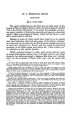
Show OLD TRAILS, OLD FORTS, OLD TRAPPERS AND TRADERS By Herbert S. Auerbach1 HISTORY AND ROMANCE OF THE OLD SPANISH TRAIL The myriads of interlacing trails throughout the Rocky Mountains date back through the centuries. Long before the visits of white men to these regions, the trails were traveled by the Indians, roving over the country on their hunting, trapping and war expeditions. Not infrequently were trails newly made, or deeply reworn, by galloping Indian horsemen on some punitive or thieving expedition against an enemy tribe of Indians in some distant part of the Rocky Mountains. Many trails were also made in the first instance, and traveled frequently thereafter, in seeking easy crossings of the streams when in high stages, and too deep to ford or cross in the usual manner. Toward Winter whole tribes moved along the trails to warmer climates, and in Spring they returned to follow the game and later in the year they traveled about to gather roots, berries, pine- nuts and seeds. They made trips also to gather flint, jasper, agate, and quartzite for fashioning arrowheads, knives, axes, tomahawks, hide scrapers, awls, hammers, grinding stones and other tools and implements. Many tribes for centuries made these quartzite and flint- gathering expeditions to the ancient " Spanish Diggings,"" prehistoric stone quarries, shops and village sites in eastern Wyoming, which quarries were scattered over a wide area in Niobrara, Converse and Platte Counties, Wyoming, extending from about thirty miles north of Hartville, Platte County, to a few miles southwest of Manville, Niobrara County, and to Bulls Bend on the North Platte River. With primitive stone tools they laboriously quarried layers of sandstone to uncover the thin vein of quartzite which they prized so highly. A particularly interesting quarry is located near Flattop, Niobrara County, where cooking and other household utensils and stone tools and implements have been found in large quantities. These quarrries are scattered over an area of 300 square ( See " Editor's Note," at end of article, page 63. J. C. A.) JThe author desires to acknowledge his indebtedness for the valuable assistance given him by: Miss Stella M. Drumm, Librarian. Missouri Historical Society, St. Louis, Missouri. Miss Mary E. Marks, Librarian, Wyoming State Library, Laramie, Wyoming. Miss Ruth Laphan Butler, Librarian. Ayer Collection, Newberry Library, Chicago, Illinois. Mr. Leslie Bliss, Librarian, Huntington Library, San Marino, California. And, last, but by no means least, J. Cecil Alter. Salt Lake City. Utah. aSo called by cowboys who discovered them. However we have no evidence to show that they were worked by the Spaniards. 14 UTAH HISTORICAL QUARTERLY miles or more. In many places the country is very difficult of access and comparatively little is known about these quarries and shops and the Indians who worked them. Another favorite source of flint was the Yellowstone. Near Sunrise and Hartville, Wyoming, are large deposits of blood red hematite iron ore, highly prized by the Indians for coloring clay and pottery utensils, for personal decoration and particularly for war paint. Salt was also a necessity that they traveled the trails to secure. Nomadic in habits, these tribes roamed the Great Basin area engaging in hunting or in warfare. In the wild recesses of the Wasatch and Uinta Mountains, and as far south as the Grand Canyon and the Rio Virgin, the Indians enjoyed fine hunting, for untold numbers of deer ranged the valleys, beaver were plentiful along nearly every waterway, and grizzly and black bears abounded in the mountains. Throughout southern Utah, as well as in the Mesa Verde, Colorado, the region of the Casas Grande at Mesa, Arizona, and parts of Nevada, there are abundant evidences of the much more ancient and more highly developed Indian civilization of the Cliff Dwellers, a people who apparently migrated from one of these locations to another, being driven from their homes by seasons of drought, or by powerful enemies. Near Blanding and Bluff, and throughout the entire Wayne Wonderland of Utah, are found cliff dwellings of many rooms, including living quarters, chambers for the storage of grains and other foods, and kivas, or underground religious ceremonial rooms. To build these terraced villages, tremendous labor must have been required, for they were constructed in natural caves high up the sides of steep canyon cliffs, and the walls of the many rooms were made of red sandstone squared into rough blocks by chipping with harder stone, and held together with clay mortar and chinking of pebbles and rocks. From the remains in the ruins of these cliff dwellings, we know that the Indians who lived there were an agricultural people, that they had great flocks of sheep and goats and of domesticated turkeys, that they made reservoirs for storage of water in this arid country, that they were skilled in making baskets, molding and firing pottery of clay, and weaving cloth of cotton, of the fiber of yucca plants, of wool and even of human hair. With the strippings of turkey feathers and yucca fiber they made fluffy rope which they wove into warm blankets. Articles found in the kivas indicate a high degree of social and religious organization. There is also evidence in southern Utah of a still earlier, and more primitive cave people, and throughout various parts of the state excavations have been made which have revealed the ancient, buned villages of the mound builders, a still different Indian civili H oo 0 > O 0, CH 2w 2 w h w CT-. >* 3 - C o : > £ I ^ H = - r , -= 5 _= s _ z u 1 E ^ O Q S O OS w 2 O H 2 < OLD TRAILS, OLD FORTS, OLD TRAPPERS AND TRADERS 15 zation. The pre- historic Indian writings traced on many canyon walls in Utah and Nevada might tell us fasdnating stories of these people of the past, if we could only interpret their meanings. In the far remote ages, these Indian people of whom we know so little, must also have traveled the natural paths along the waterways- the paths which later became a part of the Old Spanish Trail. TRADE IN HORSES AND SLAVES Through the years before the white men penetrated this wilderness, a trade had grown up between Taos and Santa Fe, New Mexico, and " The Great Basin" 8 territory, and between California and this same territory, which followed along the Old Spanish Trail and along connecting trails, the most important of which routes are indicated on the accompanying map. For generations, great herds of horses, mules and later cattle, sheep and goats were driven along these old trails by Indians, Spaniards and later by Mexicans, from California, Mexico and New Mexico into the Rocky Mountains and beyond. Mules, having originated in California, were bought or stolen from the great ranchos of the Spaniards and Californians on the Pacific coast, and brought over the Old Spanish Trail, afterwards being sold in Santa Fe and other villages and towns of New Mexico, and some eventually finding their way by trade, barter and travel to Missouri, where they were the predecessors of the famed Missouri mules. Mules were greatly valued for their endurance and strength. This traffic continued in the eighteen twenties and thirties, when many thousand horses and mules were driven every year over the Old Spanish Trail from California- and so much of the stock was stolen for this purpose that the Spanish Trail was popularly called " The Horse Thief Trail," the route of horse raiders and horse thieves. The traffic in stolen stock was attractive, exciting and very lucrative. Horses and cattle were scattered over wide areas on the huge California ranchos, roaming at large in vast numbers, so that it was easy to drive off great herds over the Spanish Trail. Horses and mules could be traded to the Indians at a magnificent profit, because an Indian or a mountain man without a horse was completely at a loss and only the lowest and meanest of the tribes traveled on foot. It was easy to sell thousands of horses and cattle in Santa Fe and other towns of New and Old Mexico, and other thousands of head were driven north to the Fort Bridger country in Wyoming. West of the Rocky Mountains three types of horses were 8Fremont apparently was the first one who designated that large area adjacent to the valley of Great Salt Lake as " The Great Basin" because from this great region, shaped roughly like a vast basin, no streams flowed to the sea. 16 UTAH HISTORICAL QUARTERLY recognized. The most valuable were those called American, which were brought into that western country from the states east of the Missouri River. The Spanish horses which were brought from Mexico and California were less valuable, and the least valuable were the Indian horses. These Indian horses were smaller than either the American or the Spanish horses. There were crosses of these three varieties, but the American horses brought much more in price than either the Spanish, the Indian or any crosses, the prices ranging from fifty to six hundred dollars each, for these various types. Because they were so essential to the Indians and to the mountain men, horses were truly the " currency" of the Rocky Mountains, and since Indian ponies could forage and rustle for themselves better than the American horses, and were also more surefooted, the Indian ponies were often preferable for riding steep slopes and very rough country. Besides the trade in horses, mules, oxen and cattle there had also been for years an important traffic in Indian salves. These slaves, mostly Indian women and children, were purchased or stolen by Spaniards and Mexicans from the Utes, Piutes, Goshutes and other tribes. The miserably poor Indians of the desert regions of Utah and Nevada were most frequently the victims of raiding parties of slave traders. Living in the most abject poverty, eating lizards and roots, hunting rabbits for food, they had few horses, scanty weapons, and therefore could offer very inadequate defense, and it was mostly from these abject, ignorant and poverty-stricken tribes that thousands of women and children were stolen and sold into slavery. Hundreds of the slaves could be seen in caravans traveling the Old Spanish Trail, guarded by the mounted Spanish or Mexican traders- the Indian squaws plodding the weary miles on foot, the older children running along beside them, the small tots on horses and the papooses on their mothers' backs. Sometimes the traders pounced on isolated or unprotected bands from the stronger and! more warlike tribes, and took them captive. This slave traffic was the cause of frequent wars between the various tribes, and many slave caravans totaling thousands of these unfortunate captives followed along the Old Spanish Trail and its various tributary footpaths. Slavery had been traditional in Mexico from the most ancient times. Even before the coming of the Spaniards in the sixteenth century, slavery had been practised by the Indian tribes of Mexico. Of the captives taken in war by the victorious tribes, the warriors had been offered as human sacrifices to the Indian gods, but the women and children had been kept as slaves by the conquerors. And after the coming of the Spaniards, the entire social structure was predicated upon the menial work of the Indian slaves and the peons. VH/ M+ t Jd fan. Si, fyti. ' J'/ fit 6' etd, *' T6- H- t//. tt. u e* / / / < • / " a, 6:, ? 77) tu // at. ,(/// A / Js<&*. / fi& pL r<,; i /% T> f fili,^ .4>/>/ t, iS AL& / a V a-// fa~> ( « e Jl / flt * 0, // fi/ u ffiti; /• u/ 6fi* < j V'J - / iIf/ '* 7 << 2$ f « "/ <*/* rf ,%£/ W * y ~?/ g s/ M/// ^ l/, iS) Passport issued to Antoine Robidoux, et al, by Colonel H. Leavenworth, permitting him to pass through the Indian country lying between Fort Atkinson and the boundary line between the territory of the United States and New Mexico in the direction of Santa Fe. Fort Atkinson on the Missouri River. I9th February, 1824. This document is reproduced by permission of the Huntington Library. San Marino, California. RI 79 OLD TRAILS, OLD FORTS, OLD TRAPPERS AND TRADERS 17 Thus the Indian slaves could be sold into New and Old Mexico at excellent prices, and the traffic flourished even after the United States took over the western territory and it began to be settled by Americans. Not only were the Spaniards and Mexicans eager to buy Indian slaves- there was also a ready market for them among the more prosperous tribes of Indians. The Navajos, in particular, wanted slaves to till their farms, weave their blankets, and mine their silver, and many of the slaves were sold to tribes of Navajos. Some were also sold to the Utes, and others to some of the more warlike, independent and proud tribes farther north. Part of this Old Spanish Trail continued even into the eighteen 70' s and 80' s, as the route of horse and cattle thieves, outlaws and robbers. The vast wilderness of barren and almost inaccessible tablelands provided such noted hideaways as Robber's Roost, San Rafael Swell, and the Sinbad Country, Utah, The Hole- in-the- Wall, Wyoming, and other places made famous in the highly colored tales of the " Wild West." Also richly romantic and colorful are the many stories of " Lost Mines" scattered along the Old Spanish Trail and throughout adjacent territory, many of the legends and traditions dating back to early Spanish explorations and even before that, to mines worked by the Indians. Among these reputedly rich mines along the course of the Old Spanish Trail were: The Lost Peg Leg Mine. The Lost Breyf ogle Mine. The Lost Gunsight Mine. The Lost Las Vegas Mine. The Lost Magatsie Mine. The Lost Henry Mountains Mine. The Lost Fish Lake Mine. The Lost Cabin Mine. The Devil's Palace. The Lost El Dorado Gold Mine, and a host of others.' SANTA FE, NEW MEXICO Adding to the romance and color of the Old Spanish Trail were the ancient and unique cities of New Mexico at its eastern end, and the Mission San Gabriel, Pueblo de Los Angeles, and port of San Pedro at the western end. It is interesting to note that although the Spaniards had penetrated and conquered New Mexico nearly a hundred years before the pilgrims landed at Plymouth, and had established missions and Spanish settlements along the Rio Grande as far north and west as Taos, Santa Fe, Abiquiu and Chamas during the sixteenth cen- * The story of the " Lost Mines" will be told in a future article. 18 UTAH HISTORICAL QUARTERLY tury, there was no communication between these Spanish colonies and the English and French colonies along the Mississippi until the nineteenth century. The Santa Fe Trail was chiefly the route of trade and commerce between the United States and Mexico. About 1804, Morrison, a merchant of Kaskaskia, who had heard the trappers repeat stories told to them by the Indians of the wealth of the Spanish settlements, sent a French Creole, La Lande, with some goods to Santa Fe to trade. But instead of returning with the profits of the enterprise, La Lande used them to set himself up in business and staid in Santa Fe for 20 years, growing rich by trading. About 1805, an American, James Pursley, wandering west of the Mississippi, met a band of Indians near the head- waters of the Platte, and accompanied them to Santa Fe, where he remained several years. In 1807 Captain Zebulon M. Pike visited Santa Fe, and returned with alluring descriptions that eventually led to the opening of the Santa Fe trail for trade, a commerce which grew so rapidly that soon huge caravans of goods were moving between western Missouri and Santa Fe. In the 1830' s this trade had become so large that it amounted to four or five million dollars a year. The merchandise brought from Missouri was sold in Santa Fe and also south in Chihuahua and other portions of northern Mexico. Those who traveled the Santa Fe Trail were teamsters, merchants and traders, bringing their goods in huge, unwieldy " windwagons" pulled at first by horses and mules, and later by oxen. The pioneer families, the women and children, so characteristic of the Oregon Trail, were very rarely seen on this southern route. And the city at the end of the trail, Santa Fe, was unique in its flavor and character. Travelers who saw its flat- topped adobe houses for the first time described the city as a huddle of " deserted brick kilns." Advance agents preceded the caravan a day or so to Santa Fe to make arrangements with the pompous customs officials for the entry of the goods, and to secure store rooms adjacent to the town square to set up the wagon- loads of merchandise for sale. Immediately the lazy, dirty town bustled with excitement and activity, ready to give a royal welcome and a riotous celebration to the traders of the Santa Fe trail. To the public square the ndgh-boring rancheros brought their farm products loaded on donkeys-forage, wood, earthen jars, melons, grapes, red and green pimentos, onions, eggs, cheese, tobacco, and pine nuts. In addition the public market had a variety of bread and meat, and barrels of whiskey. The Indians of the neighboring pueblos brought quantities of hsh to the market, either fresh or dried. This market OLD TRAILS, OLD FORTS, OLD TRAPPERS AND TRADERS 19 square was the meeting place of the whole village- of all the men, women and children, the Spaniards, Americans, Mexicans and Indians. Clustered around the square were the Governor's house, for Santa Fe was the capital of New Mexico, the customs house, where the owners of the caravans of trade paid heavy duties to the Spanish and later to the Mexican government, and still heavier graft levies to the avaricious local officials, and the shops of the American traders. Radiating in irregular order from the square were crooked streets, where adobe walls as high as a horse s head enclosed the gardens and the houses and hovels, growing poorer and dirtier towards the outskirts, where the " leperos"- petty thieves and beggars- lived in squalor with their Indian squaws. Life was simple and lazy in Santa Fe. There was plenty of wine, and rich, foaming chocolate, and spicy Spanish foods- the chili, the olla podrida, or hash of stewed mutton strongly seasoned with red pepper. For excitement there were drinking and cock fights, and gambling in Santa Fe's many monte rooms, which operated day and night. But with all these pleasures, it was possibly the charm of the Mexican women that helped draw the men from the mountains and the trails to Santa Fe. " Greenhorns" making their first trip from the East were usually not a little astonished at the change in dress of the women from the tight lacing and hoop skirts of Eastern fashions to the freedom of the thin white blouse and easy short skirts of the Mexican beauties. But if they thought the costume at first glance scanty, they also considered it becoming. The Mexican women wore bright red full skirts and gay shawls, elaborate and heavy jewelry, and thin white blouses which they embroidered with flowers. It was their custom to daub their faces with clay during the day to protect their complexions from the sun. Many of the men did the same. Then in preparation for the " fandango" in the evening, the women washed off the clay and painted their lips and cheeks with the blood- red stain of the alegria plant. Women who could afford them, wore lace mantillas, and the poorer wore the rebosa, a serape blanket with a hole for the head, and bright dyed border, which served not only as a cover for the head, but also as a shawl, veil and workbag. The rebosa was worn sometimes on the head, sometimes around the shoulders, sometimes around the waist. In the streets it was worn almost invariably over the head, and " so archly and coquettishly does the fair Mexican draw the rebosa around her face," reported Kendall, " that the inquisitive beholder is frequently repaid with no other than the sight of a dark and lustrous eye peering out from amid its folds." 20 UTAH HISTORICAL QUARTERLY Small wonder that the teamsters and traders of the Santa Fe trail stopped outside the city to shave and don their Sunday clothes," that they put loud crackers on their whips, and whooped and yelled and shot off their firearms into the air as they entered Santa Fe! Another reason for the stop just out of sight of the city, during the time when high taxes were levied at so much per wagon, was to re- load the merchandise onto as few wagons as possible, and burn the spare ones. But in spite of the extremely heavy taxes and graft levied by Spanish officials, and in spite of the losses due to marauding Indians and other dangers of the road, the trade with Santa Fe was still extremely profitable. Common calicoes and plain domestic cloth sold in Santa Fe at $ 2 to $ 3 a yard, and other commodities in proportion. After their season of barter, the traders took back to the states silver bullion from Chihuahua and in the later years gold dust from the placers of Santa Fe, and also buffalo rugs, beaver skins, Mexican and Indian blankets, and occasionally to fill up the wagons, wool. TAOS, NEW MEXICO The history of the ancient Pueblo of Taos, New Mexico, dates back into the centuries. It was the most northerly settlement in the Spanish Country in the Taos- Santa Fe- Chihuahua Trail. To the north the wild Indian tribes and particularly the Comanches and Navajos had wiped out all other attempted settlement of the Spaniards. In the northern settlements of New Mexico it was an incessant struggle between the Mexicans and the Pueblo Indians against the Comanches and Navajos who each year ran off thousands of sheep, goats, horses, mules and cattle from the villages and in their savage raids, killed numbers of the inhabitants and took many of their women and children away into slavery. Taos was originally an Indian Pueblo; about 1760 another small settlement of Spaniards, Mexicans and some Indians also named Taos sprang up a short distance from the Indian Pueblo. In 1540 a part of Coronado's Expedition passed through Taos on their quest of the seven treasure cities of Cibola ( Zuni of today) and the golden land of Quivira, ( probably northwestern Kansas), tramping en route over portions of what later became known as the " Old Spanish Trail," and pioneering the way for the domination in later years, as provinces of Spain, of that great area of country which we now designate as New Mexico and Arizona. The village of Taos or San Fernando de Taos, or Fernando, was located at the foot of the mountains in the broad sage- brush covered Taos Valley, having an elevation of nearly 7,000 feet. The village was a collection of square, flat- topped mud houses. OLD TRAILS, OLD FORTS, OLD TRAPPERS AND TRADERS 21 Many of the houses were built of sun- dried bricks or adobes, made of fine clay mixed with straw, and these adobe walls were in turn plastered with a thin layer of this yellowish mud. Some of the houses were made of poles set upright, with the ends buried in the ground. The chinks between the poles were heavily plastered and filled with mud. Across the tops of these upright poles, long poles were laid horizontally and these were covered with brush and mud or blocks of turf to serve as a roof. The town plaza was the center of all activity and these mud dwellings were clustered around it. Some of the mud houses were pyramided several stories high, ( as much as five or six stories), the precursors of our modern apartment houses. Around Taos were large flocks of sheep and goats, and herds of burros, mules, horses and cattle. During the day herders took them out in the adjacent country to graze. At sun- down they were driven back to the village and placed in corrals for safe keeping. Within the village were many vineyards and orchards. In Taos was a noted distillery, the product of which was highly prized by the trappers and widely known as " Taos lightning." When the early trappers spoke of Taos, they referred not only to the village by that name, but in general to the several small settlements scattered about Taos valley in the vicinity of Taos. Taos was known as the " Barter town" and was noted as a great market for horses, mules and oxen. In the 1820' s, and particularly from 1824 to the early 1830' s, Taos became an important headquarters for trappers and traders to dispose of their furs and peltries and to outfit their trapping and trading parties. A number of the traders maintained trading posts in Taos. Prominent among these were the Robidoux Brothers. The trappers seemed to prefer Taos to Santa Fe, the larger and the capital city of New Mexico, probably, for one reason, because most of the Mexican officials resided at Santa Fe, while there were not many at Taos. There was in fact a dearth of Custom Guards at Taos which made it very difficult to patrol the extensive border, and this facilitated the smuggling of furs and goods into Taos. Then too, the offidal supervision in Santa Fe was much stricter than in Taos. At any rate, Taos was the much more popular town among the trappers and traders and especially during the winter season these men remained for some time at the village. Business was very active and the place took on a lively and a festive air, and the townsfolk as well as the trappers and traders had happy times. The principal pastimes were drinking and gambling and upon frequent occasions Fandangos. For a number of years the Mexican Government would issue licenses to trap to Mexican dtizens only. The native Mexicans, however, engaged but very little in trapping. Americans were 22 UTAH HISTORICAL QUARTERLY forced to become citizens of Mexico in order to obtain trapping and trading licenses, or else they had to trap without a license, risking arrest and fines and confiscation of their catches and belongings. Some Americans, as for instance Antoine Robidoux and Wm. Wolfskill, became Mexican citizens for this reason, but many Americans did not, and they engaged in clandestine trapping and trading, which was particularly remunerative. Taos appears to have been a smugglers' paradise and great quantities of valuable peltries and trading goods cleared illegally through the village. ROUTE OF THE OLD SPANISH TRAIL The Old Spanish Trail used by various parties of travelers, consisted of a network of branches, cut- offs, and alternate routes, all of which were known through tradition and the stories of travelers, as " The Old Spanish Trail." Because cut- offs and alternate routes diverged to cross various mountain passes, or to shorten the distance between certain points, and because different parties in traversing the Old Spanish Trail chose to vary their course between certain places, there are many discrepancies and apparent contradictions in old accounts of this route. By careful comparison and checking of all known information, the following description of the approximate course of the Old Spanish Trail has been arrived at, locating the main trails and their branches, cut- offs and alternates: The Old Spanish Trail started at Santa Fe, New Mexico, and led northwesterly towards the village of Chamita, at the junction of the Rio Grande and the Big Chama River. The Chama River follows a natural break in the mountains to the west of the Rio Grande and the Spanish Trail followed the Chama Valley northwesterly to the ancient Village of Abiquiu. The old mines of Abiquiu are situated some nine miles north of the village and were worked for their copper content by the Spaniards in the early days. From Abiquiu the trail led northwesterly to El Vado, then to Navajo Springs, New Mexico. From here the trail proceeded to the Laguna de los Cavallos on the continental divide, where the waters flow to the Pacific and to the Atlantic. About 16 miles farther west the trail crossed the Rio Navajo. The trail proceeded northerly until it reached the upper Rio San Juan and reached the Pagosa Spring, on the bank of this river, a famous landmark and a remarkable hot spring, having a crater some 50 feet across and giving off a cloud of steam which could be seen for miles. From the Pagosa the trail led westerly to the Rio Piedra and crossed it. It then forded the Rio de los Pinos and the Rio Florido, and struck westerly across to a basin in the Las Animas Valley, the present Animas Park, ( where there are interesting ruins of old dries of the Pueblo Indians) and then crossed the Rio de las Animas OLD TRAILS, OLD FORTS, OLD TRAPPERS AND TRADERS 23 Continuing on the trail forded the Rio de la Plata. The mountain here was named by the Spaniards " Sierra de la Plata" ( Silver Mountain). Further on the trail crossed the Rio de los Mancos. It then forded one of the headwaters of the Rio Dolores, and followed along the Rio Dolores. A few miles from this river are the ruins of Surouraro, an ancient Indian town that at one time is said to have housed several thousand people. These Indians had large reservoirs and extensive irrigation systems. From the Rio Dolores the trail struck northwesterly. Along this stretch the trail crossed no streams, but passed a number of springs and pools. At Tierra Blanca was a large spring and the vicinity of this spring was covered with a white efflorescence, which gave rise to the name " White Country." Further west was the Guajelotes, a pool of stagnant water, so- called from the many water lizards that thrived there. Further west was the Ojo de Cuerbo, a sulphur spring, but potable. Beyond here the trail touched La Tenejal, a large natural water reservoir in red sandstone. This basin retained a considerable quantity of surface water over an extended period and was a well known watering station on the Spanish Trail. There were a number of similar but smaller water holes throughout this region. About ten miles westerly of here was the Ojo Verde, a large spring flowing out of the red sandstones. From Ojo Verde the trail turned in a northerly direction. It reached the Grand River some distance below the present town of Moab, Utah, and then followed up along the Grand River to a point just north of Moab, where it crossed the Grand River and then continued northwesterly towards the present town of Green River, Utah, crossing the Green River at this place and striking northwesterly between the Price River and the San Rafael River, but nearer to the San Rafael River. It crossed the San Rafael River near Castle Dale, Utah, and proceeding southwesterly forded the Garambulla River and Akanaquint Creek and continued through the Wasatch Pass and down Salt Canyon to the present town of Salina. From Salina the trail extended along Sevier River ( one branch passed westward through Clear Creek Canyon to Cove Fort, some thirty- five miles below Fillmore, thence southerly to Beaver and Cedar City), 6 near Richfield, Monroe and Marysvale and the town of Junction, through Red Canyon to Paragonah, thence to Parowan, near Little Salt Lake, thence to Summit at the top of the ridge, and down to Cedar City, and from there southerly, crossing Pinto Creek, thence onward to Mountain Meadows, and to Kane Springs Camp, about two or three miles below the Meadows; thence 5An alternate route from Green River Crossing passed by way of Spanish Fork Canyon, Provo, Payson. Nephi. Fillmore, Cove Creek, Beaver and thence followed the main Spanish Trail to California. 24 UTAH HISTORICAL QUARTERLY southerly along Magatsie Creek, to where this creek joins the Santa Clara River; from there southerly, about fourteen miles due west of the present city of St. George, ( at the junction of the Santa Clara and Rio Virgin) and across the Beaver Dam Mountains in the southwest corner of Utah; from there along the Rio Virgin, passing Beaver Dam, Arizona, and following the Rio Virgin to a point southeast of the present town of St. Thomas, Nevada. The trail struck off southwesterly across the desert to Las Vegas, Nevada, and from there continued westerly, passing east of Kelso, California, and headed southwesterly across the desert towards Crucero, California, and to the Mojave River and along the bed of this river and on through Cajon Pass and to the Hacienda or Rancho San Bernardino ( located southeast of the present city of San Bernardino and not far from the city of Redlands). From here the trail led westerly past the San Gabriel Mission to Pueblo de los Angeles, and thence south to the port of San Pedro. ( A trail branched off from Rancho San Bernardino, leading southerly through Warner's pass and thence southwesterly to San Diego.) The Union Padfic Railroad follows approximately along the Old Spanish Trail over the stretch between Las Vegas, Nevada and Los Angeles, California. DIVISIONS OF THE OLD SPANISH TRAIL The first section of the Spanish Trail lay between Santa Fe, Taos and Abiquiu and the junction of the Uncompahgre River with the Grand River. The next section lay between this Uncompahgre River- Grand River junction and the confluence of the Green River, White River and Uinta River. The next section lay between the confluence of the Green River, White River and Uinta River and the Utah Lake- Great Salt Lake Region, or the Great Basin Territory. This stretch from New Mexico to the Great Basin may be regarded as the " Eastern Division" of the Old Spanish Trail. The stretch between the Great Basin and the California settlements may be regarded as the " Western Division" of the Old Spanish Trail. THE GRAND RIVER ( GUNNISON) TRAIL The Grand River ( Gunnison) Trail may be considered a branch of the Old Spanish Trail. From Taos, this trail headed north through the Valley of the Rio Grande del Norte to Conejos, Colorado, and then led northerly through the San Luis Valley, and to the Saguache River. It followed this river and then continued northwesterly to Cochetopa Pass and after going through this Pass it led along Pass Creek to Cochetopa Creek, and followed the course of Cochetopa Creek to the Grand River ( later named the Gunnison River), passing the mouth of the Uncompahgre River. FORT UTAH ( PROVO) BY A FRENCH ARTIST, 1850 From the collection of Herbert S. Auerbach. Bear River Bridge, Overland Errjigrant Route early 1850' s; near the present Corinne, Utah From the collection of Herbert S. Auerbach. OLD TRAILS, OLD FORTS, OLD TRAPPERS AND TRADERS 25 It then continued past Fort Uncompahgre of Robidoux ( near the present town of Delta, Colorado), and thence westward, beyond the present town of Grand Junction, one branch trail striking northwesterly to White River, by way of Two Water Creek, and then following down along the White River to its junction with the Green River. 6 Father Escalante crossed Green River on the stretch between the delta of the White River and the delta of the Yampa River, at a point just below the entrance to the Dinosaur National Monument ( about six miles above Jensen, Utah), little suspecting that he was passing one of the greatest burial grounds of prehistoric reptiles and beasts the world ever knew. From here the trail continued westerly up the Uinta7 and Duchesne Rivers, to where Strawberry River enters the Duchesne River ( present site of the town of Duchesne). It then proceeded along Strawberry River and over the divide and down Diamond Fork to its junction with the Spanish Fork River, whence it paralleled this stream to Utah Lake Valley. Another trail led westerly along the Duchesne River, then up Strawberry River through Strawberry Valley, thence northerly down Daniels Creek to the Heber Valley, a valley of surpassing beauty known to the pioneers as " Round Prairie" or " Round Valley" ( in which the principal city is Heber, an important sheep and cattle center and an outfitting city for all eastern Utah). In early times this rich valley was a favorite Indian resort. Today its agricultural, livestock and dairying activities make it one of the richest valleys of interior western America. An alternate trail went over the present Wolf Creek Pass and then westerly and down Lake Creek to the Heber Valley ( most probably Ashley's route in 1825), thence following along the Timpanogos River ( now called Provo River) and into the Valley of Utah Lake. Still another trail led from the junction of the White River, the Green River, and the North Fork of the Uinta River ( now called White Rocks River) in a northwesterly direction following the North Fork of the Uinta River to Robidoux's Fort Wintey ( Uinta), just east of where the present Indian Village of White Rocks is located. From this point, a trail continued northerly along the Uinta River and across the summit of the Uinta Mountains, and thence down along Smith's Fork of the Green River to the Fort Bridger Country. Many trails, therefore, were branches of or tributary to, or alternate routes of the Old Spanish Trail, which has had a history rich in romance from very early times. " There was a branch trail leading from the Saguache River, which proceeded southwesterly to the head of the Uncompahgre River and followed down along the Uncompahgre to its junction with the Grand River. The spelling is variant; earlier writers preferred " Uintah.*' 26 UTAH HISTORICAL QUARTERLY Leaving Taos and Santa Fe, and traveling north along the Old Spanish Trail, the traveler passed a few small scattered villages of Indian pueblos, the farthest north, and one of the most ancient, being Abiquiu, in the fertile valley of the Chamas. There are records of the existence of Abiquiu, an Indian pueblo, as early as 1696; and in 1805 the Spanish census showed Abiquiu had 174 Indians and a large Spanish population. This was the farthest north the Pueblo Indians had dared to go, because they feared the marauding Navajos and Apaches, who had plundered the northern villages of New Mexico in raids through cen-turiespast. The Navajos were intelligent and strong. They had extensive and superior herds of horses, mules, cattle, sheep and goats. The Navajos were famous for weaving fine cottons, and beautiful woolen blankets, the finer blankets being so tightly woven that they were almost waterproof, and so highly prized by the Mexicans that they brought as much as $ 60 each in Santa Fe. They did fine embroidery with feathers on skins, and had perfected the art of polishing turquoise and mounting the stones in silver which they secured in the form of " wire silver" in the rocks and melted out for their use. Marauding bands of Navajos were the terror of the northern Pueblo Indian settlements in New Mexico. The thieving and fiercely warlike Apaches, who lived west of the Rio Grande subsisting chiefly on what they could steal, were also a source of danger and annoyance to the agricultural, industrious Pueblo Indians of Abiquiu and other isolated settlements. SAN GABRIEL, LOS ANGELES AND SAN PEDRO As travelers journeyed westward along the Old Spanish Trail, the first sign of human habitation, other than the wickiups of occasional nomadic Indian " root diggers and snake eaters" of the Nevada deserts, was the hacienda or rancho of San Bernardino, located southeast of the modern city of San Bernardino, in a rich meadow on a slightly elevated plateau. This hadenda, or rancho, was abandoned, however, in 1830, and was described as follows by Bartlett as he saw it in the early 50' s: " San Bernardino is a collection of adobe buildings in a ruined state, of which nothing but walls remain. One of these buildings was about one hundred feet square, with a court in the centre; and adjoining it were others with small apartments. The latter were doubtless the dwellings of the peons and herdsmen. The whole extending over a space of about two acres, was indosed with a high wall of adobe, with regular bastions for defense. Being elevated some twenty or thirty feet above the valley, this hacienda commanded a fine view of the country around. Vast herds of catde were formerly raised here, but the frequent attacks of the Apaches led to the abandonment of the place. Some cattle which had OLD TRAILS, OLD FORTS, OLD TRAPPERS AND TRADERS 27 strayed away and were not recovered at the time, have greatly multiplied since, and now roam over the plains and in the valleys, as wild and more fierce than the buffalo. Colonel Cooke, in his march to California, supplied his whole command with beef from these herds; and the passing emigrants destined for that country, replenish thdr stores from the same source." Next on the trail came the Mission of San Gabriel, and finally the village of Los Angeles. California was discovered in 1548 by Cabrillo, a Spanish navigator, and in 1758, Sir Francis Drake visited its northern coast. It was about ten years later that the first settlements were made in California,- mission establishments founded by Catholic priests for the conversion of the Indians. The first of these, at San Diego, was founded by Padre Junipero Serra. The San Gabriel Mission was founded by Padres Benito Cambon and Angel Somera near the San Miguel River, now called the San Gabriel River, on September 8, 1771. The location was known as the Indian village " Sibanga." About 1775 the first San Gabriel Mission was abandoned. The new site was located north and west of the San Gabriel River and there the mission stands today. It took twenty years for the construction of the Mission and residence of the Padre during which time 4,000 Neophytes had been baptized into the Christian faith from among the Indians. Later this number was increased to 5,000. San Gabriel, like the other California missions, was built of adobe, and contained commodious habitations for the priests, and also store- houses, offices, mechanic shops, granaries, horse and cattle pens, and apartments for the instruction of the Indian children. Around and attached to the mission were the several thousand Indian converts, who lived in rude huts. There were also a few soldiers attached to each mission, for protection against hostile Indians. All of the California missions were under the charge of the priests of the order of San Francisco, who controlled huge tracts of land, one mission's boundaries extending to the boundaries of the next and so on. In each mission the Father in charge had absolute authority. The Indians performed all of the labor at the misions, and the missions grew immensely wealthy in cattle, sheep, horses, Indian corn and other farm products. The San Gabriel mission also produced grapes and olives in abundance. The hides and tallow of the cattle produced at the missions formed lucrative items of trade with foreign vessels bound for the Orient or the Sandwich Islands. All of the California Indians, except some in the mountains, were under the control of the missions. The tremendous power and growing wealth of the missions in the height of their prosperity from 1800 to 1830, excited the jealousy of the Spanish authorities, and in 1833 the Spanish government commenced a series of de- 28 UTAH HISTORICAL QUARTERLY crees which ended with the eventual ruin of the missions and their sale at auction and otherwise in 1845. However, at the time of the greatest trade along the Old Spanish Trail, the mission of San Gabriel was flourishing with prosperity- beautiful to weary travelers with its great vineyards, gardens, orchards and broad grain fields. In its fertile valley, surrounded by abundant timber, and supplied by a thousand springs, with an inexhaustible flow of water, the Mission of San Gabriel became exceedingly rich. At one time the Mission branded fifty thousand calves, manufactured three thousand barrels of wine, and harvested two hundred and sixty- two thousand bushels of grain a year. It was a welcome spot for the traders to rest and barter their wares. Twelve miles farther west on the Old Spanish Trail was " La Cuidad de los Angeles," the City of Angels, which at various times in the 1820' s and 30' s contained from fifteen hundred to two thousand inhabitants, and was a place of much wealth. Travelers described Los Angeles as a village of winding streets laid out without any regard to regularity, with buildings constructed of adobes, one and two stories high, with flat roofs. There were also some very large frame dwelling houses, of nondescript architecture. There were many extensive haciendas and ranchos in the valley, large domains held under grants from the Spanish govern-' ment. These abounded in orchards and vineyards. In early California, there were three types of settlements- the missions, the presidios or forts occupied by a few troops under the command of a military prefect or governor, and the pueblos, or towns, which grew up near the missions. There were four presidios in California, located at San Diego, Santa Barbara, Monterey and San Francisco, and attached to each of these were farms, called ranchos, which were assigned to the use of the presidios, and were used as depositories for the taxes of cattle and grain paid by the missions. Each presidio had under its military protection several missons. The pueblos, or villages, of which Los Angeles was one of the largest in California, were inhabited at first by retired soldiers and attaches of the army, many of whom had married Indian women. This population was supplemented by emigration from Mexico, and later, after 1838, by emigration filtering in from the United States. The coastwise and foreign commerce by sailing ships which rounded the Horn on their journeys from the eastern coast of the United States, and from Europe, and which plied between California ports and also crossed the Pacific to the Orient contributed importantly to the wealth of California, and the ports, including especially San Pedro, San Diego, and Monterey, were of more importance than the inland villages. The Old Spanish Trail, « - B q Ji u 1 E-. s hej - * - g - a; I- t rtl O •£ O B e: l is o 63 s OLD TRAILS, OLD FORTS, OLD TRAPPERS AND TRADERS 29 therefore, continued southward from Los Angeles to end at the port of San Pedro. During the 1830' s and 40' s, commerce became quite extensive, fifteen or twenty vessels not unfrequently being seen in the various ports at the same time- vessels which engaged in the coasting trade until about the beginning of winter, when they departed with cargoes of hides, tallow or furs, which had been collected during the previous year. Whale ships also touched at the ports for supplies and to trade. There were, in addition, vessels from Europe, from the Sandwich Islands, from the Russian settlements in Siberia, and richly laden sailing ships from China carrying beautiful silks and brocades, and spices from the Orient, and returning with boat- loads of hides and tallow from the cattle country of California. The commerce of San Pedro was, therefore, important to the traders of the Old Spanish Trail, and some of them also traveled north to Monterey, or south to San Diego, both flourishing presidios and ports to enjoy the lucrative trade of the coast. Although the Old Spanish Trail was traveled for centuries by Indians, and by Spanish and Mexican traders, the great In-termountain area was delayed in development until it became part of the United States. To understand this period, it must be remembered that much of the land in and adjoining what is known as the Great Basin area ( except the northern portion of Oregon Territory) was in Spanish possession until 1821, when it came under Mexican dominion, remaining Mexican territory until the signing of the Treaty of Guadalupe Hidalgo, in a suburb of Mexico City in February, 1848, which ended the Mexican War and ceded to the United States all Mexican territory north of the Rio Grande. As a result of the Mexican war, a vast territory was added to the United States: California, Nevada, Utah, the western half of New Mexico, all of Arizona, the western part of Colorado, and an area in the southwest corner of Wyoming, as well as Texas. While the Spanish government had possession of this territory, it was difficult to obtain traders' permits. After it came under the control of Mexico, the permits were less difficult to obtain, but there was still a great deal of graft and extortion by the Mexican authorities. A license given by one governor would be cancelled by the next, and any furs and belongings confiscated. EARLY TRADING EXPEDITIONS We have knowledge of three early trading expeditions between the New Mexico settlements and the junction of the Uncompahgre River with the Grand River ( later known as the Gunnison River), and unquestionably there were others, possibly many others, for this Grand River country was a favorite trading area of 30 UTAH HISTORICAL QUARTERLY the Utah and Navajo Indians. This trip from Taos to the Uncompahgre River- Grand River Junction could be made in from 12 to 14 days. . In 1763 Governor Veles Cachupin sent an expedition from New Mexico to the junction of the Grand and the Uncompahgre Rivers, and Father Alonzo Posados, who was a member of this party and its historian reported the discovery of silver near this junction. The Juan Maria de Rivera Expedition went from Santa Fe in 1765 to the Uncompahgre River Junction, and then beyond to the La Plata or Silver Mountains, in the present state of Colorado, and then back to Santa Fe. In 1774 Juan Batista de Anza started from Sonora, Mexico, with nearly two hundred and forty persons and over one thousand mules and horses, bound for Monterey, California. He traveled by way of Colorado River to San Gabriel and then crossed the desert, going from southeast to northwest, and heading from Yuma. From Yuma he went by way of the San Gorgonio Pass and through San Bernardino Valley to Monterey. Apparendy, de Anza made at least one other such expedition from Sonora to Monterey, California. The Pedro Mora Expedition, made up of men who had been on this trip with Rivera in 1765, traveled from New Mexico to the Junction of the Uncompahgre River with the Grand River in 1775. The Dominguez and Escalante Expedition, consisting of these two Franciscan friars and 8 men, left Santa Fe on July 29, 1776, bound for Monterey, California. They stopped in the Utah Lake Valley where they spent 3 days, going as far north as the present Provo City. A short time after leaving the Utah Lake Valley, when they were a short distance to the south of Sevier Lake, because their guide had quit them, and their provisions were low, and because a heavy snow storm had set in, they feared that they would be unable to cross the snow- bound Sierras to reach Monterey, and so they abandoned this proposed trip to California and over a more southerly route than the one they had come over, they returned to New Mexico by way of Cosina, Moqui and Zuni to Santa Fe, arriving there January 2,1777. The Escalante Expedition attracted considerable attention to the Great Basin country, stimulated interest in it, and had an important effect in influencing later developments there, and in encouraging trappers and traders to investigate its resources. The Expedition under Capt. Zebulon M. Pike, U. S. A., went into New Mexico in 1807, without securing the permission of the Spanish Government, and this act apparently angered the Spanish officials to such an extent that after this they made it most unhealthy for any Americans traveling or operating in New Mexico territory, by throwing them into prison or driving them out of OLD TRAILS, OLD FORTS, OLD TRAPPERS AND TRADERS 31 New Mexico, and confiscating all their belongings. During this Spanish period it was therefor only natural that not many Americans trapped this country and that those who did, trapped it in secret. After the Spanish Government was succeeded by the Mexican ( 1821), the Mexican authorities took a more lenient attitude towards Americans and it became possible for American trappers and traders to operate in New Mexico under certain restrictions. THE " LOST TRAPPERS" David H. Coyner in " The Lost Trappers" tells of the adventures of James Workman and Samuel Spencer who started from St. Louis in 1807 as members of the trapping party led by Ezekiel Williams. All of this party but three lost their lives in fights with the Comanches on the headwaters of the Arkansas River. Two of the survivors, Workman and Spencer, set out to reach Santa Fe, but becoming confused in their directions they followed down the headwaters of the Grand River and then along the Grand River and reached the crossing near the present town of Moab, Utah, where the Old Spanish Trail was plainly evidenced by thousands of foot- prints of mules and horses. The two lost trappers followed this trail eastward for 2 days when they met a westbound caravan of some 40 or 50 Spaniards. The Spaniards told the trappers that they were about 500 miles from Santa Fe, New Mexico, and related that in coming westward from Santa Fe they had encountered much difficulty with the Indians, and admonished the trappers that the two of them would never pass through this Indian country alive. The two trappers thereupon decided to join the Spanish caravan, which was bound for Los Angeles, California, where it was intended to trade and and spend the winter and to then return in the spring of 1808 with large numbers of horses and mules to Santa Fe. They followed the Old Spanish Trail and crossed the Colorado River and proceeded northwesterly for several days and then struck southwesterly towards the Spanish settlements of California. In crossing the range of mountains that from their description would appear to be the Wasatch mountains they related that they saw numbers of Indians, but were not attacked by them. They reached San Gabriel, and Los Angeles in due time and remained in California during the winter of 1808- 09. This narrative gives us definite evidence that as early as 1808 the Old Spanish Trail between New Mexico and Los Angeles was dearly defined and was traversed by trading caravans and used for the transportation of herds of horses and mules. The trading expedition of Mauricio Arze and Lagos Garcia with 7 men, left Abiquiu, New Mexico, March 16, 1813 and went 32 UTAH HISTORICAL QUARTERLY as far as the Sevier River in present Utah. Their object was to trade with the Timpanogos Indians on Lake Timpanogos. The party returned to Abiquiu on July 12, 1813. The chasm of the Grand Canyon had always been an impassable obstacle to a direct route from New Mexico to the Pacific Coast, and it became necessary for the various routes between New Mexico and the coast to cross either above or below the Grand Canyon of the Colorado in order to obtain a practical and passable route. The Old Spanish Trail is reputed to have been the route of commerce between California and New Mexico in the days of the old Spanish Rule, but starting in the eighteen twenties it would appear that the routes to the north and to the south of it began to divert a part of the commerce and traffic that once passed along the famous Old Spanish Trail. THE YEAR 1826 AN IMPORITANT ONE The year 1826 was a very important year in the history of trapping throughout the southwest. Numerous trapping parties set out to catch beaver on the Gila River and the Colorado River and their numerous tributaries. While the records of this period are very vague, it appears that among these parties were the following: In 1826, Richard Campbell conducted a party and train of pack animals from Santa Fe, New Mexico to San Diego, California. J. Williams with about twenty men in his party, left New Mexico in 1826 on a trapping expedition for the Arizona country. Miquel Rubidu and Pratt with some thirty men in their party left New Mexico in 1826 to trap along the Gila River territory. Ten of their men were massacred by the Pimas and Maricopas in the neighborhood of the mouth of the Salt River. John Rueland with a party of approximately eighteen men started from New Mexico about 1826 on a trapping expedition to the Gila River area. Ewing Young's expedition, led by Wm. Wolfskill and comprising some eighteen men out of Santa Fe, among whom were Sublette and " Peg Leg" Smith, trapped in the Gila River country in 1826- 27. James Ohio Pattie and party went from New Mexico on a trapping expedition to the Gila River region in 1826, and in the spring of 1828 James Pattie and his father, Sylvester Pattie, conducted a party from New Mexico to California. Their trail led by way of the Gila River and along the course of this stream down to the Colorado River. He continued along the Colorado River to the vicinity of where it emptied into the Gulf of California and then made his way across lower California and followed along the coast to San Diego. Petition of Antoine Robidoux and Luis Robidoux for a letter of naturalization. Santa Fe, July 16, 1829. This document is reproduced by permission of the Huntington Library, San Marino, California. RI 111 OLD TRAILS, OLD FORTS, OLD TRAPPERS AND TRADERS 33 TRAPPING AND TRADING, 1826 TO 1832 From 1826 to 1832 in particular many thousands of men engaged in trapping and trading in this far southwestern part of the United States. The trapping activity was particularly great along the Green River and the Grand River and their headwaters; also alongthe Colorado River and its tributary streams. This was the golden era for the development of old trails, and for the opening up of new trails to California by the trappers and traders. They explored and developed various trails through the far southwest territory in their endeavors to reach California. Among the most important of these early expeditions we note the following: The northernmost trail was followed by that great leader Jedediah S. Smith and his party from the Great Salt Lake Valley in 1826, by way of the Sevier River, then to Meadow Valley Wash, the Muddy River, Virgin River and continuing along the Colorado River. He then struck across the Mojave Desert to the Mojave River, following the dry bed of this stream and passing through Cajon Pass and past Rancho San Bernardino to San Gabriel Mission and from there to Los Angeles. In August, 1829, Capt. Ewing Young, the noted trader and trapper, led a large party of American trappers from Taos, New Mexico, to California, where they trapped along new beaver streams with great success. Kit Carson, later to become one of the most noted of the frontiersmen, was a member of this party. This proved a memorable and a most important expedition. The stories told by Young's men awakened great interest among New Mexican trappers and traders and in the wake of Young's venture followed a number of trapping and trading parties. The next most northernmost trail was pursued by William Wolfskill, a Kentuckian, and his party of trappers and traders when they left Taos, New Mexico, in September, 1830, and moved along the Old Spanish Trail across Colorado and eastern Utah to the Great Salt Lake Valley. From the Great Salt Lake Valley they headed westerly and southwesterly, following in general the same route as Jedediah Smith to Los Angeles, at which place they arrived in February, 1831. Wolfskill is reported to have trapped in Southern Utah as early as 1824. The stories told by the Ewing Young trappers had doubtless inspired some of Wolfskill's men to make this trip from Taos to California. William Wolfskill's party conducted their train, laden with supplies for the Indian trade, on what seems to have been the first " round trip" from Taos to Los Angeles and back again over the Old Spanish Trail. George C. Yount was a member of this party. The Wolfskill party had started westward from Taos with 34 UTAH HISTORICAL QUARTERLY the intention of trapping along the San Joaquin River and the Sacramento River in California, and trading with Indians along the way. They were not very successful in their trading with Indians along the trip and did not dispose of much of thdr merchandise until they arrived in Los Angeles, where they found that they could readily trade their Navajo blankets, their calicos and yard goods and other wares for horses and mules, and also for silks and fine fabrics from China. Their profits on this trading were so unusual that they abandoned the idea of trapping on the San Joaquin and Sacramento Rivers, and returned by way of the Old Spanish Trail to Taos, where they turned the wares obtained on the Pacific coast at a huge profit. The next most northernmost trail was used by Antonio Ar-mijo and his party, going west from Abiquiu, New Mexico, on November 7, 1829, and following along the San Juan River and then across the Colorado River at the place where Escalante had forded it, and then heading northward for what he called " Rio Severo." This he followed to its outlet in Sevier Lake on December 29, 1829. From there he went to the Virgin River, finally striking southwesterly across the desert to Los Angeles, following in general the trail used by Jedediah S. Smith and his party, and arrived in Los Angeles in February, 1830. Ewing Young took his party over a southern route, going from Taos, New Mexico, in October, 1831, by way of Zuni to the Salt River. He followed along the Salt River to the Rio Verde and proceeded up the Rio Verde and then headed for the Colorado River, which he crossed to the south of the Grand Canyon, and then struck across the desert to Rancho San Bernardino, Mission San Gabriel and Los Angeles, arriving there about the middle of March, 1832. David E. Jackson and his party left Santa Fe, New Mexico, on August 29, 1831, and traveled to the Santa Rita Copper Mines and from there to the ruins of the mission of San Xavier del Bac. From this mission they proceeded to the fort of Tucson and then westward by way of the Pima villages on the Gila River. They followed the Gila River down to the Colorado River and not far below the mouth of the Gila they crossed the Colorado and headed for Temecula. From there they proceeded to the Mission San Luis Rey and from there to San Diego. From San Diego they traveled to Los Angeles, where they arrived on December 5, 1831. They then traveled up to San Francisco Bay, where they bought with Mexican silver dollars approximately six hundred mules and about one hundred horses, returning with these to Los Angeles in the spring of 1832. David E. Jackson and his party, accompanied by Ewing Young, left Los Angeles about May, 1832, and traveled eastward to the Colorado River. The river was swollen by rains and the party try/ jn> J* Bond of Antoine Robidoux guaranteeing payment of the sum of 648 Pesos by Richard D. Dallam to the Border Customs Office. Santa Fe, August 26, 1835. This document is reproduced by permission of the Huntington Library, San Marino, California. Rl 152 |