| OCR Text |
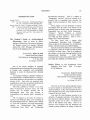
Show NOTES provenience should be carefully documented by a professional, if possible. A buried Paleo site would, of course, be extremely important since none are known in the state and if such a locale is suspected professionals should be called. Certainly no ground disturbing activities should be carried out at such a site. From an archaeological standpoint the cold- fact results of this project are simply two more dots on the map of Paleo travel in Utah. They merely reinforce the obvious: that these people were nomadic, built biodegradable shelters, and lost or broke their uniquely- fluted points in hunting or travel. ACKNOWLEDGMENTS My thanks to Lt. Colonel Brad Barnes who did the black and white drawings, and to Gail John Gill, who did the molding and casting of the points. My sincere thanks to Joel Janetski for providing a sense of direction to these amateur notes, an attention to objectivity and elimination of excess and redundant diagnostics of fluted point people. REFERENCES Copeland, James M., and Richard E. Fike 1988 Fluted Projectile Points in Utah. Utah Archaeology 1988 1( 1): 5- 28. SOME CALIBRATED RADIOCARBON DATES FROM UTAH COUNTY, UTAH Donald W. Forsyth, Brigham Young University, Department of Anthropology, 945 SWKT, Provo, Utah 84602 INTRODUCTION Over the last 45 years archaeologists at Brigham Young University have sporadically undertaken a number of excavations on the east side of Utah Lake in the region near the modem airport and in the southern portion of Utah Valley near Goshen, Utah. These excavations centered on the Hinckley Mounds, a group of low mounds on the property of G. M. Hinckley ( Figure I), an area previously tested by Julian Steward ( 1933) and Albert Reagan ( 1935). However, investigations in other sites in the vicinity, but not on the Hinckley property, such as Seamons Mound and the Smoking Pipe site, were also investigated. With the exception of Seamons Mound, all of these mounds proved to be single component sites occupied by the Fremont as indicated by standard Fremont artifact and feature configurations. Two sites near Goshen, Utah, Spotten Cave and Woodard Mound ( Figure 2) were also excavated. Woodard Mound was determined to be a Fremont site, while Spotten Cave exhibited usage from Archaic through modem times. The results of these excavations have only been partially reported, primarily in master's' theses ( Christensen 1947; Green 1961; Mock 1971; Richens 1983); however, a few preliminary reports or articles ( Green 1964; Forsyth 1984; 1986) have also been published. For this reason I have undertaken a r e analysis of the archaeological materials from these excavations in order to provide a synthesis of the work done there over the years and to bring more up to- date the data that have been published. Consequently I discovered that a number of potential CI4 samples were recovered from several of these sites, but had never been analyzed. Unfortunately, they had been stored under variable conditions in the Museum of Archaeology and Ethnology ( now the Museum of Peoples and Cultures). Some of them had been stored in cloth bags, others in paper bags, and still others carefully wrapped in aluminum foil. However, since there were few chronometric dates for these sites, I decided to take a number of the samples and send them to Beta Analytic Inc. for assay in order to try to establish a chronological framework for the sites on the basis of something other than cross- dating with other Fremont sites. The sites for which dates were obtained are 42Ut110 and 42Ut111 ( two of the Hinckley Mounds) 42Ut102 ( Woodard Mound), 42Ut150 ( Smoking Pipe), Spotten Cave ( 42Ut104), and 42Ut271 ( Seamons Mound). The results of the C14 analyses are given in Table 1. Calibration of radiocarbon ages is done to correct for the variation in the amount of atmospheric radiocarbon produced over time. Thus, it is necessary to calibrate the radiocarbon ages into calendar years using data collected by measuring the radiocarbon age of tree rings, whose calendar age could be determined by tree ring dating independently of C14. Using this UTAH ARCHAEOLOGY 1991 - L61f l . : 6SEE- I i.:: '.- : ES&~- I Table 1. Calibrated Dates for Some Previously Unpublished Radiocarbon Dates from Utah Valley Site ID Number Radiocarbon One Sigma Maximum- Minimum Two Sigma Maximum- Minimum Age of Calibrated Age Ranges of Calibrated Age Ranges Beta- 15349 Beta- 15350 Beta- 14 197" Beta- 9949 Beta- 14198 Beta- 14 199 Beta- 14200 Beta- 15351 Beta- 9950 Beta- 1420 1 Beta- 14202 Beta- 15352 Beta- 11515 Beta- 14203 A. D. 1022 ( 1035) 1166 A. D. 970 ( 1035) 1230 A. D. 657 ( 681) 781 A. D. 620 ( 681) 890 A. D. 1672 ( 1689,1732,1811,1926,1955) 1955 A. D. 1660 ( 1689,1732,1811,1926,1955) 1950 A. D. 1514 ( 1639) 1654 A. D. 1470 ( 1639) 1953 A. D. 1027 ( 1160) 1221 A. D. 1000 ( 1160) 1270 A. D. 979 ( 1018) 11 13 A. D. 890 ( 1018) 1180 A. D. 780 ( 891) 1000 A. D. 670 ( 891) 1040 A. D. 650 ( 685) 860 A. D. 567 ( 685) 970 A. D. 1221 ( 1262) 1277 A. D. 1160 ( 1262) 1290 A. D. 1012 ( 1030) 1160 A. D. 970 ( 1030) 1220 A. D. 880 ( 897) 986 A. D. 780 ( 897) 1020 A. D. 886 ( 960) 999 A. D. 780 ( 960) 1020 A. D. 1272 ( 1283) 1375 A. D. 1258 ( 1283) 1395 A. D. 780 ( 891) 1000 A. D. 670 ( 891) 1040 ' Woodard Mound 2Spotten Cave ' Hinckley Mounds ' Smoking Pipe *~ eamons Mound Zone III- Frernont ( see Modc 1971: 71- 81) Table 2. Calibrated Dates for Previously Published Radiocarbon Dates from Utah Valley Radiocarbon One Sigma Maximum- Minimum Two Sigma Maximum- Minimum Site ID Number Age of Calibrated Age Ranges of Calibrated Age Ranges 42Ut102' Beta- 6222 700k60 A. D. 1265 ( 1279) 1295 A. D. 1220 ( 1279) 1395 ( Richens 1983; Janetski 1990) Beta- 6223 Beta- 6224 1- 3821" 1484b I- 3362b I- 3363b 1- 3361' 1- 3364" I- 335gd I- 3359* Beta- 8786 Beta- 9232 Beta- 10642 Beta- 10643 Beta- 1064 1 Beta- 8787 Beta- 2235 1 Beta- 22353 Beta- 22354 670k50 Modern 12400f180 5580k120 46405~ 120 4200k 120 3660f 1 10 2110* 100 1310k90 730f90 360k50" 640k70 640+ 110 770& 80 860k90 890+ 50 4903~ 60" 570+ 90 2600f 100 A. D. 1275 ( 1285) 1379 [ beyond calibration limits] B. C. 4573 ( 4456,4417,4403) 4340 B. C. 3616 ( 3373) 3142 B. C. 2920 ( 2880,2798,2782) 261 1 B. C. 2199 ( 2037) 1890 B. C. 358 ( 160,138,124) 10 A. D. 647 ( 677) 786 A. D. 1225 ( 1272) 1295 A. D. 1452 ( 1486) 1633 A. D. 1277 ( 1295) 1398 A. D. 1270 ( 1295) 1410 A. D. 1207 ( 1262) 1281 A. D. 1034 ( 1182) 1262 A. D. 1039 ( 1163) 1217 A. D. 1403 ( 1427) 1446 A. D. 1287 ( 1398) 1431 B. C. 838 ( 801) 608 A. D. 1260 ( 1285) 1400 ( Richens 1983; Janetski 1990) ( Richens 1983) ( Mock 1971) B. C. 4720 ( 4456,4417,4403) 4 162 ( Mock 197 1) B. C. 3690 ( 3373) 2947 ( Mock 1971) B. C. 3094 ( 2880,2798,2782) 2470 ( Mock 1971) B. C. 2453 ( 2037) 1750 ( Mock 1971) B. C. 390 ( 160,138,124) A. D. 80 ( Mock 1971) A. D. 567 ( 677) 890 ( Mock 1971) A. D. 1057 ( 1272) 1400 ( Mock 1971) A. D. 1440 ( 1486) 1650 ( Janetski 1990) A. D. 1260 ( 1295) 1420 ( Janetski 1990) A. D. 1180 ( 1295) 1450 ( Janetski 1990) A. D. 1043 ( 1262) 1384 ( Janetski 1990) A. D. 1000 ( 1182) 1280 ( Janetski 1990) A. D. 1020 ( 1163) 1250 ( Janetski 1990) A. D. 1310 ( 1427) 1482 ( Janetski 1990) A. D. 1270 ( 1398) 1470 ( Janetski 1990) B. C. 977 ( 801) 410 ( Unreported) * Incorrectly reported in Janetski 1990 ' Woodard Mound ' Spotten Cave 3Smoking Pipe Site 4Heron Springs Site ' Provo stage of Lake Bonneville ( Mock 1971: 12) " Zone I of Spotten Cave- Archaic ( Mock 1971: 61) " Zone Il of Spotten Cave- Archaic ( Mock 1971: 66) dZone I11 of Spotten Cave- Fremont ( Mock 1971: 71) 88 UTAH ARCHAEOLOGY 1991 data, calibration curves for radiocarbon ages over the last 9,000 years have been constructed. Calibrated dates for the Utah County samples were obtained using the CALIB' program and Method A for calibrated radiocarbon age ranges ( Stuiver and Reimer 1986). Calibrated ages and ranges are reported in columns 4 and 5 of Table 1 by giving " the extremes of the 1 sigma or 2 sigma ranges with the calibrated ages between them in parentheses" ( Stuiver and Reimer n. d.: 7). Figures 1 and 2 show these dates in graphic form. In addition to the above dates, a number of radiocarbon dates for Utah Valley have been published in theses and other publications. The calibrations for some of those dates are given in Table 2 and shown graphically also in Figure 1 and Figure 2. NOTE 1. University of Washington Quaternary Isotope Lab Radiocarbon Calibration Program, 1987. REFERENCES CITED Christensen, Ross T. 1947 A Preliminary Report of Archaeological Investigations Near Utah Lake, Utah, 1946. Unpublished Master's thesis, Department of Anthropology, Brigham Young University, Provo. Forsyth, Donald W. 1984 Preliminary Report on Archeological Investigations at the Smoking Pipe Site ( 42 UT 150), Utah Valley, Utah- The 1983 and 1984 Janetski, Joel C. 1990 Wetlands in Utah Valley Prehistory. In Wetland Adaptations in the Great Basin, edited by Joel C. Janetski and David B. Madsen, pp. 233- 257. Museum of Peoples and Cultures, Occasional Papers 1. Brigham Young University, Provo. Mock, James M. 1971 Archaeology of Spotten Cave, Utah County, Cedral Utah. Unpublished Master's thesis, Department of Anthropology, Brigham Young University, Provo. Reagan, Albert B. 1935 Archaeological Report of Field Work Done in Utah in 1934- 35. Proceedings of the Utah Academy of Sciences, Arts and Letters 1250- 87 Richens, Lane D. 1983 Woodard Mound: Excavations at a Fremont Site in Goshen Valley, Utah County, Utah 1980- 1981. Unpublished Master's thesis, Department of Anthropology, Brigham Young University, Provo. Steward, Julian H. 1933 Early Inhabitants of Western Utah, Part 1: Mounds and House Types. Bulletin of the University of Utah 23( 7). Stuiver, Minze, and Paula J. Reimer 1986 A Computer Program for Radiocarbon Age Calibration. Radiocarbon 28( 2B): 1022- 1030. n. d. User's Guide to the Programs CALIB & DISPLAY 2.1. Ms. Quaternary Research Center, University of Washington, Seattle. ANTIQUITIES SECTION, DIVISION OF STATE HISTORY, LIST OF REPORTS WITH 1990 PROJECT NUMBERS Seasons. Museum of Peoples and Cultures Kevin T. Jones, Antiquities Section, Division of Technical Series 84- 92. Brigham Young University, Provo. State History, 300 Rio Grande, Salt Lake City, 1986 Post- Formative Ceramics in the Eastern Great Utah 84101- 1182 Basin: A Reappraisal of the Promontory Problem. Journal of California and Great Basin Anthropology. 83281- 284. INTRODUCTION Green, Dee F. 1961 Archaeological Investigations at the G. Hinckley All archaeological organizations holding an Farm Site, Utah County, Utah, 1956- 1960. antiquities permit issued by the Antiquities Section Unpublished Master's thesis, Department of and who carry out archaeological projects in the state Anthropology, Brigham Young University, are obliged to: ( 1) obtain a project number from the Provo. Antiquties Section and ( 2) submit a report on the 1964 The Hinckley Figurines as Indicators of the work done. Position of Utah Valley in the Sevier Culture. American Antiquity 30: 74- 80. |