| OCR Text |
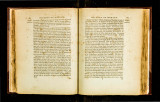
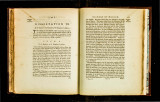
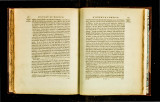
Show 433 DISSERT. Vll '-'"'""v--J II I S T 0 R Y ·o F M E X I C 0. birth of infants (n). Who would believe that they would have occafion for their Gods merely to guard their doors? Forculus was charged with the door poft , Carna with the hinge, and Lamentinus w.i.tlil the thre01old. "Ita," cxd ims St. Auguftiu, H ita non poterat, For- 1' culus iimul fores, ct cardin em limcnq ue fervare." So wretched was . the power of the gods in the judgmc.:nt of the Romans l Even the names by which {ome of them were called a1ew the pitiful conceptiol'l cntcrtnincd of them by tht:ir adorers. What names more unwor.thy o~ divinity than thofe of J up'iter Pifl:or, Venus Calva, Pecunja Caca, 3ubigus and loacina ? Who would ever think that a ftatue formed I by Tatius in the prin ipal fink of Rome was to become a goddefs with the name of Cloacina? This was certainly a mockery of their religion, and rendering the very gods whom they adored, vile and con temptible. But the Greeks and Romans a1ewcd the opinion they had of their gods in nothing more ftrongly than the vices which they afcribed to them. Their whole mythology is a long feries of crimes : the whole Jile of their gods was compofed of enmities, revenge, inceft, adultery, and other bate paffions, capable of defaming the mofi degenc.:rate of men. Jove, that omnipotent father, th:'.t beginning of all things, that king of men and of gods as the poets call him, appears fometimes difgui!C::d as a man to treat with Akumena, fomctimcs as a fatyr to enjoy . Antiope, fometimes as a bull to ravilh Europa, fometimes as a fwa11 to abufe Leda, and fometimes in a lhower of gold to corrupt Danae, :tnd at other times afiumes other forms to accompli!h his guilty deJigns. In the mean time the great goddefs Juno, mad with jealoufy, thinks of nothing but having revenge of her diaoyal hufuand. Of the iame !l:amp were the other· immortal gods ; efpeQially the dii majores, or felect gods, as they were called by them; felec:t, fays St. Auguftin, (n) Tho. go?d~fs OpiJ was charged with giving nffi!lance to the child which was deliveriug, and to re-ce1v~ 1t tn her lap, Y'at icmuu to open its mouth to cry, Lwm1a to raife it from the .t:rt:und, Cu'~' na to watch the cr~!dle, the Cm·mcllleJ to announce its de!liny, ]<ortuna to favour 1t 111 all accidents, Rumina to introduce the nipple of the mothc1·'s hreail: into the mouth of the child, Pot~1111 .took care of its drink, Educa of i1s pap, Favc11tia wiped its flubbel'ings, Yc11ifia had to chenlh Its hopes, Volupia to attend its plenfures A,.nzoria to watch its motions Stimula to mak e .I t 1.1 1'0l '1 ve, Stre11u1 to make .I t courageous N11m' cria" ' to teach it m1mbersl Camcna ' tinging C , . J I I o11jo to g1:~ It counf~l, Senica refolution, Juventa had charge of its youth, and Fomma Bar· !lata wa~ CIIJOIIled that amport:ult office of making hair grow upon adult• for H I S T 0 R Y 0 F M E X I C 0. for the fuperiority of their vices, not for the excellence of their virtncs. But what good examples could thofe nations imitate in the gods, who, while they boa«:ed to teach virtue to men, had nothing confecrated . but their vices ? What merits obtained deification to Leena among the Greeks, nnd to Lnpa Faula and .Faula among the Romans, but that of having been famous courtezans? From thence fprung various deities, charged with the mofl: infamons and fhameful employments. But what lhall we £1y of the Egyptians, who were the firft authors of fupcrfl:ition (o).? They not only paid worilii~ to ~he ox, dog, ca.t, crocodile, hawk, and other fuch animals, but ltkewtfe to leeks, omons, and garlick, which was the occafion of that fatyrical faying of J uven::tl, 0 .frmftas gentes quibus. ht~c n.qjcu~tur in hortis. Numina! .and, not contented with that, they detfied hkew1fe the moft mdccent tlungs .. That cuftom of marrying with their fi!l:ers was imagined to be author-ized by the example of their gods. . . . . The Mexicans entertained very different 1deas of thetr detttes. We do not find in all their mythology, any traces of that excefs of depravity which charaCl:erifed the gods of other nations. The Mexicans h.o • noured the virtues not the vices of their divinitcs ; the bravery of Hultzilopochtli, the beneficence of Centeotl, Tupotlatman, and Opochtli, and others, and the chafhty, juftice, and . prudence of ~etzalcoat]. Although they feigned deities of both [exes, they did not 1~arry them, or believe them capable of thofe ob~ cne pleafures whtch were fo ~ommon among the Greeks and Romans. The Mexicans i~1agined they had a !l:rong averfion to every fpecies of .vice~ ~herefore thetr worlhip was calculated to appeafe the a.nger of tl~e1r dettles, provoked by. d~e guilt of men, and to procure their protechou by repentance and teh-gious ref pec:t. · . . The rites obferved by thofe natio.ns were cnprely agreeable to the idea they had of their gods. Superftition was con~mon t~ them all, but that of the Mexicans was lefs, and not fo pucnle; this tl~e con~parifon of their auguries will be fuilicient to {hew. Th~ MexJca.n dl· viners obferved the figns or characters of the days concernlll_g.ma_rrmges, journeys, &c. as the European aftrologers obferved the polltlOll of tJ.le (o) Nos in Tc-mpla wam Romana acce~imli S lfin. Semicanefquc Dcos ct Si!ha moventwhl tum. Llli'lltllll• :!l:ars, l . 439 DISSERT. VIII. ~ |