| OCR Text |
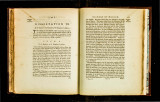
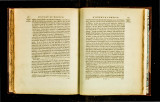
Show 344 DISSEl T. v. '--v--' H I S T 0 R Y 0 F M E X I C 0. jumy c{lecm d by his famous patron Ant.. de ~cbri~a, the refi:orcr of let ters in Spai n. This renown d prelate m hts Lattn Letter to pope Paul III. written in 1536, after ten years continual commerce with, and ob1crvation of the Americans, among many prai{cs whi h he bcil: ows on thcir difpoGtions, and the gifts of their minds, he extols their ge niu s, and in fomc degree raife it above that of h is countrymen, as may appear from the paffitge of hi ' letter which we have fubjoincd. here bdow (s). What perfon is there who would n0t give greater fa ith to thofc three bifhops, who, beftdes their probity, their 1 arnillg, and ch. ratter, had long <.:ornmerce with the 1\.tm:ricans, than to other authors who eithet· never h\W the Americans, or viewed them without refleCtion , or paid irnpropcr and unjufi: deference to the inlorm, tions of ignorant, prtjudiced, or itltet·cil:cd men? But laflly, if M. de Paw rc&tfes the depofitions of theic three witndT<.: s, however rclpctl:ahl , becaufe they were ecclelia!tics, to whom he thinks weakne('i of mind attached, he nnnot, bnt fubmit to tit• judgment of the famous bifhop of Allgelopoli, Pahtfox. Mr. de Paw, though a PruOlan and a philofophcr, calls that prelate the vemrable j ervant qf God. If he gives fo much f~1ith to this venerable.Jervant if God in what he wrote againft the Jcfuits in his own caufe, why not believe him in what he has written in favour of the Ameri ... cans ! Let him read the work of this prelate, compo(ed in order to dcmonftrate the difpofitioll, genius, and virtues of the Indians. Notwithfl:anding the implacable hat red' which M. d~:: Paw bears to the ccdeiiafi:ics of the Roman church, and to the Jcfuits in particular, he praifcs the Natural and Moral Hi.fl:ory of Aco.fl:a, and calls it very jufi:ly an excel!mt ~votE This judicious, impartial, :md very learned Spaniard, who faw and obferved with his own eyes the Americans in Pew as well as Mexico, employs the whole fixth book of this c:-:a! lmt work in dcmonilrating the good fenfe of the Americans by (1) " Nunc vero de lwrum fr gillatim hominum ingcnio, quos vidimus ab hiuc dcccnuio, " quo ego in Patria convcflltua eotum potui perfpiccrc mores ac ingcnia pcrfccutari, tcll ificans · "coram rc, Beautiffimc Pntcr CJi1i hrilli in tcn·is Vicarium ngis quod vidi gucd audivi ct mn· "nus noflr:\! contrct'bvenmt de his 1wogcnitis abc clcfia per qualccumquc mini!l:crium meum '' in vcrbo vitm q\1od finguln lingulis rcfcrendo, id ofr paribus parin , ration is oprim:l! c01'!1potcs "funt et inrcgri fenrl1 ~ ;1c capiris fed inf11pcr nofl: ratib us p11cri ifiorum ct vi!:,"'rc fpiritus ct lcnfu· "um vivacitatc dtxteriorc in omni ngibili ct int lligihli p•·t-eHantiorcs ·epcri unwr.", all 5 H I S T 0 R Y 0 F M E X I C o. an explanation of their nncient~overnmcnt, their Jaws, their hiil:ories in paintings and knots,• calendars, &c. To be informed of his opinion on this fubjcet, it wm be fufficient to re(;ld the firil: chapter of that book. We requeft M. de Paw, as well as our readers, to read it attentively, as there are matters in. it Worthy of being known. M. de Paw will difcover there the origin of the error into which he, and many E uropeans, have fallen, and will perc ive the great difference there is between vi~wing things while the :light is dimmed by paffion and prejudices, and examining them with impartiality and cool judgment. M. de Paw thinks the Americans are befrial; Acoil:a, on the other hand, reputes thofe perfons weak and prefumptuou$ who think ·them fo. M. de Paw fays, that the moft ac.ute Americans were inferior in indllfiry and hlgacity to the rudeft nations of the old continei':t.t. Acofta, extols the civil government of the Mexicans above many -republics of Europe. M. de Paw finds, in the moral and political conduCt of the Americans, nothing but barbarity, extravagance, and brutality; and Acofta finds there, laws that are admirable and worthy of being preferved for ever. To which of thefe two authors our greatefl: faith is due, the impartial reader will decide. We cannot here avoid the infertion of a ·paifage of the Philofophical Refearches, in which the author difcovers his turn for defamation as well as enmity to truth. " At firft, he fays, the American were not bccc lieved to be men, but rather f.1tyra, or large apes, which might be " murdered without remorfe or reproach. At laft, in order to add in "' fult to the oppreffion of thofe times, a pope made. an odginal bull, ·cc in which he declared, that being deiirous ;of founding bilhopri'cks " in the riche!l: countries of America, it pleafed him, and the Hp~y " Spirit, to acknowledge the Americans to be true men : in fo far, that " :witho,ut this dccifion of an Italian, the inhabit:mts of the new wor~d " wot1ld have appeared, even ~t this day, to the eyes of the faithful,, a " race of equivocal men. There is no example of fuch a decilio-9, cc Lince this glbbe has been inhabited by men and apes." We lhGmld rejoice that there was no other example in the world of fuch .calurrjnies and infolence a~ thofe of M. de Paw, but that we may put the I complexion of thi's pafiage in its true light, we !hall giv~ a copx 9f that 1 d~ci6orl)• after ha.ving expl~ined the ,occafion of .i~. , . . 1 r ·• • VoL. 'II. · Y y SQme I ... 345 DJSSERT• v. "--v--1 |