| OCR Text |
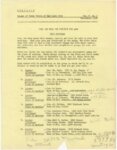
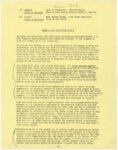
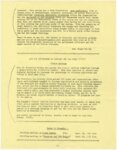
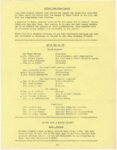
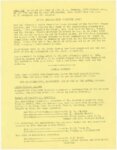
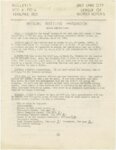
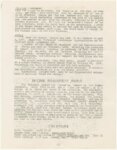
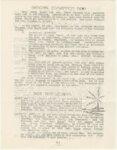
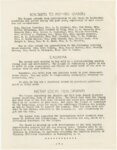
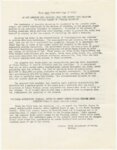
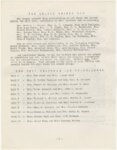
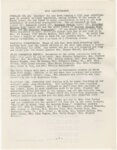
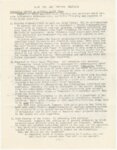
Show (Each unit furnished copy of bill) SEC. 55-0-59, illAH GODE ANNDrED 1953 RELATING TO SPl.CIAL PLACES OF JUVENILE DE1'ENT ION AN ACT AMENDING The inadequac y of juvenile d~tention is considere d by the juvenile court judges, and others intereste d in the welfare of children, as th~ greatest single problem in the effective treatment of juveniles . Letention is the process of holding juveniles , while awaiting court hearing, either to protect the child from himself or others, or for the purpose of evaluatin g the child's behavior. Existing law makes it the rosponsi bility of "municip alities and counties" to provide detention facilitie s. The municipa lities and counties, for the most part, have not met this responsi bility; primarily , because it is unworkable for other than two or three of the larger cities and counties in the state to separatel y provide facilitie s. The unfortuna te result has been a lack of proper detention facilitie s, resulting in young boys and girls being placed in jails and lockups in violation of law. These places are often dirty, bug-infes ted, and with immoral quips written upon the walls. While these young people are, genera]v., physicall y separated from hardened criminals ; neverthel ess, they often are able to freely converse with such persons to their detrimen t. The proposed bill would place the responsib ility upon the State Department of Public Welfare to provide detention care for juveniles . It is anticipat ed that six or seven secure units, strategic ally located throughou t the state, would adequatel y meet the problem. The cost of operation would be approxim ately $125,000 to $140,000 per year, exclusive of capital investmen ts. It is proposed that approxim ately $75,000 in fines, now going to the counties, be shifted to the state to partially ease this burden. The aforement ioned estimate of cost does not include physical facilitie s. The proposed bill provides that counties shall continue responsi bility _.f'Ot- · detention for a maximum period or two years with a provision that the State ·.-, Department of Public Welfare assume responsib ility sooner when ready to carry on the program. It is thought that it will take a period of time to properly plan the commencement and operation of the program. TWO BIIJ.S AtJrHORIZINC JL'VENILE COURTS TO COMHIT FEEBLE-MINDEI) ...iERSQM;_,,~ • EIGHTEEN YEARS TO STATE TRAINING SCHOOL - .. • These two bills have one objective , _i.e., to permit the Juvenile Courts to commit feeble-mi nded persons, under eighteen years of age, to the State Training School. Often such persons appear in Juvenile Court for delinquen cy and it is sometimes wise to commit such children to the Training School. Under present law, the Juvenile Court cannot commit to the Training School. These bills would accomplis h this. The commitment power of the District Court would not be changed. Either court would have jurisdict ion to commit feeble~mi nded persons under eighteen years of age to the school. ~ource: State Department of Public Welfare |