| OCR Text |
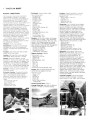
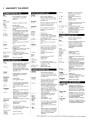
Show 4 FACTS IN BRIEF Autumn 1990 Profile The University of Utah is the major public higher education institution in the region stretching from the Rockies to the Sierras, an area covering more than 10 percent of the continental U.S. with a population of more than three million. As such, the University is an important upper-division and graduate collector institution, not only for the nine-school Utah System of Higher Education, but for more than a dozen colleges in contiguous states. The people of the region look to the University for outreach services in health care, public broadcasting, public education, culture, business development, mining, environmental preservation, regional history, public affairs and virtually all academic specialties. The University seeks to enhance its regional stature by remaining conscious of the character of. and tailoring programs to serve, this vast portion of America. Affiliation. Public, state-assisted. Classification. Classified by the Carnegie Foundation as one of 50 comprehensive research universities from among 3,400 U.S. schools. Founded. 1850, three years after pioneers settled the Salt Lake Valley. Location. Salt Lake City (county seat and state capital). Metro population: 715.000, Climate. Distinct four seasons Annual precipitation: 15.31 inches. Sunny days: 69%. January average daily high, 37 degrees; low, 20 degrees July; average high, 93 degrees; low, 62. Snow: 18 days with accumulation of 1 inch or more Local ski resorts average 450 inches during the November to May season. Calendar. Traditional quarter calendar, with full summer quarter. University Libraries. Combined University Libraries, among three research libraries in Utah J. Willard Marriott Library (central collection), mathematics branch. Spencer S. Eccles Health Sciences Library and Law Library Bound Volumes 2,041.681 Documents 627,479 Maps: 150.600 Microforms 2,521,619 Periodical Titles: 18,332 Enrollment. Autumn Quarter 1990 Total Enrollment 24,311 Architecture: 201 Business 3,322 Education 1.261 Engineering: 2,442 Fine Arts 1,331 Health. 1,151 Humanities: 2,605 Law 387 Medicine 790 Mines and Earth Sciences: 347 Nursing 691 Pharmacy 341 Science: 1,568 Social/Behavioral Science: 3.051 Social Work: 177 Nonmatriculated 1,477 Undeclared Major: 3.169 Students. All 29 Utah counties, all 50 states and 90 foreign countries. 1.427 international students. Of total enrollment, 56% men, 44% women. 1.016 single students live in three residence halls, 1.094 campus apartments serve students, faculty and staff. Average ACT score of entering freshmen: 23.5 Also: Residents: 21.525 (89%) Nonresidents: 2.786 (11%) Graduate: 4.404 (18%) Undergraduate 19,907 (82%) Degrees Awarded. 1989-90: Total Graduate: 1.213 Medicine and Law: 219 Doctoral: 202 Master's: 792 Total Baccalaureate: 2,830 B.A.: 717 B.F.A.: 85 B.Mus.: 17 B.S.: 1,993 BUS.: 18 Total Graduate and Baccalaureate 4,043 Faculty. 98% of regular faculty have the highest terminal degree in the field. Total Faculty: 3,376 Regular: 1,310 Visiting: 57 Research. 82 Clinical 808 Emeriti: 246 Ad|unct, Teaching Fellows. Assistants 883 Student-Faculty Ratio. 15.6 to 1. Average Class Size. 29.6 (100- to 500-level classes); 11.4 (600- to 700-level classes). Facilities. Campus consists of combined University, Health Sciences Center and Research Park. Size ol Campus 1 425 acres Buildings: 227 Classrooms: 197 Instructional Labs 43 Research Labs 1,359 Computing. The University has the largest computing capacity in Utah and is a major servicer of industry and higher education; distinctive as one of 15 gateways to NSFNET, providing access for Utah, Idaho and Arizona schools as well as for government and industry BITNET and WESTNET provide communication throughout the U S.. Europe and Japan Utah Supercomputing Institute- comprised of University of Utah. Brigham Young University. Utah State University and IBM users-installed an IBM 3090 Model 600S supercomputer at the University in 1989 Supercomputers 1 Mainframes 25 Minicomputer Networks 75 Workstation Computers: 125 Microcomputers: 8,000 Broadband Networked Computers: 2,000 Microcomputers tor Free Student Use 800 Recreation. Einar Nielsen Field House 60,000- square-foot facility with a 211-meter track, 5 tennis courts. 2 weight rooms, cardiovascular fitness equipment, 13 handball/racketball/squash courts. |acuzzis, saunas and equipment rentals. Health. Physical Education and Recreation Complex: 188,000 square-foot complex with 1 diving and 2 swimming pools. 8 basketball courts (4 gymnasiums with 28 hoops), 6 racketball courts, 2 weight rooms, fitness research labs, offices and classrooms. Other facilities: 9-hole golf course, 3 outdoor playing fields, 22 outdoor tennis courts, indoor tennis stadium with 8 courts, 10-lane bowling alley, pocket billiards, pinball and video games, big-screen TV and movie theatre. University Hospital. One of 64 hospitals profiled in The Best Hospitals in America (Henry Holt & Co . NY. 1987). with 372 bedsFACTS IN BRIEF 5 Student Budget. 1991-92 estimate (subject to change) lor students living and eating in campus residence halls (three quarters with 15-hour course load): Resident Nonresident Tuition/Fees . . . . . $1,982 $5,619 Room/Board.......... 4,136 4,136 Books/Supplies.............. 612 612 Travel................................ 450 450 Miscellaneous , 1.142 1,142 $8,322 $11,959 Financial Assistance. More than $36.2 million annually in scholarships, grants, loans and work-study jobs. Average award per undergraduate: $1,800; 65% of all students received some form of aid Research. In 1989-90, received $110.9 million in research and student aid funding from all external sources; 90% ($100.2 million) was used for research or for graduate student training. The remainder ($10.7 million) went to undergraduate financial aid. Educational Distinction. The following programs are unique to the University of Utah: Architecture. Only graduate degree program (required for professional licensure) in Utah, Wyoming and Nevada, Business. Only Ph D. in Business Administration in Utah. Education. Utah's only graduate program in multicultural education, Engineering. Intermountain West's only B S. in computer engineering. Fine Arts. One of the nation's few programs in art therapy (M.A.); Utah's only state school offering undergraduate and graduate programs in ballet; one of only three schools nationwide to have a facility exclusively for dance instruction and performance. Health. Only master's in exercise and sport science with emphasis in coaching and one of few programs nationally that emphasizes sport sciences in coaching; only state-supported school in Intermountain West with recreation and leisure program accredited by NFiPA/AALR and one of only 74 schools nationally. State's only doctoral program in recreation and leisure with emphasis in recreational therapy. Only nationally accredited Ph.D. in communication disorders (one of nation's oldest such programs). Humanities. Utah's only programs in linguistics. Middle East studies and Japanese studies. Law. One of the nation's first and Utah's only LL.M. in energy law. Medicine. Only medical school in Utah, Wyoming, Idaho and Montana, Mines and Earth Sciences. Utah's only undergraduate and graduate programs in geological engineering, metallurgical engineering, mining engineering and meteorology; nation's only graduate degree in fuels engineering; among the nation's best federally funded, college-based research programs in earth sciences and minerals engineering; Utah's only seismograph stations. Nursing. Utah's only doctoral and postdoctoral nursing programs. Graduate specialties in nurse- midwifery, nursing informatics, oncology, neonatal nursing, teaching nursing and nursing administration. Pharmacy. Only undergraduate and graduate program in Utah. Science. Intermountain West's only combined B.S -M.S. (5-year) degree in biology with emphasis in molecular biology/genetics engineering; M.S. degree in instrumentation physics; and Ph D programs in molecular biology and biological chemistry Utah's only Ph D in chemical physics, only mathematics B S. degree program that emphasizes scientific computing/industrial mathematics, and only M S. degree tailored specifically for secondary school science teachers. Chemistry graduate programs consistently rank in the American Chemical Society's top 20 schools nationwide. Social and Behavioral Science. Utah's only graduate program in biological or medical anthropology; graduate program in economics with emphases in neo- classical and neo- Marxist approaches (one of less than 10 nationally); master's program in family ecology; undergraduate program in urban planning; state- supported undergraduate and graduate certificates in public administration; and M P A. (Master of Public Administration) degree |