| OCR Text |
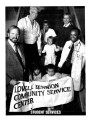
Show SEE PAGE 7 FOR ABBREVIATIONS LIST STUDENT SERVICES 43 ACADEMIC SUPPORT SERVICES Student Support Services Project/ Educational Opportunity Programs 2075 Annex Building 581-7186 The Student Support Services Project is federally funded to help students with low incomes or those with physical or learning disabilities develop the academic skills necessary to succeed at the University. Students must be accepted into the program to take advantage of its services. All services are free to eligible students. Special Classes. The program offers college-preparatory classes and workshops in reading, math, study, and college-survival skills. Some credit courses are available. Tutoring. Tutoring is offered in writing, mathematics, reading, and study skills. Tutorial assistance is also available for writing term papers in other subject areas. Advising. Eligible students receive assistance with course selection, registration, and ■ financial aid applications. Advisers also help identify other campus resources to enable students to achieve their academic objectives. Testing. Diagnostic testing is available to identify the need for academic skill development. ALCOHOL AND DRUG EDUCATION SERVICES Alcohol and Drug Education Center 328 SSB 581-7776 The Alcohol and Drug Education Center (ADEC) was established to increase awareness among students, faculty, and staff of the influence, use. and abuse of drugs and alcohol. Substance abuse prevention programs emphasize ways to maintain a satisfying academic, professional, and personal lifestyle. To this end, the center provides the following services: Confidential Assessment and Referral. Provided for students, faculty, or staff who feel that alcohol or other drugs negatively impact their lives. Includes referral to appropriate community resources for counseling and/or treatment. This service is provided through the University Counseling Center. Presentations. ADEC presentations are tailored to specific requests from classes, organizations, and groups needing information about skill development and/or drug-related topics. Contact ADEC for a list of potential Presentations. Workshops. Weekly workshops offered to the University community examine problems underlying substance use and abuse, and how they can be prevented. Topics include developing and maintaining healthy, intimate relationships; what it means to be an adult child of an alcoholic parent; alternative recreational choices to drug use; stress rhanagement, and other pertinent topics. Training. Students, faculty, and staff can be trained to assess substance abuse and to use intervention methods designed to meet the needs of each group. Alcohol and Drug Awareness Week. Events include speakers, recreation, and education related to drug awareness. The Health Fair is sponsored yearly in conjunction with the Student Health Advisory Committee. Team of Peer Support (TOPS). Students trained in drug and alcohol-related issues are available in the center to listen, provide information, and, when appropriate, to extend referrals to their student peers. TOPS also presents workshops and coordinates alternate-choice activities. Library. Books, articles, audiotapes, videotapes, and research and other drug-related educational materials can be read at the center or checked out as needed. ALUMNI SERVICES University of Utah Alumni Association 155 South Central Campus Drive 581-6995 The University of Utah Alumni Association (UUAA) office is located in a beautiful campus facility constructed entirely with donated funds. UUAA oversees the Student Alumni Association, Young Alumni Association, Emeritus Alumni Association, the Beehive Honor Society, and chapters throughout the nation and in some foreign countries. The Association sponsors homecoming, reunions, community-relations projects, student recruiting, and Founders Day and also co-sponsors Continuum magazine annually for over 170,000 alumni and quarterly for its members. UUAA provides additional benefits for dues-paying members. Alumni and students are invited to call or visit the Alumni House for further information. BOOKSTORES University Bookstore Main Campus 581-6326 Health Sciences Bookstore Building 528 (Health Sciences Center) 581-8049 Gift Shop Utah Museum of Natural History 581-5259 The University Bookstore, one of the largest college bookstores in the United States, is a convenient campus source for textbooks, general books, educational supplies, and much more. The main store is located southwest of the Olpin Union and northwest of the Marriott Library. The bookstore carries over 35,000 general reading titles, including an extensive inventory in professional fields. Special orders for items not in stock are always welcome. There is also a wide variety of film, calculators, office, school, art and engineering supplies. The computer sales department offers several lines of personal computers, peripherals, and software at educational prices to qualified buyers. The Crimson Corner specializes in University insignia apparel and souvenirs. Paylot parking is located south of the main store. (A validation may be obtained with a purchase of $3 or more.) Medical books and health sciences related inventories can be found in the Health Sciences Bookstore, located south of the University Medical Center in Building 528. The Museum of Natural History Gift Shop carries specialized merchandise related to museum exhibits, such as mineral and ore samples, fossils, educational books and toys, jewelry, posters. Native American crafts and petroglyph reproductions. COUNSELING SERVICES University Counseling Center 426 Student Services Building 581-6826 The University Counseling Center is staffed by professionals from Counseling and Clinical Psychology, Clinical Social Work, and Psychiatry. Services are available to students, faculty, and staff. Please call for an appointment. The Counseling Center provides services in the following areas: Career Development. For those interested in exploring vocational possibilities and developing educational/career plans. Available resources include Career Development Workshops, credit-bearing classes, and individual counseling. Personal Counseling. Personal concerns can often interfere with academic and professional effectiveness. This service is provided to assist those who want to increase their selfunderstanding, solve personal problems, or develop relationship skills. Individual, couple, and group counseling are available, as well as classes and self-development workshops that foster specific skills. Learning Assistance Programs. For students who want to increase their academic effectiveness, a credit class, Learning Skills (ED PS 260), is offered. In addition, the Supplemental Instruction Program offers study sessions in selected freshman courses (look for note #78 next to courses in the current Class Schedule). Workshops on study skills are also available upon request. Marriage, Family, and Premarital Counseling. For couples, parents, families, and individuals who want to work on solving family and relationship problems and/or to develop more effective communication skills and patterns. Outreach and Consultation. For any campus department, agency, group, or organization whose general goal is eliminating institutional barriers to student growth and facilitating the learning goals of the University. Consultation may focus on personal concerns (e.g., stress), interpersonal concerns (e.g., communication skills), and/or organizational concerns (e.g., problem assessment). Testing Services. For individuals interested in obtaining objective information about their interests, abilities, and personal characteristics44 STUDENT SERVICES in conjunction with other counseling services. University and national group tests (ACT, CLEP, and admission tests for professional and graduate programs) are also administered. Crisis Intervention. Crisis assistance is offered during the University working day. After 5 p.m., crisis assistance is available through the University Hospital Emergency Department. University Tutoring Center. For those interested in improving their performance in particular subjects, tutorial assistance is available for a minimal fee through the University Tutoring Center, 330 Student Services Building. Classes for Credit. In cooperation with the Department of Educational Psychology, credit courses in Learning Skills (Educational Psychology 260), Career and Life Planning (Educational Psychology 261), and Exploring Self (Educational Psychology 262) are staffed each quarter. See Counseling Services in the current quarter Class Schedule for details. The University Counseling Center is accredited by the International Association of Counseling Services, and is fully committed to policies of equal opportunity and nondiscrimination. Persons with disabilities are invited to request appropriate accommodations. DISABLED STUDENT SERVICES Center for Disabled Student Services 160 Olpin Union 581 -5020 (Voice or TDD) The center provides resources and support services for students with documented physical or learning disabilities. These services allow students with disabilities maximum independence while providing the accessibility necessary for them to have a successful university experience. Stop by or call the center for a campus map designating accessible buildings, walkways, and parking lots. Services include the following-. Orientation. Information and assistance is available for campus and program accessibility, classroom relocation, admission and registration procedures, accessible parking and housing, and financial assistance. Equipment. Adaptive equipment is available for on-campus use and on a temporary-loan basis. Support Services. The center arranges for readers, scribes, tutors, and interpreters for the deaf. Learning Disabilities Program. Counselors provide students with learning disabilities with services and resources specifically designed to meet their educational needs. Documentation of a learning disability is required for this program. Awareness. Information and workshops about disabilities are provided to increase knowledge and understanding among faculty, staff, and students. Rehabilitation Services. Students may contact the center for information about services offered by the Utah State Office of Rehabilitation. ETHNIC STUDENT SERVICES Center for Ethnic Student Affairs 318 Olpin Union 581-8151 The Center for Ethnic Student Affairs ensures that minority (African American, American Indian, Asian-American, and Hispanic), non-traditional, and educationally disadvantaged students have the opportunity to enjoy the benefits of a successful university education. To achieve this goal, the center provides the following services designed to help students adjust to campus life: Individual Academic Planning. Assistance in developing an individualized academic plan to include classes that increase basic academic skills, fulfill Liberal Education requirements, and complete a chosen major. Class Scheduling. Quarterly assistance to help students select appropriate courses and register for a balanced set of classes. Career Exploration. Individualized assistance to explore career opportunities; identify personal interests, talents and skills; and choose an educational major. Personal Counseling. Professional counseling to assist students with personal concerns and to promote personal growth. Time Management. Time scheduling to ensure that school work is accomplished with time also available for work and personal activities. Surcharge Payment. Fees for tutoring services paid for students who are classified as both economically disadvantaged and residents of the state of Utah. Qualifying criteria verified through the Office of Financial Aid. Coordination of Services. Close coordination with all student agencies on campus and various graduate programs to ensure that students benefit from available University of Utah opportunities. HEALTH INSURANCE Student Health Service University Wasatch Clinics Building 555 Foothill Boulevard 581-6431 Health Insurance Requirement. The University of Utah has instituted a program requiring students to have and maintain Health Insurance coverage. This requirement will be phased in over a three-year period becoming effective to different student groups according to the schedule below. Graduate students Autumn 1994 New and Transfer students Autumn 1995 All students Autumn 1996 For Autumn Quarter 1994, matriculated graduate students registered for three or more credit hours must either (1) enroll in the University sponsored student insurance plan or (2) complete and return the Insurance Action Form to the Student Health Service (555 Foothill Boulevard, Salt Lake City, UT 84112). On the form, students provide the required information verifying that they have other health insurance which will cover them for the entire academic year. One of these two actions must take place by the second Friday of the quarter. Graduate students beginning in any quarter besides autumn, must complete and return the Insurance Action Form by the second Friday of the quarter they begin and each subsequent autumn of every academic year. Students are not required to purchase the University sponsored Student Health Insurance plan. However, if a student chooses not to purchase the University sponsored student insurance plan and fails to return a completed Insurance Action Form (including signature) by the established deadline, a hold will be placed on the student's registration. The deadlines for returning these forms and the registration hold dates are listed below. Term Deadline Hold takes effect Autumn 1994 October 7. 1994 November 1, 1994 Winter 1995 January 14, 1995 February 1, 1995 Spring 1995 April 8, 1995 May 10, 1995 Summer 1995 July 1, 1995 July 20, 1995 Note: Students applying for financial aid should include the cost of insurance with their other expenses on their student loan application forms. By doing so, students' insurance expense is included in the determination of their unmet financial need. Questions regarding the compliance requirements should be directed to the Student Health Insurance Coordinator, (801) 585-6949. HEALTH SERVICES Student Health Service University Wasatch Clinics Building, Level 1 555 Foothill Boulevard 581-6431 The Student Health Service provides low-cost, quality primary medical care to all University students and their dependent families. Services. Services include professional care in family practice, pediatrics, internal medicine, gynecology, general surgery, and orthopedics; diagnosis and treatment of sicknesses and injuries including colds and flu, urinary-tract infections, sexually transmitted diseases, skin problems, and children's diseases; a women's clinic providing gynecological, family-planning, and other special health services; a health-maintenance program of routine physical examinations, and immunizations for the prevention and control of communicable diseases, including preparation for overseas travel; well-child care and parent education in child development and preventive health care; on-site X-ray, laboratory, and pharmacy services; allergy desensitizations when referred by an allergist; confidential HIV antibody testing and counseling; nutritional counseling for weight control, special dietary conditions, eating disorders, and other related conditions; health education information and counseling;SEE PAGE 7 FOR ABBREVIATIONS LIST STUDENT SERVICES 45 disease prevention and health promotion; and referrals for additional specialty consultation, obstetrical care, or diagnostic tests as appropriate. Fees. Fees are charged for most services; the Student Health Service fee schedules are, however, considerably lower than elsewhere. Payment is requested at the time of service. Mastercard and Visa are accepted for your convenience. Insurance. Insurance is not required to use the Student Health Service, but students with the University Student Health Insurance Plan °nly pay a $10 co-payment for covered services. Other selected insurance plans may be billed for your convenience. Appointments. The Student Health Service works on an appointment basis in order to utilize both patient and provider time most effectively. Appointments may be made by calling 581-6431 during regular office hours. Hours. The Student Health Service is open Monday through Friday, except on official University holidays, during the following hours: Office Providers Laboratory 8:00 a.m.-12:00 p.m. 1:00 p.m.-5:00 p.m. 9.00 a.m.-11:30 p.m. 1:30 p.m.-4:30 p.m. 8:30 a.m.-11:30 a.m. 1:00 p.m.-4:00 p.m. Emergency Care. Emergency care for treatment of injuries or acute life-threatening 'Mness is available 24 hours a day at the University Hospital Emergency Department or at other local emergency rooms. Proof of Immunity Requirement (PIR). The University of Utah requires proof of immunity 'or new and transfer students due to the resurgence of measles, mumps, and rubella 'nfections on college campuses. As recommended by the American College Health Association, the federal Centers for Disease Control and Prevention (CDC) and the Utah State Health Department, students must have evidence of immunity to or appropriate vaccinations against measles, mumps, and rubella. All new and transfer students born after December 31,1956 are required to submit Proof of immunity to the Student Health Service. Instructions and forms will be mailed to every new and transfer student approximately one week after admission to the University and must be returned to the Student Health Service, University Wasatch Clinics Building, Level 1, 555 Foothill Blvd., Salt Lake City, UT 84112. To avoid a registration hold, the PIR forms must be returned according to the following schedule: Quarter Autumn Winter Spring Summer PIR January 14. 1995 April 7,1995 July 7, 1995 October 6, 1995 Registration Hold Spring 1995 Summer 1995 Autumn 1995 Winter 1995 Questions regarding compliance requirements may be directed to the Student Health Service Immunization Program Assistant, (801) 585-6009. HOUSING The University is committed to making the on-campus residential experience an important part of education. Professional and student staff carry out this commitment through a concept of responsible freedom and encourage residents to participate in the many programs associated with the residential experience. Residence Halls Office of Residential Living Van Cott Hall 581-6611 Austin Hall. Austin Hall accommodates approximately 450 students in three wings of 150 each. Austin Hall contains the largest proportion of single rooms of any hall. Each floor has a furnished central lounge for social functions as well as a main central lounge. Men's graduate housing is located in a separate wing of Austin Hall and is available for serious students who are at least 21 years old. The area accommodates approximately 150 persons and is bound by all policies and procedures pertaining to residence-halls living, including a 24-hour-a-day, seven-day-a-week quiet policy. Austin Hall is surrounded by 20 tennis courts, outdoor basketball courts, and a nine-hole golf course. Ballif Hall. Ballif Hall accommodates approximately 300 students in six wings. Each floor has a furnished central lounge. In addition to regular double rooms, there are a number of suites consisting of two double rooms separated by an enclosed living/study room. Ballif Hall also has several single rooms as well as a limited number of double rooms with private baths. Van Cott Hall. Van Cott Hall accommodates approximately 420 students in three separate wings. One wing has apartments that accommodate six residents each and contain three double bedrooms, a kitchen, a dining area, and a bathroom. Each floor has a furnished lounge area. This hall also has a central lounge, which is the site for various social and educational functions. Students who live on campus may purchase meals in any of the campus cafeterias, either with cash, or by enrolling in the prepaid food-service point system. The latter method allows students the convenience of using their University identification card to access their "account" at campus food-service facilities. Summer and Conference Housing Office of Residential Living Van Cott Hall 581-5151 University residence halls are available for students registered during the summer quarter as well as for conferences and groups visiting the campus. Conference groups and individual visitors on University business can be accommodated year-round on an as-available basis. Call for more information. Fraternity and Sorority Housing Fraternity/Sorority Adviser 270 Olpin Union 581-8061 Fraternities and sororities offer board and room for their members in facilities located adjacent to the University. Campus Apartments University Student Apartments 1945 Sunnyside Avenue 581-8667 Housing for single students, married students, students with families, faculty, and staff is available on campus in University apartment communities. Students are given priority over faculty and staff on the waiting list. For additional waiting list information and to request an application, call (801) 581-8667. Medical Plaza Twin Towers. This community includes two 14-story apartment towers and a townhouse complex located adjacent to University Hospital. Unfurnished one-, two-, and three-bedroom apartments and three-bedroom townhouses are available Apartments have living-room carpeting, mini-blinds, a range, refrigerator, and disposal. Central coin-operated laundry facilities are located in each tower. Storage lockers, a childrens' playground, and convenient parking are additional features. Monthly rents, which include utilities (except telephone), routine maintenance, and trash removal, are $330 for one bedroom, $390 to $425 for two bedrooms, $535 for three bedrooms, and $595 for three-bedroom townhouses. University Village. This community of unfurnished one-, two-, and three-bedroom apartments is located within walking distance of the campus, bordering an attractive residential area of the city. The campus shuttle-bus service provides transportation to and from campus. The apartments are unfurnished except for an electric stove, refrigerator, and disposal. Space is provided for washing machines, and each building has coin-operated laundry facilities. North and East Court units are carpeted and air-conditioned. Rates including all utilities (except telephone), routine maintenance, and trash removal are $255 to $305 per month for one bedroom, $305 to $355 per month for two bedrooms, and $440 per month for three bedrooms. The village features two community centers, a preschool and early childhood education day care program, adult and family programs, landscaped grounds, gardens, playgrounds, and picnic areas. INTERNATIONAL STUDENT SERVICES International Center 159 Olpin Union 581-8876 The International Center assists foreign students in meeting requirements of the U.S. Immigration and Naturalization Service and offers counseling with personal, financial, and academic problems. Foreign students are assisted in obtaining passports, visas, and46 STUDENT SERVICES other immigration and naturalization information and certification. Students and faculty from abroad and foreign research personnel who participate in the University of Utah Exchange Visitors Program can also consult the office for immigration information and certification. Social and cultural events, home hospitality, community activities, and activities of international student organizations are coordinated through the office. PARKING Parking Services Building 436 581-6415 Students, faculty, and staff driving to the campus are required to purchase a parking permit from Parking Services for display on their vehicles. Annual permits are in effect through Friday of the first week of Autumn Quarter. All visitors to the campus are required to use parking meters or visitor paylots, or they may purchase day passes at the booths located in the library and Union parking lots. Passes may also be purchased at Parking Services, Building 436, located south of the Jon M. Huntsman Center. University parking is limited and administered on a user-pay basis. To protect the rights of all users, tickets are given for rule infractions cited under the University parking violation system. Parking tickets may be appealed to the parking hearings officer. Complete campus parking regulations are listed in the Parking Regulations brochure available from Parking Services. PLACEMENT SERVICES Placement and Career Information Center 350 Student Services Building 581-6186 The Placement and Career Information Center provides the following services: Career Job Placement. Placement services for graduating seniors and graduate students include on-campus interviewing and direct job referrals with local and national employers. Professional counselors offer individual assistance in developing a job-search strategy, Permanent personal files of credentials are maintained in the center. Thousands of career job listings are processed during the year, are posted on boards, and are published in semi-monthly bulletins. Student Employment. Cooperative education experiences, internships, and part-time, temporary, and summer positions are announced and coordinated through this office. New listings are posted daily in 380 Student Services Building. Alumni Services. Employment services, including bimonthly job bulletins and direct referrals, are offered in business, education, social work, liberal arts, engineering, and science. Professional counseling is available, and personal credential files are updated upon request.SHE PAGE 7 FOB ABBREVIATIONS LIST STUDENT SERVICES 47 Career Path Programs. The center provides educational programs and services to help students learn the art of the professional career search. These services include career-path workshops on skills identification, career goal-setting, employer research, and effective iob-application techniques, e.g., letter writing, resume, and interview preparation. The center also sponsors career seminars by local and national employers and provides assistance to students applying to graduate and professional schools. Career Information. A nationally recognized career library provides resources for extensive career exploration. Independently, or with the help of a career information specialist, students can research specific occupations related to their majors and investigate related career materials from the hundreds of companies that recruit on campus. SIGI PLUS, a computerized career-guidance system, is also available for student use. Cooperative Education. Cooperative education formally integrates a student's academic and/or career interests with productive work experience, i.e., supervised and paid employment off campus in a position directly related to the student's major. Students are given assistance in locating Part-time or full-time cooperative education opportunities in Utah and throughout the nation. Credit is available for approved cooperative-education experiences. Interested students should contact the Placement and Career Information Center. STUDY ABROAD SERVICES international Center 159 Olpin Union 581-5849 The Study Abroad division of the International Center provides a variety of international study opportunities for University students and the community. These range from two- to nine-week programs to full academic-year Programs at universities around the world. Advisers are available to assist interested Participants in selecting the most appropriate study program, and orientations are provided Prior to departure. A library of resource Materials on work study and travel abroad is available for use. Most financial aid (student loans, grants, and scholarships) can be applied to study-abroad Programs. The International Center awards many Liberal Education Study Abroad Scholarships to program participants annually. For additional information on specific Program locations, see Study Abroad in the Special Academic Programs section of this catalog and inquire at the International Center. See also Studies Abroad under Languages and Literature in the Courses section of this catalog for language programs offered abroad. VETERANS SERVICES Office of Veteran Affairs 50 Student Services Building 581-6945 Veterans and dependents of veterans receive assistance and information concerning benefits provided under the G.l. Bill, including eligibility, certification, credit-hour requirements, and procedures to ensure payment. The office also supplies information about veteran work-study programs and provides advising. VOLUNTEER SERVICES Lowell Bennion Community Service Center 101 Olpin Union 581-4811 The Lowell Bennion Community Service Center involves University students, faculty, staff, and alumni in sen/ice to the local, national, and global communities in which they live. Current volunteer projects involve over 5,000 University participants annually in services for the aged, children, the homeless, single parents, the disabled, and others. Each program is managed by a student director who recruits other participants. A volunteer corps of interested individuals contributes one Saturday each month to a variety of group service projects. The center sponsors a communityawareness week each spring that brings together a broad range of student groups to have fun, provide service, and raise awareness about community needs. It also maintains a volunteer resource library and has the capacity to match interested volunteers with meaningful opportunities in the community. The center offers public-service professorships to selected faculty members who undertake a significant community-service project, or to those who integrate a service component into a class. Interested individuals are encouraged to call or visit the center. Opportunities to combine "hands-on" service and course work are coordinated through the center. "Service-learning" classes, as they are called, merge academic course work with service to the community. In addition to offering service-learning classes across the curriculum, a new Service-Learning Scholars Program has been created. Students who complete the following rigorous and enriching requirements graduate with special recognition; 400 hours of community service, 15 credit hours of service-learning class work, and a large, integrative service project. WOMEN'S RESOURCE CENTER SERVICES Women's Resource Center 293 Olpin Union 581-8030 The Women's Resource Center (WRC) offers services that enhance the educational experience of women and men within the academic community. The WRC provides programs, short-term counseling, referral and resource information, internships, and special help for nontraditional and single-parent students. It also promotes better understanding of women's issues among students, faculty, staff, and the community. Prospective students are welcome to use the services of the center. The general public may also use many services. Most WRC services are free. Fees are charged on a sliding scale for counseling services and groups. The WRC is open Monday through Friday, 8 a.m. to 5 p.m. Groups are generally held in the afternoon or evening. Specific services include the following: Programs. The center sponsors programs and workshops on selected themes, Sack Lunch Seminars (noontime informal discussions of selected topics), and Lunch with a Lawyer (noontime discussions on legal topics). Counseling. Individual short-term counseling (for faculty, students, and staff) and quarterly groups explore issues such as self-esteem, personal relationships, new directions, single parenting, assertiveness, divorce and separation, and re-entry to the University. Referral and Resource Information. Resources include information on campus and community services and a women's-issues library comprised of books and periodicals. Most library materials may be checked out. Announcements of events, conferences, services, and organizational news are posted. Consultation. The center offers consultation for University departments and community agencies concerning women's issues. Internships. Opportunities for undergraduate and graduate students are available. Nontraditional Students. Re-entry workshops are held regularly for prospective students considering entering or re-entering the University after an absence of five years or more. A limited amount of financial aid is awarded each academic year to undergraduate and graduate students. Courses. Classes taught by WRC staff include Educational Psychology 500R, and Three- to-Get-Ready. Project on Single-Parent Students. This project makes higher education more accessible to single parents through workshops, advocacy, and information sharing. A booklet, How to be a Successful Single-Parent Student, is available free to single parents and tor a small charge to others. Peer advisers provide free information on single-parent issues to current and prospective students. Math Anxiety Project. The center supports a variety of programs designed to assist women in entering and achieving success in the fields of math, science, engineering, and the health professions. Programs are announced on a quarterly basis. |