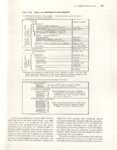
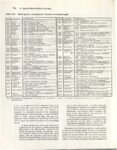
| OCR Text |
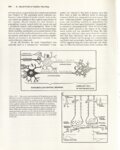
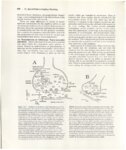
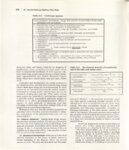
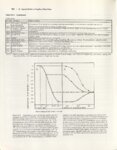
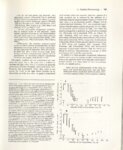
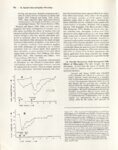
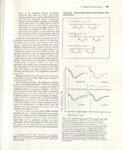
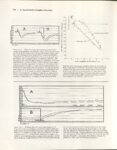
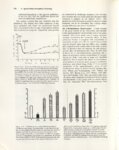
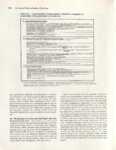
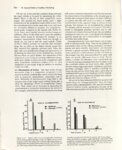
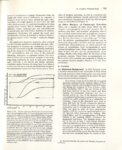
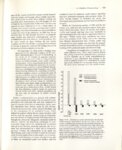
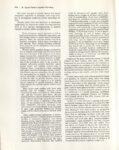
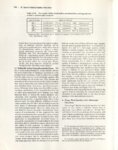
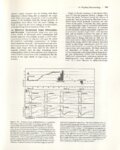
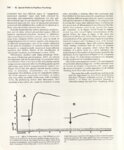
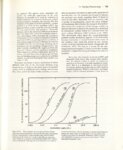
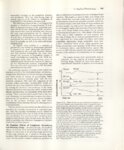
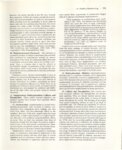
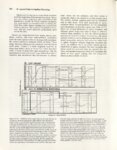
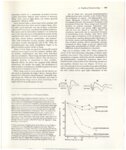
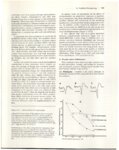
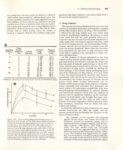
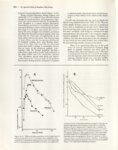
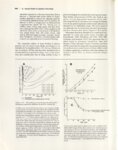
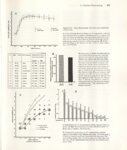
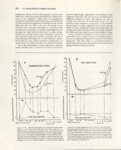
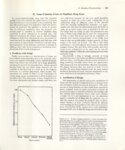
Show 808 / 11. Special Fields in Pupillary Physiology alkaloids expo ed to it. Beutner found that from a mixture of alkaloid with serum which no longer yielded alkaloid on dialysis the alkaloid could be recovered by chemical means and by heating the mixture to 65°C, a temperature at which protein coagulated but lipoids did not. Among sera of rabbits, cattle, horses, pigs, goat , and man there were wide species differences. These applied to all alkaloid . Thus rabbit serum bound to all alkaloids very much better than did cattle serum. And among different drugs (cocaine, atropine, strychnine, morphine, novocaine, and pilocarpine) pilocarpine was especially prone to protein binding. The important subject of drug binding by plasma proteins and by various body fluids and tissues is too extensive to be considered here. For the eye, Mikkelson and co-worker (1973a), who had done detailed work on protein binding of ophthalmic drugs, came to the conclusion that considerable loss of drug activity is due to protein binding in the lacrimal fluid and aqueous humor. They further demonstrated (1973b) that (both in vitro and in vivo) the drug-protein interaction can be inhibited competitively by substances that occupy the binding sites on the protein molecule which would otherwise be occupied by the ophthalmic drugs. This leaves more of the alkaloids free to reach their intended destinations, and thus enhances their effects (Figure 14-38,A and B). Pilocarpine had been thought to be inactivated enzymatically by serum and ocular tissues (Lavallee and Rosenkrantz, 1966; Schonberg and Ellis, 1969; Ellis, Littlejohn and Deitrich, 1972). But apparently this is a minor factor in pilocarpine inactivation, since both Beutner (1925) and more recently Newsome and Stern ( 1974) found that this drug, after inactivation by incubation with serum or ocular tissues of albino rabbits, could be almost completely re-activated when the mixture was heated to 65 or 70°C, as already mentioned (Figure 14-38 C). A 0 B 5 eE /d / a:1 Pilocarplne plus Cetylpyrldlnum chloride E' UJ ~ ~2 C ► a: <3 Pllocarplne ...J ...J ii: ~4 ~ UJ ~5 11. 10-1 M < E 8 E'-l u F 8 F' -5 r. 10-I M :I: 0 '"'===---=---'-- DRUG DRUG W4 ......... --'----'--...._- w~ w~ w~ w~ w~ w1 DOSE, M 0 -, --, 40 80 120 160 200 MINUTES Pllocarplne Pllocarpine plus Cetylpyridinum 240 280 320 chloride Figure 14-38. Prevention (or reversal) of protein-pilocarpine binding by competitive inhibition (A and B) or by heat (C). A: Miosis time-action patterns for various concentrations of pilocarpine nitrate (see key), with and without the addition of 0.02% cetylpyridinum chloride to the solutions. The solid lines show the reactions to pilocarpine alone, the broken lines those to pilocarpine plus cetylpyridinum chloride. Standard deviation is indicated for the I x 1()2curve, and was imilar for the other curves. Each curve represents a minimum of four separate reactions in each of four rabbits and was constructed from fifteen to forty experimental points. Note that cetylpyridinum chloride bound competitively to protein molecules and thus reduced pilocarpine-protein binding, enhancing the pilocarpine reactions. B: Maximal miotic responses of albino rabbit eyes to pilocarpine nitrate (filled circles) and to pilocarpine plus 0.02% eetylpyridinum chloride (circles). Note the enhancement of the miotic responses by inhibition of protein-drug binding in these experiments. (A and B from T.J. Mikkelson, S. Chrai, and J.R. Robinson,]. pharmaceut. Sci., 62 [ 1973]:1942) C ~4 --.....---f < ...J ...J Pilocorpine +Sorum+ ······--··· Pllocarplne Alone Heat ii: ::, IL 3 0 10 20 30 40 TIME (min) C: Loss of the miotic activity of pilocarpine after incubation with albino rabbit serum (broken line); and recovery of miotic potency after heating at 70°C for 10 minutes (solid line). The dotted line shows miosis elicited by pilocarpine alone. Each data point shows the average of 18 cases, and vertical lines indicate standard error and mean. (From D.A. Newsome and R.S. Stern, Amer. J. Ophthal., 77 [1974]:9I 8; published with permission from The American Jou ma I of Ophthalmology, 0 The Ophthalmic Publishing Company) |