| OCR Text |
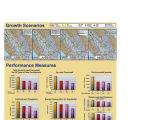
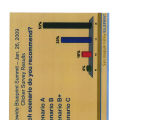
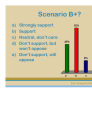
Show Regional Policy Council Meeting April 1, 2009 SJV Blueprint Report and Recommendation Page 3 1. The Valleywide Blueprint should be a principle/goal based document with best practices of how to achieve better land use efficiency. This also applies to conservation of natural resources - water/energy/agriculture. 2. The Blueprint should take into account market, infrastructure, and fiscal constraints. 3. We will not have the Greenhouse Gas (GHG) targets until 2010. Furthermore, we do not have a good grasp of what densities will be required to achieve the GHG numbers. An average of 10 Valleywide may or may not be enough to meet the required reductions. 4. We will need to address the existing built environment and not just tweak the future new development to meet GHG directives. Furthermore, there is a significant amount of residential development with vesting rights already in the pipeline and with CA granting extensions- this will make attainment of higher density targets more difficult. 5. The Blueprint efforts should result in some competitive advantage for the future of the SJV as we continue to compete in a rapidly changing global economy. It should help us get more federal and state funding and spur private investment. 6. Water is still the missing piece. What is the Valleys holding capacity? Do we have enough to sustain our future population? We need to connect water planning to land use planning the way we have connected transportation planning to land use planning. 7. The Blueprint is a vehicle to create power in unity for the San Joaquin Valley. We need to create structures for working together. 8. We need to set up a process, similar to how we locally distribute the Regional Housing Needs Allocation (RHNA) for distributing density targets. This would allow a local adaptation to density and for communities to trade density. This recognizes that a one size fits all does not work for density across the valley. 9. Recommend the inclusion of a Rural-Urban Strategy in the Valley Blueprint following the concept of the SACOG Plan. 10. The fear of attached single family dwelling units (condos) has placed severe design limitations on housing types and inhibits creative design. This has tended to create a political backlash against higher density residential in communities that could probably otherwise support higher densities (but not high rise developments). Need to reduce building liability on condominiums. The results from all of the outreach on the four Valleywide scenarios, as well as additional outreach by each of the individual COGs, are now being presented to the Regional Policy Council (2 elected officials from each of the 8 counties). The Valley COG directors are recommending that the Policy Council adopt the list of Smart Growth Principles included in this packet. These principles will be used as the basis of Blueprint Planning in the San Joaquin Valley. The COG Directors are also recommending that the Council adopt Scenario B+ described above as the Preferred Blueprint Growth Scenario for the San Joaquin Valley. This preferred scenario will be referred back to the eight Valley COGs for their action and ultimately presented to the local agencies with land use authority so that they may begin their own process of integrating the preferred Blueprint into their general plans. All of the COGs are firmly committed to assist with this process. |