| OCR Text |
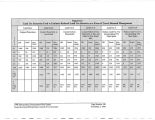
Show enhance traffic operations along this facility by adding left turn lanes. An ITS pilot project scheduled to be implemented over the next one to three years will improve signal synchronization along Center Avenue, Main Avenue and 1st Avenue N., improving traffic flow under normal conditions, and under abnormal conditions, as when the north/south roadways are blocked by trains. Travel Demand Management Alternatives One of the goals of the transportation modeling effort for the 1998 update of the Transportation Plan, was to use the model to evaluate the effectiveness of travel demand management (TDM) alternatives as solutions to roadway capacity deficiencies. Three TDM measures seemed timely and appropriate for analysis at this time. They included: • an overall 3 percent usage of transit for trips made within the metropolitan area, • a five and ten percent trip reductions in home based work trips to and from certain traffic analysis zones in the West Acres area due to TDM participation and the establishment of a Travel Management Organization, and • the application of reduced land use intensity in newly developing portions of southwest Fargo, where several roadway capacity deficiencies are projected for 2005 and/or 2020. Each of these alternatives has been applied within the model. A summary of the extent to which each alternative provides relief from projected capacity deficiencies is provided. The analysis was also presented in a Technical Memorandum, which is included in Appendix IX for reference. Increased Use of Transit Transit has a tremendous potential as a transportation alternative in the Fargo-Moorhead area, where service is frequent, route coverage is good in most areas, and buses are clean and safe, and not over-crowded at this time. However, transit currently accounts for only about one percent of the trips made in the metropolitan area. This raises the question of whether or not residents of the area will use transit to the extent that is needed to result in lower traffic volumes along corridors where capacity deficiencies are projected. To try to answer this question, Metro COG chose to analyze a scenario where three percent of the local trips would be made by transit. This would constitute a tripling of current transit ridership. The increased use of transit has the potential to reduce projected ADT volumes by approximately 500 to 1,000 vehicles per day on most collector and arterial facilities. On some of the major arterials, such as University Drive and 25th Street near 1-94, the projected reduction is approximately 1,500 vehicles per day. Some segments of the interstate highways have ADT volume reductions ranging from 1,500 to 3,000. While these are small reductions in projected traffic, they do help keep v/c ratios down to a slightly lower level throughout the system. The projected traffic reductions taper off in the 1998 Metropolitan Transportation Plan Update Page Number 142 Fargo-Moorhead Metropolitan Council of Governments November 5, 1998 |