| OCR Text |
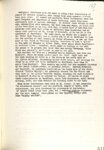
Show J"" ':I' The Na:wajos the Navajos and the Apaches are of that the (I remember hearing a fairly well-educated NavaAthabascan stock. jo make the assertion that his people did not come from the north ward these people came It has been said that but from the southward). down the eastern side of the Rockies probably about to the latitude Ethnologists tell they occupy today Arizona, and then us in northern and central New Hexico and the present The Navajos may have been in the Valley of westward. the Little Colorado in the 13th century. The early Navajo seems to have had a perhaps natural propensity for looting, and thus obtained at least a portion of his support. The more peac ef'uh pueblo peoples of what is now the no rthern part of New Mexico and Arizona may have furnished a profitable field prehistoric times he had developed abducting women and girls---at the present encouraged time it is said this has been carried on so long and so extensively The Spanish padres that there is no typcal Navajo to be found. introduced horses, sheep, goats, apricots, peaches, chili peppers, etc. among the pueblo peoples; and to such of these ,as they desired, it may seem that the Navajos have 'helped themselves' rather often. * Especially has thi been the case with the horses. for this. It seems also that in the habit of or came to Mexico, they brought many horses, were generally of good breeds-- These other animals. perhaps among Fathers established perhaps of the Arab, Barb, Hoor. As theCatholic southern Arizona now is what and Mexico northern in Missions their * When the and new Spanish Mexico, they of course, stocked these 'ranches' with such northward and to spread Indians, of course, captured the Sioux, who like the Navajo, many of the horses---especially the for 'made it has been said was hor; and among these world the (Note the tribes were many of perhaps the Mormon of animals draft the "wild bulls", which attacked southern in Arizona). Battalion in the San Pedro Valley Loose on good ranges, the eastward of the mountains. animals. the heraes rhrsemen. The Navajos often rl'written are or spoken of as "nomads". Regardless during their prehistor,y, of the truthfulness of this The Indian has it seems hardly true on their Reservation today. In the er, herds. and floets his his domain for pasturage of from his distant most lands his pasture he may use the portions of and his camping and possibly wagon hogan, even taking his family the home for the In this way he saves the pasturage nearer out. the use to when outlying forage might inclement Winter season, statement somewhat difficult. the arti His spare time he may work as a 'silversmith', making will ourselves purchase. cles that tourists, and perhaps be unseen world to him may Navajo is very serstitious---the to and guard against trouble 'be mostly inhabited by el spirits, warrior the When dies, he is generally from these he has many 'taboos'. the from distance hogan; and thither buried at some secluded spot some which devious 'paths may frustrate the the body is borne, perhaps by With him. him, or at the grave, evil spirits if they try to follow tools he is accustomed and utensils his saddle, the may be his horse , The for---each using and may have need case of spirit to escape). In to 'killed' the death of an (broken infant, to allew its a white man, r |