| OCR Text |
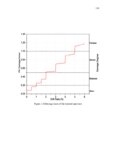
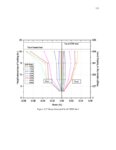
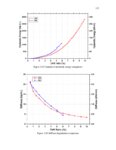
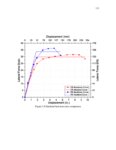
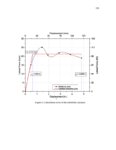
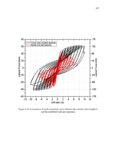
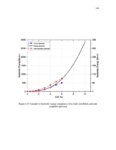
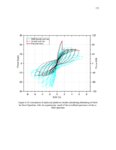
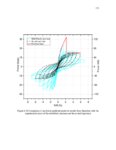
Show 139 bars. The first group was assigned a strain of 0.5%, which is the maximum strain value obtained from the experiment. The second group was assigned a strain value of 0.6%, which is closer to the initial strain as observed in hysteretic curve obtained from the experiment. The third or final group was assigned a strain of 0.9%, which is 60 % of the ultimate tensile strain of the NSM fiber rod. Figure 4.29 shows the comparison between the result obtained from the second pushover model along with the cyclic experimental result in the pull direction of the retrofitted specimen and the as-built specimen. The curve obtained from the pushover analysis shows gradual failure mode of NSM bars in three different strain values and is in accordance with the failure of the specimen in pull direction. The third pushover model was developed to predict the lateral load capacity of the specimen considering the NSM bars lasts until the failure. Beside the tensile force, the NSM fiber rod is exposed to bending and even shear force. Hence, in order to predict the capacity of the specimen, conservatively half of the ultimate strain of the NSM fiber bar as described in the technical data sheet (i.e., 1.58 %) was considered. The obtained result, as shown in Figure 4.30, was plotted against the experimental result of the retrofitted specimen and the as-built specimen. The predictive model shows that the wall would resist 32 kips of lateral force before the failure of NSM bars. 4.9 Conclusions A quasi-static cyclic test of the retrofitted seismically deficient as-built specimen was performed at the University of Utah structures laboratory. The seismically deficient as-built specimen was retrofitted using the carbon fiber rod with Near Surface Mounted (NSM) method in combination with the Carbon Fiber Reinforced Polymer (CFRP) |