| OCR Text |
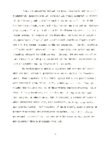
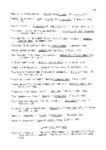
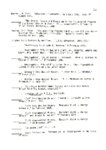
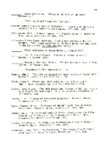
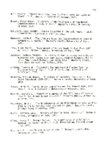
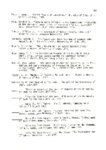
Show 91 and many other Mormon was a continuation of values. of educators, practical education, or return a On the other hand, it was to earlier a means rejoining mainstream America after The Saint educators, helped of conservation/progress adjusting to education thrusts. For many plored. and reconcile them; such men as especially Jacques Ellul ism, they perhaps provide practical and 60 closely more education as specifically a may related issues of freedom well as and Joel the most the unex- Krug, Erich Fromm, Sol Cohen, Spring61 do not refer to Mormon satisfactory key synthesizer as practical thrusts has been largely Edward A. but disparate but the Mormon interest in it relates to these dual Although Latter-day unconsciously) or Numerous historians have isolated these as the times, and Mormonism were simultaneous tendencies in Mormon theory and practice attempts to delicate balance between the quest for in a dividualism and collectivism and the and control. hand, prolonged isolation. practical education (consciously to maintain one and educational religious paradoxical qualities of Progressivism not restricted to have a the on for of the individual of freedom and control. Ellul understanding and the group sees in 60See O'Dea's The Mormons, p. 187 and pp. 242-45; ltJilliam J. on Earth--A Planned Mormon Societ (Oxford, Ohio: pp. 38-39; Marvin S. Hill and James Mississippi Valley Press, 1940 B. A 11 en, tv10rmoni sm and Ameri can Culture (New York: Harper and Row McNiff, Heaven , Publishers, 1972), p. 2. 61See Edward (Madison, Wisconsin: A. Krug, The Shaping of the American High School The University of Wisconsin Press, 1969), p. 249; Hart Publish A. S. Neil, Summerhill, Forward by Erich Fromm (New York: ing Company, 1964), p. xi; Sol Cohen, liThe Industrial Education Move ment, 1906-17," American Quarterly 20 (Spring 1968):105-09; Jacques Ellul, The Technological Society, trans. by John Wilkinson (New York: Alfred A. Knoph 1967); and Joel Spring, "Education and Progressivism," History of Education Quarterly 10 (1970):53-71; and also his Education and the Rise of the Corporate State (Boston: Beacon Press, 1972). , |