| OCR Text |
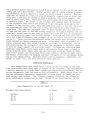
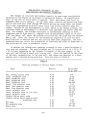
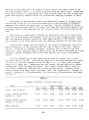
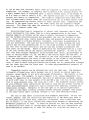
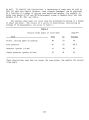
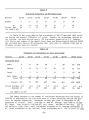
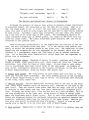
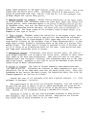
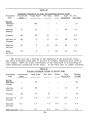
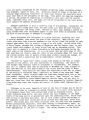
Show The Solidity ( Strength) of Ice: Some Physical and Chemical Properties The changes in structure and binding capacity in snow cause considerable variation in the degree of resistance to mechanical forces. Of significance, also, is the rate at which force is applied. Thus, hard dense snow falls in fragments when struck sharply. On the other hand, cornices and projecting flanges of such snow will bend through 90° before giving way under their own weight. ( Ice) casts impregnated with melt water crack like brittle material when disturbed. Because of the heterogeneity of snow, which is not always evident, calculations based on measurements of different snow specimens may differ 100% and more. For example, the average resistance to intermittent shearing of hard, windblown snow of 0,46 density, computed from 14 measurements taken on an area 1 m^, was 240 g/ cm2, where the minimum resistance was 140 g/ cm2 and the maximum, 500 g/ cm2. Since the indices for the mechanical properties of snow are much more difficult to measure and are less precise than other properties, the data presented here are solely for orientation in assessing the order of magnitude of the resistance of snow to mechanical forces. To measure the intermittent shearing strength of snow, a parallelepiped of test snow was prepared. The parallelepiped was 10 cm high with a 10 x 10 or 25 x 25 cm base, depending on the firmness ( strength) of the snow sample; to the rear wall was affixed a board with tracing rods. Force was applied in the plane of the base, perpendicular to the rear wall, and stress was measured by a dynamometer with a maximum arrow- indicator. Data are given in Table 4. Table 4 Shearing Strength of Various Types of Snow Snow Density Resistance in g/ cm2 Dry, freshly fallen snow 0.10 0- 3 Loose, windblown snow 0.14 3- 10 Hard, windblown snow 0.24 20- 35 Hard, windblown snow 0.31 17- 49 Hard, windblown snow 0.46 140- 500 Loose, fine granular snow 0.19 7- 15 Hard, fine granular snow 0.26 25- 110 Hard, fine granular snow 0.36 95- 155 Loose, granular snow 0.28 20- 110 Loose, granular snow on ice crust 0.28 25- 40 Loose, granular snow 0.33 60- 210 Freshly fallen moist snow 0.17 0- 3 Freshly fallen moist snow on hard windblown snow 0.17 5- 20 Wet snow 0.23 7- 30 Wet granular snow 0.46 20- 120 Dense snow 0.52 85- 130 - 27- |