| OCR Text |
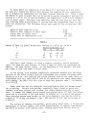
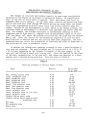
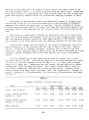
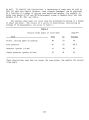
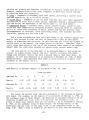
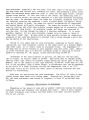
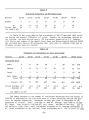
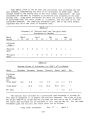
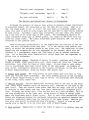
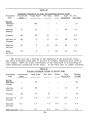
Show At sites open to average winds, the mean density of the snowcover is 0.20- 0.25 at the beginning of winter, increasing to 0.30- 0.35 by winter's end. During the thaw period density increases to 0.40- 0.45 and remains so until the snowcover disappears. Snow of density 0.40 and over will maintain this density during freezing weather; but when thawing begins, density will increase to 0.60- 0.65. The highest density measured was 0.70. The density of a snowcover is generally observed to increase toward the ground. This increase need not be regular, however, and a less dense layer will often underlie a denser one. This irregularity is more marked where measurement of very thin layers is concerned, in which case the layer next the ground is always less dense than the one above it. The table below shows density distribution for a snowcover lying in relatively thick layers: Table 2 Layer Thickness Snow Density in Cm 20 Loose Snow in First Stage of 0.20 Recrystallization 11 Loosely Bound Granular Snow 0.25 Measuring 1 mm 8 Same as Above, but Firmer 0.37 36 Same as Above 0.30 8 Coarse Granular Snow Measuring 4 mm 0.26 The density of hoarfrost is much greater than that of freshly fallen snow. In a sample of spongy structure, taken in February, 1935, on Mount Ukspor, from a 55 cm layer, density was 0.24. The Layered Structure of Snowcover Every snowfall deposits its own layer. Subsequent falls of even the same type of snow are deposited on layers which have changed in the meantime. Hoarfrost settling on snow can form a distinct layer, especially on mountainsides where hoarfrost layers are sometimes measured in tens of centimeters. Thawing and wind transfer lay down especially well- demarcated layers. Consequently, a snowcover is formed of a number of dissimilar strata; and when the snow is 1 m thick and conditions are favorable, one may observe as many as 30- 40 layers, many of which are sharply differentiated. The more the structure and the type of bond of the layers vary, the more clearly these layers can be distinguished. Density is not too significant. Following recrystallization the differences - 19- |