| OCR Text |
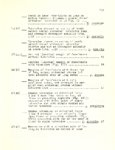
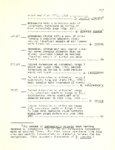
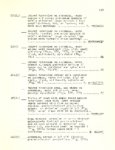
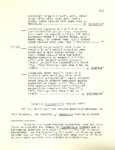
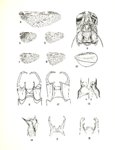
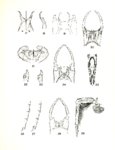
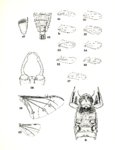
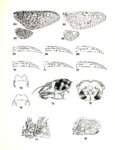
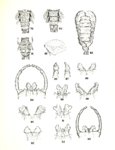
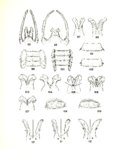
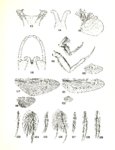
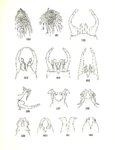
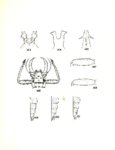
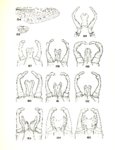
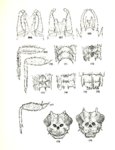
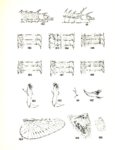
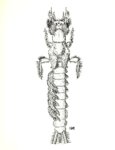
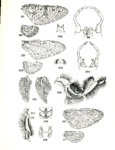
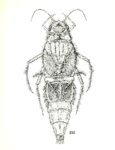
Show 237 and short • • (Fig. 178) blunt ..•.•...•... . grandis .•••••.•••••••.•.••.•...•• grandisl Mesonotum with a submedian pair of tubercles; tubercles on vertex of head moderately long (Fig. 180) ...•.. •• 19(15) • . • • • . • • • • • • • • • • • • . • . • • • • • •. . grandis Lnge ns+ Abdominal sterna with a mass of setae a complete adhesive disc; ventral (leading) margin of all femora with tubercles .•••••••••••.••...•.•..• forming E. doddsi Abdominal sterna may have sparse setae but never forming adhesive disc as above; tubercles absent on ventral (leading) margin of middle and hind femora •••.••••.•••..•••••••.•••••••••••••.••• Paired tubercles on abdominal terga 9 short and blunt (Fig. 176); paired tubercles on vertex of head usually small and blunt . 20(19) ••••.•••••••••.•.•• 20 flavilinea Paired tubercles on abdominal terga 9 moderately long ad sharp (Fig. 175); head usually only oughened on vertex ••••....••.••..•••.••.•••••.••.•. 21(5) . coloradens is Paired tubercles on abdominal terga sometimes small on terga 3; legs unicolorous brown; maxillary palpi greatly reduced in size (Fig. 191) 4-7, ••.. E. teresa Paired tubercles on abdominal terga 2-8, sometimes small on terga 2 and 8; legs with variable color pattern; maxillary palpi moderately long (Fig. 190) ...•...•..••.•.....•••.•......•.....•..•. 22 IThe nymphs degrees much of of of Ephemerella grandis show varying intergradation of the two subspecies throughout central Idaho. For this reason specimens from this usually intermediate in character between the (See taxonomic discussion of . grandis.) subspecies. area are two |