| OCR Text |
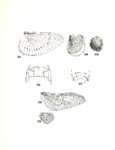
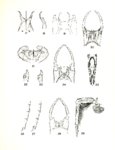
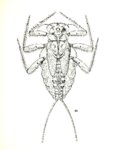
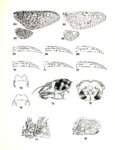
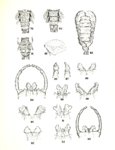
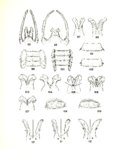
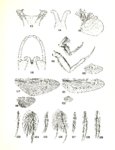
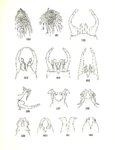
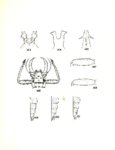
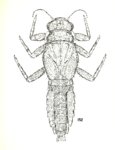
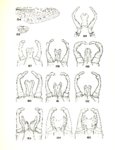
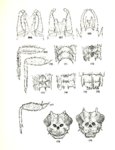
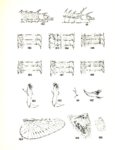
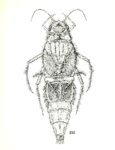
Show 236 Cerci at least two-thirds median terminal filament; abdominal tubercles as in • 14(12) • • • • • • • • • • • • • • • • • . • • • • • • long as paired dorsal Fig. 174 as ... • • • • • • • • . • .. est e s . or E. cascadia Tubercles present on vertex of head; paired dorsal abdominal tubercles long and strongly divergent apically (Fig. 171) .......................•.......• absent Tubercles on of vertex head; paired dorsal abdominal tubercles shorter and not as divergent apically as 15(3,4) 173) .....•...•....•... Ventral (leading) margin without tubercles Ventral (leading) margin with 16(15) (Fig. above tubercles of ••••••••••••••••••••••••••.• (Fig. 177) of of scattered ginal E. forefemora with only not arranged in marabdominal sterna without setae, those 17 tubercles Paired 8 and 9 more on abdominal terga twice as long as on than preceding segments (Fig. 181); mesonotum with three pairs of sharp tubercles and with single median posterior tubercle . .•••.•.•.•.••..•.•.• spinifera abdominal Paired terga 8 and 9 subequal to or slightly longer than those on preceding segments (Fig. 180); mesonotum with one or two pair of blunt to sharp tubercles . grandis, tubercles on .•••••••• 18(17) 19 pelosa row; adhesive disc 17(16) 16 forefemora •••.••.•..••..•••••. Margins of forefemora with dense row of long setae; abdominal sterna 3-8 with adhesive disc of long setae Margins . hystrix forefemora Mesonotum with a submedian pair of low ridges; tubercles on vertex of head 18 |