| OCR Text |
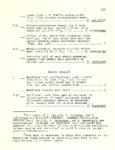
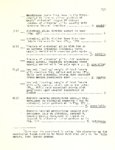
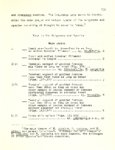
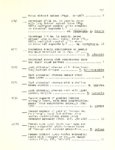
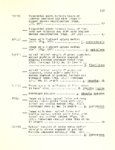
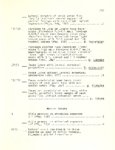
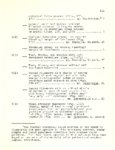
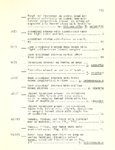
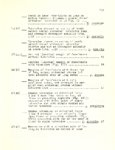
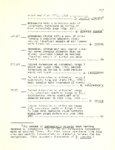
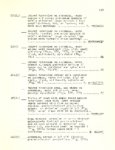
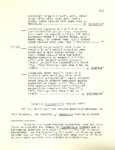
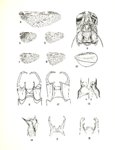
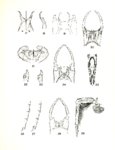
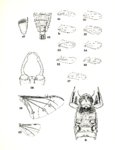
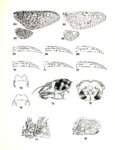
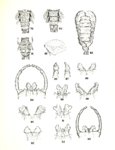
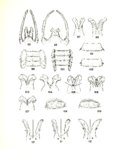
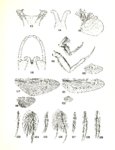
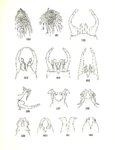
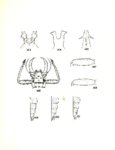
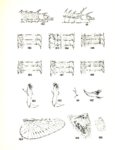
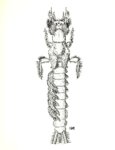
Show 212 Mandibular tusks from base to tip three fourths as long as widest portion of head;l abdominal tergum 10 obtuse; trachea of abdominal gills usually with lateral branches numerous ..•••••.•..••.. 3(1) gills divided almost to Abdominal (Fig. 128) packi* •..•..•••••••••••••••••••••••••••••••• divided to base Abdomlnal gills thirds distance 4(3) P. base 4 two- than less (Fig. 129) •••••••••••••• 5 Trachea of abdominal gills with few or no lateral branches; abdominal terga usually marked with numerous pale spots · . · · · · · · · · · · · · · · · · . · · · · · · · · · · . · · · · · · · · .. f. debilis Trachea of abdominal gills with numerous small lateral branches; abdominal terga usually marked with few pale spots ••• 5(3) f. gregalis* Ventral (leading) margin of hind femora with numerous long spines and setae (Fig. 147); each abdominal sterna with distinct brown median ganglionic spot .•••••••.•.• of hind femora sparse, short spines and setae 148); each abdominal sterna with only (Fig. indistinct ganglionic spot usually absent 6(5) vaciva (leading) margin Ventral with P. or •.•••.•••••••••••••••••••••••••••••••••••• 6 Postero-lateral projections usually well developed on abdominal segments 8 and 9; abdominal color pattern as in Fig. 150 •• · ..... · · · · · · ..... · · .... · · · · · · · · · · .... f. Postero-lateral projections usually well developed only on abdominal segment 9, usually weakly developed or absent on segment 8; abdominal color pattern as in Fig. 149 K. •••••••••.••••••••••••••••••• lCare must be exercised in using this mandbular tusks develop to their full size mature, late ins tar nymphs. memorialis heteronea character as the in the fully only |