| OCR Text |
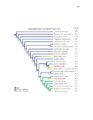
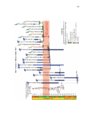
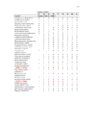
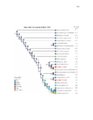
Show 247 Kirkland, 1998; Arbour, 2014) sometime during the Early Cretaceous (Aptian-Albian), replacing most of the nodosaurid dinosaurs in this region (Maryańska, 1977; Tumanova, 1987; Kirkland, 1998). During this time, ankylosaurid dinosaurs are unknown in Laramidia and ankylosaurians are instead represented by nodosaurids such as Sauropelta, Cedarpelta, and Panoplosaurus, and polacanthids (e.g. Mymoorapelta, Gastonia, and Polacanthus) (Carpenter, 1990; Kirkland, 1998). Dispersal of ankylosaurid dinosaur taxa into Laramidian land masses occurs sometime during the lower Campanian, and these taxa were probably closely related to Talarurus and Pinacosaurus (Maryańska, 1977). However, the earliest fossil evidence of ankylosaurid dinosaurs in Laramidia does not occur until the middle Campanian, (Scolosaurus cutleri [77-75 Ma] and Dyoplosaurus acutosquameus [76.5-75.5 Ma]) but ghost lineages inferred from temporally calibrated phylogenies (Coombs, 1978; Tumanova, 1987; Carpenter, 2001; Loewen and Kirkland, 2013) suggest that the clade could potentially be present in northern Laramidia as early as the Santonian. Currently, no fossil evidence confirms the presence of ankylosaurid dinosaurs in Laramidia prior to the Campanian. The focus of this chapter is two-fold: 1) a revision of phylogenetic hypotheses for Ankylosauridae in light of the discovery of new Campanian ankylosaurid taxa, including two new taxa from southern Utah (UMNH VP 21000 and UMNH VP 20202), in order to determine their position within the clade; 2) a reconstruction of the nature and timing of biogeographic patterns for ankylosaurid dinosaurs, particularly with respect to multiple sea level changes between upper Coniacian and upper Campanian times. |