| OCR Text |
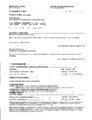
Show NPS Form 10-900-a Utah WordPerfect 5.1 Format (Revised Feb. 1993) 0MB No. 10024-0018 United States Department of the Interior National Park Service National Register of Historic Places Continuation Sheet Section No. 8 Page 5 Ramsey, Lewis A., House, Salt Lake City, Salt Lake County, UT Recent art historians have praised his landscapes for exhibiting a "fluid brush, bold color, and sparkling light."14 Ramsey's use of light in a work entitled "The Vision," is particularly praised by Richard Oman, who cites it as "a good example of impressionism as the premiere artistic tradition dealing with light."15 It is a painting of Joseph Smith and his heavenly visitors within a grove of trees and illustrates Ramsey's proficiency as both a portraitist (painting using classical realism) and as a landscapist (employing an impressionistic technique). One of Ramsey's most interesting projects was a series of paintings of landscapes and pre-historic animal life for a text on geology to be published jointly with Dr. Frederick Pack of the University of Utah. Unfortunately Dr. Pack died before the book could be published. Ramsey never received payment for these paintings, which were donated by Mrs. Pack in her husband's name to the university's geology department. By the late 1920s, the Utah art market had dried up completely and Lewis Ramsey was struggling financially. Although with his landscapes he may have been doing better than most Utah artists of the period, he was unable to support his family without supplementing his income by teaching at Jordan Junior High School. He was prominently featured in the October 1928 edition of Utah Educational Revue. Ramsey must have been fairly discouraged. The last year his name appears in the Salt Lake City directories, he lists his occupation simply as teacher. Lewis and Elizabeth Ramsey moved to the Los Angeles area in 1934. Ramsey found work overseeing a 1936 WPA art project for the Southwest Museum, contributing a diorama. He continued to paint landscapes and an occasional portrait of a civic leader until his death on May 11,1941. He was interred in Los Angeles. Ironically, the artistic achievements of Lewis A. Ramsey were probably better known during his lifetime than in the almost sixty years since his death. While known and loved as a teacher one student eulogized him as "a gentle and patient [teacher who] did miraculous things with colors" Ramsey was among only a handful of Utahans who managed to make a living as a professional artist. Richard Oman notes: Because almost his entire productive career was spent as a full time painter, rather than a teacher, his life tells us much about not only the local Utah art market, but also some of the ways that a Utah artist could paint in Utah and still tap into a national market for his paintings. 16 Ramsey could be considered a significant Utah artist on the basis of his LDS Church commissions alone, however he left a legacy of hundreds of completed oil paintings. What is particularly remarkable 102. 14Vern G. Swanson et al. Utah Painting and Sculpture. Salt Lake City, Utah: Gibbs-Smith Publishing, rev. ed, 1996, 150man interview. 16Oman biography, 11. X See continuation sheet |