| OCR Text |
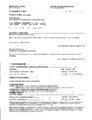
Show NPS Form 10-900-a Utah WordPerfect 5.1 Format (Revised Feb. 1993) 0MB No. 10024-0018 United States Department of the Interior National Park Service National Register of Historic Places Continuation Sheet Section No. _8_ Page A. Ramsey, Lewis A., House, Salt Lake City, Salt Lake County, UT art critic as a painter "rather stiff portraits."11 However, Richard Oman, an art historian for the IDS Church, considers Ramsey "one of the top five Mormon portraitists in the first one hundred years of the church," and furthermore suggests that Ramsey's techniques create "an interaction between the painting and the viewer [which results] in a quiet peacefulness and a feeling of psychological insight in his portraits, seldom equaled by any other Utah painter." 12 Until the onset of the Depression, Lewis A. Ramsey was able to support his family through his paintings. However, after 1916 he painted very few portraits choosing rather to concentrate on his landscapes. This change may have been the result of a series of career setbacks. (Not an aggressive personality, Ramsey had the misfortune to both alienate a dissatisfied powerful client and spurn an equally powerful art agent.) Or the career change may simply have been that Ramsey found a measure of success in painting and selling landscapes. He began making annual trips to Zion and Bryce National Parks. Going in on horseback, he was the first professional artist to do a painting of Cedar Breaks National Monument. Ramsey also painted landscapes of the Grand Canyon, Yellowstone National Park, and the Tetons. Two of his paintings were purchased by Stephen Mather, known as the father of the national park system. They were hung in his Washington, D.C., office. One of Ramsey's most critically acclaimed pieces is a painting of Bryce Canyon, which is currently on display at the Orton Geological Library of Ohio State University. Also, one of his paintings of Zion National Park was on the cover of the June 6, 1925, edition of The Literary Digest. During the 1920s, Ramsey gained national recognition as a landscape artist. Upon seeing two of Ramsey's paintings at a prestigious 1924 exhibition in Chicago, a Parisian art critic wrote in La Revue Moderne: We consider him [Ramsey] above all, a landscape painter, although he has to his credit a number of fine portraits, some of which did much to contribute to his well merited success. But it is in his landscape that we should seek to know, understand, and love him... The artist expresses himself with intense emotion and a vibrating sincerity. He reveals his sensitive soul which seems to be open to the beauties of the earth. He also reveals the virtuosity of his technique and the surety of his science. 13 11 Robert S. Olpin. Dictionary of Utah Art. Published by the Salt Lake Art Center in cooperation with the Utah American Revolution Bicentennial Commission, 1980,197. 12Richard Oman, phone interview by author, December 8,1998. Also Oman's biography of Ramsey, 4. 13Copies of the original review and its English translation are found in the Ramsey Family Collection. X See continuation sheet |