| OCR Text |
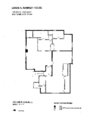
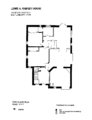
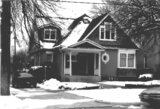
Show NPS Form 10-900-a Utah WordPerfect 5.1 Format (Revised Feb. 1993) 0MB No. 10024-0018 United States Department of the Interior National Park Service National Register of Historic Places Continuation Sheet Section No. _7_ Page 2_ ~ Ramsey, Lewis A., House, Salt Lake City, Salt Lake County, UT original chimney stack (not visible from the exterior) and a small diamond-shaped window (c.1990). The lower portion of the rear (west) elevation has been partially obscured by a wood deck and glassenclosed porch (c.1990). The back door is to the north with two windows to the south. The west gable feature two small six-over-one fixed-sash windows. The interior has about 2,731 sq. ft. of space total with 1,446 sq. ft. on the first floor. The main entrance leads into a foyer with an open stair with a squared balustrade and newel posts. The stair is original, however a door to the parlor was blocked and the foyer completely enclosed when the home was converted to apartments, c.1935. According to Jean Ramsey Driggs, who lived in the home between 1918 and 1934, the foyer originally led directly into the parlor, the dining room, and the librarybedroom.3 Though the arrangement of the main floor rooms is essentially the same as the original floor plan, a few other modifications have been made beyond the closing of the foyer. For example, the original pocket doors leading from the dining room to the parlor have been removed (date unknown, probably 1950s). The fireplace was closed and the mantel removed in the 1950s, as well. The door leading from the dining room to the kitchen, as well as a pass-through, was removed probably in the late 1980s to create a large, arched opening to the kitchen. At this time, the kitchen was completely remodeled, the butler's pantry removed, and the glass-enclosed porch added to the rear of the house. Also during this time, a skylight and light scoop was installed in the dining room, plaster was removed from several walls in order to expose the masonry, and a new mantel built. The library-bedroom and the back bedroom are essentially unchanged, except the conversion of a rear (west) box staircase into a closet sometime before the 1920s. Physical evidence indicates the house had been badly fire damaged. Jean Driggs could not remember a fire or a rear staircase, which suggests the fire occurred before 1918 and may account for the removal of the staircase. During the 1998 rehabilitation of the house, it was discovered the fire had charred nearly all of the upper-floor structural members which had to be replaced. The roof structure was also rebuilt at this time and the roof was covered with wood shingles. Though technically an attic, the upper floor with its steeply-pitch cross gables provides both headroom and large amounts of useable space. The upper floor was probably finished early. Tax cards note four finished and no unfinished rooms in the attic by 1936. On the 1955 tax card there are listed six finished rooms upstairs and both attic apartments have a small kitchen and bathroom. The only other major change to the upper floor was the introduction of the dormer (c.late-1960s) at the southeast corner. The intent of the 1998 rehabilitation was to keep all later additions intact (i.e., kitchens, bathrooms, and dormers), while stabilizing the structure and restoring some original architectural elements. The attic space now features several new multi-light wood windows, and wood trim and moldings replicated from extant original pieces. 3Jean Ramsey Driggs, interview by Barry Nielsen, November 28,1998, Salt Lake City, Utah. X See continuation sheet |