| OCR Text |
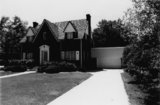
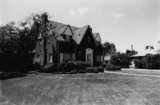
Show NFS Form 10-900-a Utah WordPerfect 5.1 Format (Revised Feb. 1993) OMB No. 10024-0018 United States Department of the Interior National Park Service National Register of Historic Places Continuation Sheet Section No. 8 Page 4 Dr. Elmo and Rhea Eddington House, Lehi, Utah County, UT and Chicago. After the couple and their two sons Richard and Keith (later joined by a daughter, Jane) relocated to Lehi in 1931, Rhea became active in Lehi social circles. She was in the local LDS Relief Society and Sunday School presidencies, and she served as president of the Lehi Athenians Women's Club, a literary group. Early in Eddington's career, Rhea bottled fruit to feed patients at the hospital. She continued her interest in medicine as president of the Utah County Medical Auxiliary and the Women's Auxiliary to the Utah State Medical Association. Mrs. Eddington hosted many of her social events in her home, which was also the setting for Jane Eddington's wedding reception in 1956.6 In 1965, Dr. Eddington left private practice for a position as Director of the Utah County Health Department. The Eddingtons sold the house at this time and moved to Provo. Eddington returned to private practice in Lehi in 1967. His office was located in the couple's new house at 1015 East Ninth North, where it remained until his death in 1982. 7 Rhea Eddington remained in the house until her death in 1991. 8 Morgan and Charlyn Evans purchased the house from Doctor and Mrs. Eddington c.1963. They remained there until 1992, when it was sold to the current owners, Edward and Nann Frandsen. The Eddington house is an excellent example of a combination of Tudor and Colonial Revival styles. The one and one-half story side gable form is characteristic of both styles. The front cross gable is also seen in both styles although its symmetrical position is more Colonial Revival in nature and the steepness of the roof pitch more Tudoresque. The symmetrical placement of the two wall dormers is reminiscent of a Cape Cod cottage and is not uncommon in Colonial Revival houses. To contrast with the Cape Cod form, the windows are not double-hung, but rather they are divided light casement windows in strings of four; this feature is typical of Tudor Revival. Period Revival houses are relatively uncommon in Lehi. This house is one of only 42 Period Revival buildings compared to 174 in the Victorian style. Of that 42, only 22 are rated as significant. This house is an excellent and significant example of the kinds of Period Cottages built in Lehi. 6Lehi Free Press. 21 June 1956, p.4. 7Van Wagoner, 320, and Lehi Free Press. 26 August 1982, p.1. |