| OCR Text |
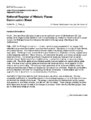
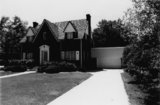
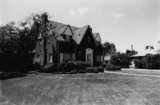
Show NPS Form 10-900-a Utah WordPerfect 5.1 Format (Revised Feb. 1993) OMB No. 10024-0018 United States Department of the Interior National Park Service National Register of Historic Places Continuation Sheet Section No. _8_ Page _3_ Dr. Elmo and Rhea Eddington House, Lehi, Utah County, UT in which he hit a small boy and rushed him to the Lehi Hospital, Dr. Eddington's brother learned of Dr. Worlton's recent death. He called his brother in Chicago; within a month Dr. Eddington and his family had moved to Lehi.2 Eddington bought the Lehi Hospital from Dr. Worlton's widow and set up his office and living quarters there. Shortly after, he built the house at 617 N. 100 East. 3 A staid example of the Tudor Revival style and the Colonial Revival style, the Eddington House embodies the selective characteristics of historical eclecticism adopted by many upper-middle class Utahns in the 1920s and 1930s. Frequently, as in the Eddington house, the historical allusion was reserved almost exclusively for the exterior of the house; the form of the house and interiors were undergoing separate evolutions into new forms adapted to the changing lifestyles of the 20th century.4 By using historical styles associated with rural examples in Europe, the Eddington's pastoral cottage expressed the security and social standing many well-to-do Utahns aspired to recreate in Utah. This included an appreciation and desire for modernity and order (expressed clearly in the new open plans of the house), along with a quest for traditional association and community respectability. Eddington soon gained the respectability he sought to evoke in his new house. In 1937, he arranged for the renovation of the outdated hospital by securing Works Progress Administration funds from the federal government. To make the project eligible, Eddington deeded the building to Lehi City. Eddington oversaw the project and remained the manager and primary physician at the updated hospital until 1942, when an appointed board took over its management. Concurrently to his practice at the hospital, Dr. Eddington was appointed to the post as the Lehi City Quarantine Physician. In that role, he oversaw the community's response to a polio outbreak in Utah in the summer of 1943. Thirtyfive Lehi residents were infected with the disease in the years between 1943 and the introduction of the Salk polio vaccine in 1954.5 Dr. Eddington also served as president of the Utah County Medical Association, and was a member of the State House of Delegates for the Utah State Medical Society. As her family observed in her 1991 Lehi Free Press obituary, Rhea Felt Eddington fit the niche required of a doctor's wife of the time. Born in Manti to Nathaniel H. and Elvira Clark Felt, Rhea attended schools in Manti and Moroni and then went to Utah State Agricultural College in Logan (now Utah State University). Rhea met her future husband while a student at the college, and their relationship solidified while Rhea attended a course at the University of Utah, where Elmo was a student. Rhea and Elmo were married in 1922; shortly after that they moved to Philadelphia and then to Pittsburgh 2Van Wagoner, 318. 3The exact date of construction is in conflict. Richard Van Wagoner states the construction began in 1932, a year after the Eddington's arrival (p.424). Title Abstracts on file at the Utah County Recorder's Office show, however, that the Eddingtons did not buy the property until 1935. "Carter and Goss, 145-146. 5Van Wagoner, 26. |