| OCR Text |
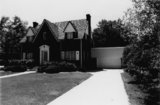
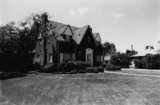
Show NPS Form 10-900-a Utah WordPerfect 5.1 Format (Revised Feb. 1993) OMB No. 10024-0018 United States Department of the Interior National Park Service National Register of Historic Places Continuation Sheet Section No. _8_ Page _2_ Dr. Elmo and Rhea Eddington House, Lehi, Utah County, UT Narrative Statement of Significance The Dr. Elmo and Rhea Eddington House, built c.1932, is significant for its association with the "Modernization, Steady Growth, and the War Years, 1900-1940s" context of the "Historic and Architectural Resources of Lehi, Utah" Multiple Property Submission. The house is a historically and architecturally significant example of the Period Revival style houses built in Lehi during the 1920s and 1930s. These houses reflect the stable economy of Lehi after soaring growth in industry and commerce around the turn of the 20th century. The Eddington house also reflects the shift in popular housing design away from elaborate Victorian styles, toward simpler styles such as the combination Tudor Revival style of this house. Such historically allusive styles evoked the pastoral lifestyle of the rural European Upper Classes, a quality of life to which many upper-middle class Americans of the time aspired. Professionals such as Dr. Eddington reinforced their standing in the community by evoking this image of restrained prosperity. Unlike the periods of dramatic growth during the late 19th century, Lehi's progress through the first decades of the 20th century was slower but steady. This environment of stability allowed the city to keep pace with growth and insure order and good management of the community. As the city matured, it began to acquire the trappings and infrastructure associated with a small city of the twentieth century. Among these was the Lehi Hospital, opened in 1914 in a former home at 518 North 100 East (the former John Y. Smith house, also nominated to the National Register in 1998 as part of the Lehi Multiple Property Submission). Dr. Fred Worlton, the first trained physician who was from Lehi, was the owner and operator of the hospital, which was located for several years in the Cutler House at 150 East State Street (National Register) and finally in the former Utah Commercial and Savings Bank Building at 206 East State Street. 1 Dr. Worlton died while on a hunting trip in 1931, leaving Lehi without a doctor for the hospital. Dr. Elmo Eddington moved to Lehi in 1931, after Dr. Worlton's death. Eddington was born 1895 in Morgan, Weber County, Utah to William J. and Mary Anne Fry Eddington. His family moved to Salt Lake City when Eddington was a teen, and he graduated from Latter-day Saints High School and the University of Utah in Salt Lake City. After serving in the U.S. Navy medical corps during World War I, he married Rhea Felt, of Manti, Utah, in 1922. The newly married couple moved to Philadelphia, where Elmo attended the University of Pennsylvania Medical School. While in Philadelphia, the first of the couple's three children was born. After graduating in 1924, Dr. Eddington served an internship at St. Francis Hospital in Pittsburgh and a residency in surgery at Woodlawn Hospital in Chicago. Dr. Eddington's move to Lehi in 1931 was prompted by a phone call from his brother. After a car accident Van Wagoner, 317-320. |