| OCR Text |
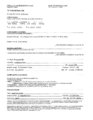
Show NPS Form 10·900-a Utah WordPerlect 5.1 Format (Revised Feb. 1993) OMB No, 10024-0018 United States Department of the Interior National Park Service National Register of Historic Places Continuation Sheet Section No. JL Page i Oldham, John and Elizabeth Brown, House, Sandy , Salt Lake County, UT two fire trucks. 7 Utah Power and Light began servicing Sandy in 1913, and by 1914 the city was managing a park and a cemetery. 8 Economically, the city was changing dramatically. The depletion of the mineral resources in the Alta area and the loss of the smelting and sampling industries had changed the economic structure of Sandy City significantly. Moreover, a series of national and local depressions beginning in 1893 and continuing to the onset of World War II had made small-scale single-crop agricultural enterprises nearly impossible. 9 Sandy farmers had an especially difficult time, needing to overcome the additional challenges of water scarcity and the arid, sandy soil. Fortunately irrigation methods improved steadily through these years, and several Sandy farmers were able to successfully continue to raise hay and grain. A few farmers converted their fields to the raising of sugar beets. A "beet dump" was established near the railroad tracks, and Sandy beets were shipped to a West Jordan sugar factory, founded in 1916, and processed by the Utah/Idaho Sugar Company. 10 Another successful agricultural industry was poultry. The Draper Egg Producers Association was formed in 1932. 11 A few entrepreneurs survived by raising livestock ranging from Holstein cattle to mink. 12 However, despite the success of these specialized agricultural industries, most farming in Sandy during the first half of the twentieth century was purely subsistence level. Between 1900-1920, the number of farms doubled, but nearly all were very small scale. Eighty-five percent of the farms were smaller than forty-nine acres. Six farms were between two hundred and one-thousand acres, and one farm was 1,217 acres. 13 During the first half of the twentieth century, the majority of Sandy residents continued to live on their farms. Most managed to survive economically by combining subsistence farming with other occupations, primarily cottage industries and mercantilism. In the 1927-1928 statewide gazetteer, the last one published exclusively for Utah, not one resident listed farmer as their occupation . The only agricultural occupations listed were poultry, dairy, and a single flour mill. The majority of occupations were highly diversified. Sandy appeared to have at least one resident involved in occupations associated with early urbanization: a physician, a dentist, a barber, a plumber etc. The most common business listed was dry goods, the Sandy City Bank founded in 1907, and several residents listed their 'Sanborn Fire Insurance map, 191 I. 'Bradley, 58-59. 'Richard Poll et al., U1ah's Hjsmrv, (Logan, Utah: University of Utah Press. 1989), 465-466. ' 0 Rich, 169. "Rich, 169. "Bradley, JOO; Rich, 171-173. "Bradley, 109. _x See continuation sheet |