| OCR Text |
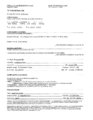
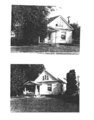
Show NPS Form 1().900-a Utah WordPorfoct 5 1 Format (Revised Fob. 1993) OMB No 10024-0018 United States Department of the Interior National Park Service National Register of Historic Places Continuation Sheet Section No. _a_ Page -2.._ Oldham , John and Elizabeth Brown , House, Sandy, Salt Lake County, UT Narrative Statement of Significance Built c.1907, the John and Elizabeth Brown Oldham house is significant for its association with an important period of development in Sandy's history. The house represents one house type built by residents of Sandy during the Specialized Agriculture, Small Business, and Community Development Period ( 1906-1946). The house is an example of the substantial brick homes built by Sandy residents at the turn of the century and a good example of the level of craftsmanship available during thefirst quarter of the 201h century. The Oldham family, like many others, made their living by combining a variety of careers with subsistence farming. The Oldham house retains its historic integrity and is being nominated as part of the multiple property submission, Historic Resources of Sandy City. HISTORY OF SANDY: The first half of the twentieth ce :ry was a period of transition for the city of Sandy. The mining, smelting and small farm era wa ~ .:ieing replaced by a more diversified economy. In some ways the town still resembled the earlier predominantly agricultural community founded by Mormon settlers in the 1860s, especially as the "boom town" economy created around the mining industry waned . The --opulation of Sandy remained around 1,500 for the four decades between 1900 and 1940.4 However, ' city was defining itself as the political, economic, civic and social center for a major portion of the . Jtheast Salt Lake Valley. This period of Sandy's history laid the groundwork for city's eventual transformation from small town to suburb. The transition began with the failure of canyon mines which fed Sandy's economy. As sampling and smelting plants shifted to other locations, Sandy's impact as a mining town diminished. While the dominant force in the economy of Sandy during the 1870s, 1880s and 1890s was undoubtedly that of mining, the local agricultural community had not ceased to develop. Water sources were developed which added greatly to the establishment of the local agricultural economy which saw Sandy through the mining boom and subsequent depression. 5 The community was also seeing a great deal of civic development. The city of Sandy was incorporated on September 26, 1893. At the same time, thirteen city ordinances were "passed and approved."6 Though most of these early ordinances defined punishable offenses, the city founders also made provisions for the naming of streets, taxation, voter registration and animal control. By 1911 the city was managing its own water resources and had a volunteer fire brigade of twenty-five, complete with 'Martha Bradley, Sandv Ciiy : tho Om 100 year~. (Sandy, Utah: Sandy City Corp., 1993), 205. The population totals in Sandy for census years 1880 to 1950areasfollows: 1880-488; 1900-1,632; 1910-1,716; 1920-1,208; 1930-1,436; 1940-1.487; 1950-2,095. 'Balle. 'Rich, 87-93. .X See continuation sheet |