| OCR Text |
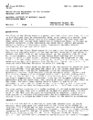
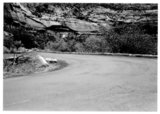
Show NFS Form 10-900-a (8-86) 0MB No. 1024-0018 United States Department of the Interior National Park Service NATIONAL REGISTER OP HISTORIC PLACES CONTINUATION SHEET Section 7 Page 8 Washington County, UT Zion National Park MRA STATEMENT OF SIGNIFICANCE Summary The Floor of the Valley Road is associated with the Zion National Park multiple property nomination theme "Landscape Architecture and Transportation" (see Zion National Park Multiple Resource Area nomination, listed 1987). The road is eligible for listing at the local level of significance under criterion A, for its association with the early park development of its transportation system, and under criterion C, as design and placement clearly illustrate the design philosophy of road construction developed by National Park Service landscape architects in the Western Office of Design and Construction during the late 1920s and early 1930s. The period of significance dates from 1932, when the 1925 road was replaced by the current road, to 1942, when additional road features were completed. Significant dates are 1932, the road's date of construction, and 1940-1942, when additional parking areas were built. Expanded Statement of Significance The Floor of the Valley Road is the final generation of three roads to carry automobile traffic up the canyon. When President William H. Taft signed the presidential proclamation establishing Mukuntuweap National Monument in 1909 (to be designated Zion National Park in 1919) only a primitive wagon road provided access into the canyon. In the 1916, Congress allotted $15,000 for construction of a new road. Engineer W. 0. Tufts, was sent from Washington B.C. to survey the new road. By the summer of 1917 the first automobile road into the canyon was completed. This barely passable dirt road carried visitors as far as the Cable Works at what is now the Weeping Rock Parking Area. This road, along with the Wylie tourist camp, and the new Union Pacific depot at Lund, Utah helped to establish the development of automobile touring in Zion. In 1925, a new gravel surfaced road was constructed, called the "Government Road," at a cost of $70,000. It began at the park's south entrance (at that time just below the North Fork of the Virgin River Bridge), continued north up the canyon, and terminated at the Temple of Sinawava. The completion of the road coincided (by design) with Union Pacific's construction of a spur line from Lund to Cedar City, and with their building of a new hotel in Cedar City and a new lodge in the park. These improvements marked the advent of a new era for Zion National Park tourism. Segments of the old Government Road can still be seen on the east slope of the canyon, up slope from the present road. In addition to improving visitor access to the park, construction of the Government Road inaugurated the beginning of ten years of close cooperation between the National Park Service and the Union Pacific Railroad to bring |