| OCR Text |
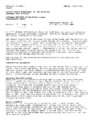
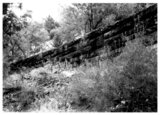
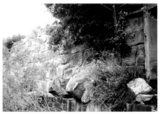
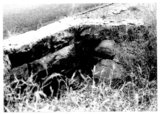
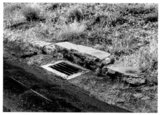
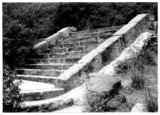
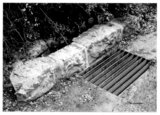
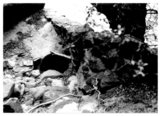
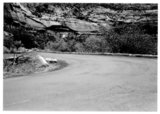
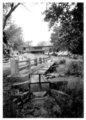
Show NFS Form 10-900-a (8-86) OMB No. 1024-0018 United States Department of the Interior National Park Service NATIONAL REGISTER OF HISTORIC PLACES CONTINUATION SHEET Section 7 Page 6 Washington County, UT Zion National Park MRA visitors can walk or ride horseback in the narrow canyon without interference from automobile travel" (Aug. 31, 1931 report, Superintendent to the NFS Director). Its alignment paralleled the road, traversing up the canyon floor to the Temple of Sinawava. The trail's proximity to the road varied from being right next to it, to meandering as much as one-quarter mile away. The trail has suffered numerous changes through time: large portions have been washed out by floods, some sections have been incorporated into other trail systems, while others have been abandoned. Consequently, the trail no longer retains historic integrity. It is not considered a contributing feature to the road, nor is it individually eligible. Oak Creek Bridge The 1926 Oak Creek Bridge is located a one-quarter mile north of the current boundary and one-eighth of a mile east of the present day Floor of the Valley Road. The bridge is of a common construction with a concrete slab and nine post on each side with dual four-inch round metal rails connecting the concrete post to form a guardrail. On the east side of the bridge is suspended a metal half pipe flume which carries irrigation water from the Crawford water diversion ditch to the South Campground. The bridge no longer retains its historic association with the Floor of the Valley Road. The section of road it is located on was realigned in 1961 leaving the original section functioning as an access road to the administrative parking area. Because it is no longer associated with the historic road, and lacking engineering and architectural significance, the bridge does not meet National Register criteria for listing. The rerouted portion of the road also lacks integrity due to change in alignment; both road and bridge are located outside the boundary drawn around the eligible section of road. Revetments, North Fork of the Virgin River The river revetments, located in Zion Canyon along the North Fork of the Virgin River, consist of a series of basket dams occurring along the river's length. The revetments consist of hand-placed river stone, dredged from the bottom of the river bed, anchored with wire mesh. In 1931, the construction of two 1,500-foot "rock dykes," according to Superintendent Thomas, "enabled construction of the new road past the lodge on a new alignment, allowing it to follow the river to a point near the public campground, thus making available for parking and construction purposes a large area which formerly was a part of the river channel." Like other building activities in the park, the earliest placement and installation of river control structures was overseen by the Western Office of Design and Construction (later, the Bureau of Plans and Design). After the creation of the Emergency Conservation Works program in 1933, additional river bank protection structures, known as "basket dams," were constructed by the Civilian Conservation Corps. The actions of the river, |