| OCR Text |
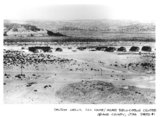
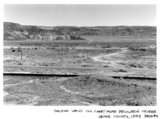
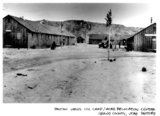
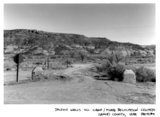
Show NPS Form 10-900-a Utah WordPerfect 5.1 Format (Rev. 2/93) OMB No. 10024-0018 United States Department of the Interior National Park Service National Register of Historic Places Continuation Sheet Section No. 8 Page 3 Dalton Wells CCC Camp/Moab Relocation Center, Grand County, UT Narrative Statement of Significance The significance of the Dalton Wells site derives from its association with two important events in American history: New Deal work programs, particularly the Civilian Conservation Corps, and the relocation of Japanese Americans to inland concentration camps during the Second World War. As a CCC camp and later as a relocation/isolation center for Japanese American internee "troublemakers," Dalton Wells figured prominently in Moab, Grand County, and American history. The site's political/governmental significance stems from its role in federal policy decisions to relieve Depression-era unemployment and later, to segregate Japanese American "security risks" during World War Two. As an artifact of social history, Dalton Wells represents a response to the Great Depression and symbolizes American prejudice against people of Japanese descent. The site's military importance results from its use as a relocation center. Finally, Dalton Wells is significant because it stands as evidence of Depression-era efforts to conserve and develop the resources of the desert grazing land in and around Grand County, Utah, part of similar efforts that took place throughout the West during the CCC era. Po 1 i t i cs/Government Dalton Wells' political and governmental significance inheres in its embodiment of two historic federal policy decisions. The first decision was locating the first of four Moab-area CCC camps at Dalton Wells. Primarily an agricultural region, the Great Depression arrived early and hit hard. The camp, established July 10, 1935 and actually staffed on October 25, 1935, provided much-needed jobs, brought cash into local businesses, and developed the natural resources and improved the ability of Grand County's range to support grazing. 1 The Dalton Wells CCC camp boosted the attitudes and economy of Moab's residents. "Enrollees" typically earned about $25 per month with $20 being sent home or banked, leaving $5 to spend on the usually limited diversions in the area of the camp. Several CCC enrol lees remained in Moab and married local women and relations with the community were good. Older Moab natives recall the CCC camp with warmth and nostalgia. Enrollees had varied experiences at Dalton Wells. The week-day work of building flood control devices, developing water supplies, etc., was challenging. On the weekends, some languished at the pool table in camp while others explored the surrounding desert and rock formations. The Dalton Wells CCC camp apparently ceased operation c.1941. Baldridge reports that it was unclear if it was included in the "17th Enrollment Period, 1 April - 30 Sept 1941." 3 X See continuation sheet 1 "Camp DG-32, Dalton Wells-Moat), Utah: Report on Activities," 23. 2James Crosby, interview with Arthur Whitehead, 6/28/91, 4, 5, 8, 12. 3Kenneth Baldridge, Nine Years of Achievement--The CCC in Utah. 376. |