| OCR Text |
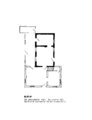
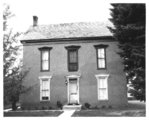
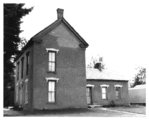
Show NFS Form 10-900-a (7-81) United States Department of the Interior National Park Service National Register of Historic Places Inventory Nomination Form Continuation sheet 2___________________item number 8___________Page 3 In 1877, as Harri son's business ventures began to flourish, he built a large two-story addition to the small Lyman Wood house. The addition- -really a house in its own right followed a plan which was popular in most nineteenth-century Utah communities. The new section was one room deep, two rooms wide, and two stories high, and is a folk form often simply labeled an "I-house."° The house had a symmetrical three-opening facade and an asymmetrical hall -and-parl or internal floorplan. The new section was also constructed of adobe. The house was left unstuccoed until 1980 when the deterioration demanded that the adobe be protected. However, it was a common practice to stucco adobe buildings and the addition of stucco to the exterior of this dwelling is in keeping with the character of the period in which it was built. The building was identified as one of the five most significant sites in a Springville, Utah, survey completed in 1981, and of 31 potentially eligible sites identified, was the only one of adobe construction.. Notes Leonard J. Arrington, Great Basin Kingdom (1958; rept. ed. Lincoln: University of Nebraska Press, 1966). historical information background on Springville, see Don Carlos Johnson, A Brief History of Springville, Utah (Springville, Utah: D. C. Johnson and William F. Gibson, 1900); also Daughters of the Utah Pioneers, Memories That Live: A Centennial History of Utah County (Springville, Utah : Art City Publishing Company).----------- 3The nature and the origin of the Mormon nucleated village have attracted a great deal of attention, see in particular, Lowry Nelson, The Mormon Village (Salt Lake City: University of Utah Press, 1952) and Leonard J. Arnngton, Feramorz Y. fox, and Dean L. May, Building the City of God: Community and Cooperation Among the Mormons (Salt Lake City: Deseret Book Company, 1976), pp. 1-14. ----- 4See Johnson, A Brief History of Springville, pp. 109-110. ^The rectangular cabin type is identified in Henry Glassie, "The Types of the Southern Mountain Cabin," in Jan Brunvand, The Study of American Folklore (New York: W. VI. Norton, 1968), pp. 353-360. For Utah examples, see in particular, Richard C. Poulsen, "Stone Buildings of Beaver City," Utah Historical Quarterly, 43:3 (Summer 1975), pp. 278-286. 6See Frank Esshom, Pioneers and Prominent Men of Utah, p. 921 and George the Handcart Boy. ?For a discussion of the changing economic nature of Springville, see Wayne L. Wahlquist, "Settlement Processes in the Mormon Core Area 1847-1890," dissertation, University of Nebraska, Lincoln, pp. 265-291; and Daughters of the Utah Pioneers, Memories That Live: A Centennial History of Utah County pp. 317-355. |