| OCR Text |
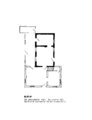
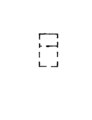
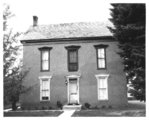
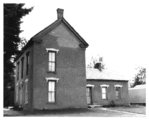
Show NPS Form 10-900-a (7-81) United States Department of the Interior National Park Service National Register of Historic Places Inventory Nomination Form Continuation sheet 1__________________Item number 8 page 2 lyman Wood, the builder of the original section of this house, was born in Ohio. 4 Converts to the Mormon church, the Woods arrived in Salt Lake City in 1848. In 1853 Lyman moved to Springville where he built himself an adobe house. The house was 24' x 14' and contained two small rooms (figure 1). This house type, a form often called a "rectangular cabin,"^ was common in most Utah towns during the pioneer period. Lyman was very active in civic life, beginning in 1853 as a teacher in the first school. He was elected the first recorder of Springville, city alderman in 1861, and served two terms in the state legislature. He was elected mayor in 1863 and was re-elected for ten terms serving until 1889, a record never broken, and during which time he received no salary. The main Springville occupation at this time was farming, and produce and goods were freighted from Springville to outlying areas and overland to the mining camps at Virginia City and Pioche, Nevada. Partly due to scarcity of water, in the 1870s there was a rapid decline of farmers as new industry came to the area. In 1873, Lyman Wood sold his house and city lot to George Harris on. Born in 1841 in Manchester, England, George Harrison came to the United States with his parents in 1856.6 jhe family traveled to Utah with the Martin and Tyler handcart company, but George got sick and stayed behind at an Indian camp. Johnson's army, on its way to Utah, let the boy travel with them, and George was put to work helping the cook to pay his way. He was reunited with his family, and moved to Springville in 1861. He began his business career carrying farm produce to outlying mining areas, one of the common local occupations. Later he became noted as the proprietor of the Harrison House, the first hotel and stable in Springville. The hotel was famous for serving nothing but T-bone steaks, and Harrison served only extra choice meat, cured just right, bringing loins from as far away as Lehi and Sanpete. An icehouse, using chunks cut from Utah Lake, preserved the meat. Reportedly as many as 100 people were fed on a Sunday when the Denver and Rio Grande Railroad stopped in front of the hotel to let everyone off for a steak dinner. Because of the fine food he served and his excellent cooking he became known as "Beefsteak Harrison" and was acclaimed far and wide as "an all round genial gentleman." George was also active in community affairs, serving in the Black Hawk War, and holding various church positions. The golden spike was driven at Promontory, Utah in 1869, connecting the Pacific and Atlantic by rail. Other lines soon followed. By 1871 there was a line to Provo, and the Central Railroad ran one mile west of Springville.' Coal was discovered at Scofield in Carbon County and a narrow gauge line was built to connect it with Springville and the coal consuming market. By 1878 track was laid up to State Street and a depot built on Main Street in Springville. The town continued as a successful freighting center, and an establishment such as George Harrison's hotel was necessary to accomodate travelers. |