| OCR Text |
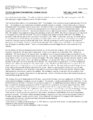
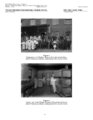
Show United States Department of the Interior National Park Service / National Register of Historic Places Registration Form NPS Form 10-900 OMB No. 1024-0018 (Expires 5/31/2012) Western Macaroni Manufacturing Company Factory Salt Lake County, Utah Name of Property County and State The Western Macaroni Manufacturing Company also made important contributions to Utah in the area of Ethnic Heritage representing the Italian immigrant experience in Utah. In the late nineteenth and early twentieth century, overpopulation, agricultural depressions, and discontent among the peasants (or contadini), encouraged a mass exodus from northern Italy to the United States. The relatively small number of Italian immigrants who settled in Utah were attracted by the employment opportunities in railroads and mining. By 1900, 102 of the 170 Italians in Utah lived in a residential and boarding house district near the railroads on the west side of Salt Lake City.18 Most were employed by the railroads, but several owned small businesses, such as saloons, groceries, and tailor shops. Immigration legislation in the 1920s reduced the number of new immigrants and put pressure on immigrants in the United States to assimilate. Italians in Utah were frequently persecuted for their ethnic and cultural differences. One Italian-American related that as a child, he was ashamed to admit to his friends that he ate spaghetti.19 In this context, the growth and influence of the Western Macaroni Manufacturing Company is a remarkable achievement. Although a keen observer could note that 41 out of the company's 45 products had Italian names, the Queen's Taste brand was never marketed as an Italian food product. Italian cultural references were not regularly used on packaging, in print advertisements, on railcar placards, or at state fair and trade show booth displays. Nevertheless many considered the company's immigrant origins when praising the enterprise. An article published in the Salt Lake Herald in 1916 cited the Western Macaroni Company as an example of the American melting pot: The old theory that mixed races are strongest is, of course, being again demonstrated today in this county. We are now a mixture of almost everything and after each new foreign element settles down and becomes American we can see that their poorer traits die out and their best traits and talents and customs survive and begin to grow among all Americans. Macaroni is perhaps the latest regular addition to our diet . . . . today we have a great company, the Western Macaroni Manufacturing company, capitalized at $26,000, manufacturing 4,000 pounds daily in forty different styles, and all of it to the "queen's taste," which is fresher and superior to imported goods.20 The patronizing tone of this praise was symbolic of the controversies surrounding immigration during this period of American history period. It is likely the reason the Western Macaroni Company went to great lengths to Americanize the marketing of its products. Instead of being exotic, Queen's Taste products were promoted as "The Most Delicious, Nourishing and Economical Food." Countering perception of inferiority, the factory and its machinery was described as scientific and modern by both the company and its observers. As one advertisement proudly proclaimed: "These are the delicious Queen's Taste products made right here in Salt Lake City in a spotlessly clean sunlight factory."21 Despite its public American face, the Western Macaroni Manufacturing Company was an important resource for the immigrant communities on Salt Lake City's west side. The company made cultural foods available and affordable for local immigrant families. Although the majority of products were Italian in origin, the company also made orzo that was favored by the local Greek community, egg noodles that could be adapted into Asian dishes, and a variety of tubes, stars, shells, and alphabet letters for the masses. As a result of the success of the factory, the Ferro family was active in the Sons of Italy, the Italian-American League, and the Catholic Church in Utah. One of the most important contributions to the local community was the employment of numerous Italian and other immigrants at the factory. Because the pasta drying process had to be monitored twenty-four hours a day to ensure a perfect product, several men lived on the factory property. The 1920 census lists seven men, two married and five single, living in a boarding house at the southeast corner of the property. All of the men had emigrated from Italy to the United States sometime between 1904 and 1914. Two were naturalized citizens. A number of other men and women from the surrounding neighborhood were also employed at the macaroni factory. The Western Macaroni Manufacturing Company provided both the comfort foods of the old 18 Philip F. Notarianni, "Italianita in Utah: The Immigrant Experience," in The Peoples of Utah, edited by Helen Z. Papanikoas, (Salt Lake City, Utah: the Utah State Historical Society, 1976): 309. 19 Ibid: 322. 20 Salt Lake Herald, November 26, 1911: 42. 21 Utah Payroll Builder, April 1927. 9 |