| OCR Text |
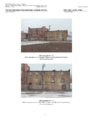
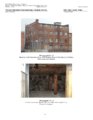
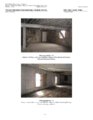
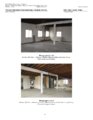
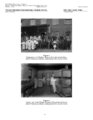
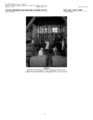
Show United States Department of the Interior National Park Service / National Register of Historic Places Registration Form NPS Form 10-900 OMB No. 1024-0018 (Expires 5/31/2012) Western Macaroni Manufacturing Company Factory Salt Lake County, Utah Name of Property County and State second one-story addition was built in 1920 by contractors Schuyler & Sorenson. A few days after a second extensive fire on April 10, 1921, two building permits were issued to remodel the factory: a $2,000 estimate for work to be completed by builder P. O. Maron and a $6,000 estimate for work by R. T. Chamberlain & Sons [Figure 1]. In 1927, at the height of the company's production, the macaroni plant was featured in an article in the Utah Payroll Builder, the trade journal of the Utah Manufacturers' Association. The writer of the article was taken on a tour of the factory from the mixers in the basement to the packing rooms on the upper floors [Figures 2 and 3]. The writer was particularly enthralled by the pressing/molding machines and the equipment needed to maintain the atmosphere of the drying rooms. The article noted that the factory was operating at five tons of daily production, but had a capacity of six tons.13 Around the time of the 1927 article, Antonio Ferro became president of the company and Joseph Scarpino took over the general manager position. During the 1930s and early 1940s, there were no other macaroni factories in Salt Lake City; however, the company had competition from outside the state. Antonio Ferro's son, Ariosto M. Ferro, helped managed the factory, but earned a law degree and went into practice. In August 1940, a third major fire caused $5,000 worth of damage to the factory. The company never recovered and filed for bankruptcy in 1942, a year after Antonio Ferro retired. Antonio Ferro died two years later in 1944. According to historians, Antonio Ferro was known in his day as the "Pasta King" of the Mountain West.14 The city directories indicate there were no pasta makers in Salt Lake City for many years after the Western Macaroni Company closed its doors. The property was sold by the Lynch and Spitz families to Burton Lumber & Hardware in 1945. During this time, a variety of trucking and equipment businesses operated in the building. The lumber company sold to T.W. and Mac Fotheringham in 1948, who sold the property to George and Thyra Browning in 1950. Browning Freight Line, Warehouse and Storage used the building for many years. Beehive Brick was the last company to use the building prior to its most recent period of vacancy. Significance in the Area of Commerce During its thirty-seven years of operation, the Western Macaroni Company had a large impact on Utah's food industry. The company purchased raw Utah products such as 150,000 eggs annually and tons of Turkey Red wheat, which was grown on dry farms in Utah and Idaho. The company mixed the Turkey Red with harder Durham wheat shipped from Minnesota. The factory reportedly furnished "most of the macaroni supplied to Utah, Idaho, Wyoming and Nevada."15 By employing four traveling salesmen, large quantities were also marketed to stores and restaurants in Colorado, California, Oregon, Washington, and Montana. For a number of years, macaroni was shipped to British Columbia until the Canadian government began to tax imported wheat products in the 1920s. According to one observer, the Queen's Taste "is a brand that has become recognized as standing for the very best that the market affords in the way of macaroni, spaghetti, vermicelli, noodles, etc."16 Described as a "Utah Concern" and the largest plant of its kind west of Chicago, the Western Macaroni Manufacturing Company was believed to be largely responsible for the dissemination of pasta into the American diet, at least in the Intermountain West. As one writer observed: "In years past, it was the rare exception rather than the rule to find macaroni and spagetti [sic] served on the table of the masses. It seemed then to be the exclusive dish of the epicure but today throughout Utah the excellent products which come in almost endless variety manufactured by the Western Macaroni Co. . . . are almost a matter of daily enjoyment."17 In the area of Commerce, the Western Macaroni Manufacturing Company's contributions to Utah between 1905 and 1941 cannot be overstated. Significance in the Area of Ethnic Heritage 13 "A Visit to a Macaroni Plant" in Utah Payroll Builder, vol. 16, #4 (April 1927): [103-107]. Miriam B. Murphy, "The Pasta King of the Mountain West" Utah History Blazer, May 1996. Eileen Hallet Stone "Living History: Italian Immigrant Became Utah's Pasta King" Salt Lake Tribune: August 10, 2013. 15 Ibid. 16 Salt Lake Tribune, November 19, 1916: 27. 17 Deseret News, April 7, 1916. 14 8 |