| OCR Text |
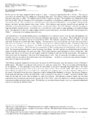
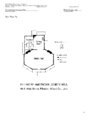
Show United States Department of the Interior National Park Service / National Register of Historic Places Registration Form NPS Form 10-900 OMB No. 1024-0018 (Expires 5/31/2012) Fillmore American Legion Hall Millard County, Utah Name of Property County and State Legion Post 61 undertook an ambitious phased rehabilitation of the building. As a result, the building is in the best condition it has seen since its completion in 1925. The American Legion Hall continues to contribute to the historic resources public/town square, the historic and current location of the majority of government buildings in the city. Currently, the square includes the following historic government buildings: the Territorial State House (built 1851-1855, now museum), Fillmore Rock School (built 1867, now museum), the Millard County Courthouse (built 1919-1920), Fillmore National Guard Armory (1937), Fillmore City Hall and Library (built 1939, now a restaurant), and the Fillmore Hospital (built 1948, now city hall and library). The Fillmore American Legion Hall is significant in the area of Politics/Government for its inclusion on the town square.27 The Fillmore American Legion Hall is significant under Criterion C in the area of Architecture for its unique interpretation and exceptional execution of the early-twentieth-century Rustic style. The building was inspired by the National Parks Rustic movement, but was individually designed and built by members of the American Legion. Although Utah has a plethora of Rustic-style building, particularly within the National Park system, the Fillmore legion hall the only one constructed with an octagonal shape. The octagonal log design also appears to be unique to the Fillmore organization among the numerous American Legion halls constructed across the country.28 It is easy to concur with Jane Wilson's assessment of the building: "a building of considerable historical interest . . . It has been admired and coveted by members of Veterans organizations and Auxiliaries from throughout Utah."29 In 2004, the legionnaires voted to rename the building, the Day-Stewart-Trimble Home of the Brave. The American Legion Hall was particularly important to the residents of Fillmore and east Millard County in the areas of Entertainment/Recreation and Social History. It not only provided a venue for innumerable community events, but was a source of pride and accomplishment. An article from the Millard County Progress, published after the "brilliant" plans for the building were announced, foresaw the continuing role of as a memorial worthy of preservation: Every social and civic function held in the building would serve to rekindle the fires that light the way for lasting civilization . . . . When all of the legion boys are old men their sons and daughters may look upon the memorial and be fired with the worthy emotions that prompted their fathers to build it. Coming generations also will benefit from the moral appeal of the building dedicated to the spirit of sacrifice for world freedom.30 ________________________________________________________________________________________________________________________ Developmental history/additional historic context information (if appropriate) 9. Major Bibliographical References Bibliography (Cite the books, articles, and other sources used in preparing this form.) Carter, Thomas and Peter Goss. Utah's Historic Architecture: A Guide, 1847-1940. Salt Lake City, Utah: University of Utah Press, 1988. 27 The public square also includes the Veterans Memorial Wall (dedicated May 2001). The National Guard building is currently undergoing rehabilitation. 28 There is only one other Legion Hall built of logs in Utah. It is a more traditional Colonial Style structure built in Layton, Utah, in 1941. Brick was the most popular building material for halls in Utah. Of the seven American Legion Halls currently listed on the National Register of Historic Places throughout the United States, there are frame, stone and brick examples. One was built in 1918 and later converted to a legion hall (NV), four were built in the 1920s (AR, ID, SD, WA), and two were WPA projects (ID, CO). The Fillmore building would be the first legion built of logs to be listed. 29 Jane Wilson, Letter to the Utah State Historical Society, February 28, 1977. 30 Millard County Progress, January 25, 1924:1. 10 |