| OCR Text |
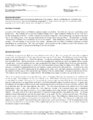
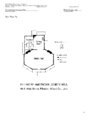
Show United States Department of the Interior National Park Service / National Register of Historic Places Registration Form NPS Form 10-900 OMB No. 1024-0018 (Expires 5/31/2012) Fillmore American Legion Hall Millard County, Utah Name of Property County and State On the interior, the large octagonal hall is completely open. It measures approximately 66 by 45 feet. The logs are exposed on the exterior where the chinking is a contrasting white color. The ceiling is open to the rafters and the modified king-post truss work is visible. The ceiling height is 22 feet 3 inches at the apex. The wood floor was refurbished for the first time in 2002. The two fireplaces that correspond to the northwest and southwest cobblestone chimneys have mantels and hearths of brick. The mantels are ten feet wide and constructed of red brick laid in a running bond. Except for the firebox, the brick has been painted white (circa 1950s). The chimneys were recently cleaned and are operable, but difficult to maintain due to the number of leaves that accumulate in the flues. The hall is decorated with artifacts, plaques, flags and military-themed artwork. In the back wall of the hall (west wall), there is a large opening to the smaller meeting room. The opening is divided by a single support and the original opening may have been the smaller one (enlarged circa 1950s).2 The framing of the opening is painted white. The main feature of the smaller meeting space is the fireplace in the southwest corner. Like the main hall fireplaces, this fireplace has a brick firebox; however, the mantel is cobblestone and extends to the ceiling.3 The woodwork in the back room was painted and linoleum was put over the floor in 1936. The fireplace is painted white (circa 1950s). As in the main hall, the logs are exposed with white chinking. The basement is excavated under the rear wing with access from a staircase in the northwest corner of the room. The basement stairs have a plank rail painted white. In 1930, plumbing and restrooms were installed in the basement. By 1934, the building was wired for electricity and a kitchenette was also constructed in the basement. The kitchenette was removed in the 1950s and the room was refinished for small meetings in 2005. The remaining basement space is used for storage and utilities. The 1950 addition was divided between the kitchen (west two-thirds) and storage room (east one-third). The kitchen features a pass-through to a built-in buffet area. The cabinets and counter on the west wall are original, while the cabinets on the east wall are more recent. The restrooms were moved from the basement to the main floor storage area in 2001. The restrooms are now handicap accessible. A concrete ramp was installed on the concrete pad to the north entrance. The electrical system was upgraded and brought to code with new light fixtures in 2005. The Fillmore American Legion Hall is located in the center of a 0.27-acre parcel near the southeast corner of Fillmore's public square. The parcel is landscaped with lawn on four sides and mature trees. There are no associated outbuildings on the property. A wide sidewalk extends from the front porch to the public sidewalk along Main Street. The 1931 former library building is located just to the south at the corner of Main Street and 100 South. The legion hall and the former library are separated by a chain link fence. Along the north property line is an asphalt driveway leading west to the center of the block where the former Territorial Capitol building (NR# 70000625) is located. The National Registerlisted sandstone building, constructed 1852-1855, is now a museum in the center of a park.4 Restroom facilities (circa 1990) for the park are located directly behind the legion hall building. The Fillmore American Legion Hall has been maintained and in continuous use since its construction in 1924-1925. The 1950 addition is a historic modification and more recent modifications have been minor. The building has excellent historic integrity and is an important architectural and historic resource in Fillmore, Utah. 2 The footprint of the building on a 1930 Sanborn map shows a smaller central opening between the two rooms. The interior cobblestone masonry is similar to all the exterior masonry. The brick mantels may have been used to set a more formal tone for the main meeting hall. 4 The building, which was one wing of the proposed capitol building, was only used a few years before Salt Lake City was designated as the capitol of Utah. The building was listed on the National Register of Historic Places in 1970. 3 4 |