| OCR Text |
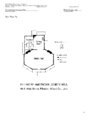
Show United States Department of the Interior National Park Service / National Register of Historic Places Registration Form NPS Form 10-900 OMB No. 1024-0018 (Expires 5/31/2012) Fillmore American Legion Hall Millard County, Utah Name of Property County and State What is particularly impressive about the time period for the legion members of Post 61 was their level of involvement in other aspects of the community. Throughout 1925, the legion organized a book drive to collect books to start a local library. Their efforts resulted in the first civic library in Fillmore. The members also continued to participate in all national and state sponsors American Legion activities. For example, the members held a fund-raising drive in May 1925 for "Endowment Week" which raised funds for widows and orphans of servicemen.21 The American Legion Hall in Fillmore had its greatest impact on the social life of the community. From the late 1920s to the early 1940s, the legion hall was in constant demand as a social venue. Particularly after the town's two former dance halls were burned to the ground.22 In 1927, with the legion hall as a community venue, the City of Fillmore deeded the statehouse to the State of Utah, which encouraged the Daughters of Utah Pioneers to start a museum in the building. The legion sponsored boxing and wrestling exhibitions, musical comedies, and dances. The building was noted on the 1930 Sanborn map as the "Legion Dance Hall." Dancing, especially for Armistice and Memorial Day were particularly popular. Each year the legion hosted a series of five dances between Christmas and New Year's Day. The American Legion Post 61 Ladies Auxiliary, which was organized in 1926, hosted a Mystery Party and the Gold Star Mothers' Tea, among other events.23 In addition to their own events, the legion opened the building to the general community for activities. Some examples are the Merchants Frolic (sponsored by Fillmore merchants with door prizes), the annual PTA bazaar, Rod & Gun Club meetings, high school proms, Boy Scout meetings, class and family reunions, and the flower/handicraft exhibits of the Millard County Fair.24 The legion hall also provided meeting space for faiths other than the predominant LDS Church. Many community events were moved to the Millard High School gymnasium after its construction in 1935, however, the legion hall continued to be an important social venue, particularly during the World War II era. In the 1950s through the 1970s, the American Legion continued to hold meetings, but community use decreased with an emphasis on smaller groups. The legion hall was often rented by private individuals for club meetings, family parties, or teaching facilities (particularly dance lessons). The building was occasionally used by government agencies, such as the Utah Highway Patrol, who held workshops and conventions there. At the time of the Bicentennial, a committee led by Jane Wilson, pursued state funding to restore the old hall, which was beginning to show its age. In a letter to the Utah Bicentennial described the importance of the building and its condition in 1977: Meetings of the Legion and its Auxiliary are held regularly, along with joint socials and District conventions . . . Members of the Post gather there to pick up their guns and flags when they are asked to carry out military rites at funeral services for departed servicemen. Boys and Girl Staters are chosen in the big meeting hall and return to give their reports there. However, the ranks of veterans who conceived and saw their beloved "Home" completed are thinning and their source of income is almost nil. The structure is deteriorating badly. The furnace is beyond patching up, the roof is leaking, the logs need more than one coat of oil, to mention a few of the things that need repairing.25 Because of the committee's efforts to renew interest in the historic hall, the building was partially restored and listed on the Utah State Register of Historic Sites on October 5, 1977.26 Beginning in 2001, the current members of the American 21 Millard County Progress, May 8, 1925. The Alcazar Hall was built in 1907 and burnt in 1919. Bartholomew Hall was built in 1919 and burned in 1926. 23 The first organization may have been an informal one. According to newspaper reports, the auxiliary was officially chartered in 1936. Compare Millard County Progress, February 12, 1926 and Millard County Progress November 27, 1936. 24 Powell, [4]. Millard County Progress, various issues. 25 Wilson, Jane, Letter to the Utah Bicentennial Committee, May 1, 1977. From correspondence in the files of the Utah State Historic Preservation Office. 26 A draft National Register nomination was prepared in 1977, but the listing was not pursued. There are currently three buildings listed on the National Register for Fillmore (statehouse and two residences). There is also a listed archaeological site near the town. The Millard High School Gymnasium was de-listed when it was demolished. 9 22 |