| OCR Text |
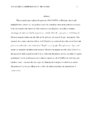
Show THERE ARE NO IMMIGRANTS IN THE WORLD 19 reality by creating ideologies or "knowledge" (1975), which are then spread throughout society where they influence the creation of social norms, organizational practices, bureaucratic procedures, and commonsense knowledge. The interests of the oppressors are then presented as though they are in the best interest of everyone and without conflict the oppressed groups accept the dominant group's will (Pyke, 1998). In a society with subversive power relations, norms are embedded beyond individual and community perceptions - causing us to discipline ourselves without any willful coercion from others. This internalized surveillance described by Foucault is subdued and embedded throughout every aspect of our lives - not a manifestation of those who self-inflict societal injustices. In a society such as this, systems of surveillance and assessment no longer need force or violence, people will discipline themselves and behave in expected ways often without question. Internalized surveillance is easily transferrable to race relations. Individual and institutional discrimination are social constructs that favor the dominant group at the expense of all others. How we are treated in school, at the doctor's office, at the grocery store, at work, and other social settings tell us who we are and our hierarchy of power in comparison to others in society. The stigma of inferiority is always with the oppressed group (Williams, 1999). The idea of race itself is a social construct that was created by and favors the white dominant group (Guess, 2006). Within the Mexican immigrant community there is a division between undocumented and documented immigrants (Kahsai and Schaeffer, 2011). Even though the Mexican immigrant community is very aware of the conditions in Mexico that are causing people to flee and how difficult it is to gain formal documentation, documented immigrants feel their authorized status make them more closely aligned with or even part of the dominant group (Kahsai and Schaeffer, |