| OCR Text |
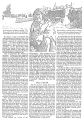
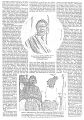
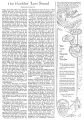
Show f enlarge life - whim create u.e. » nt IMI^.,- ical and social ruin and death of these Indians is totally needless, indeed :t is being accomplished with great difficulty, but it is being accomplished* Through the past Autumn 1 have been amid seventeen distinct nations, each of them more ancient than 1'jigland or France. The languages have been Fnglish, Spanish, Taonan, Tevvan, Keresian and Zunian. Sometimes all these languages have been used at a single meeting. 1 here is nothing in theLybian Desert, or 1 tirke-stan, or the Caucasus more picturesque and wild, more throbbing / with vitality than these unknown Pueblo communes. Charles F. Lummis has called the Pueblo Indians the original American Quakers. But the '• Quakers never faced such a temptation to hatred as these Indians have long faced. And the Quakers never loved life with the gay and fierce passion of these Indians, or maintained a community rich in life-giving institutions like theirs. Here arc groups of men, citizens of nations older than Rome, who bad achieved democracy, the rule of love, a social ideal of beauty, at a date before Greek thought and Christianity had begun to civilize the Aryans of Europe. They remember their past, which to them is a living present, with an ardor greater than that of the Irish toward the Irish past. They have seen an alien race crowd against them, using trickery plus sheer mass and machine power to dominate them. They have learned again and again the deadly meaning of that summary of the Government's policies, formulated in the endorsement of those policies by Francis A. Walker, Commissioner of Indian Affairs in 1872: "Laws to place all this .. ,- ~ ., . . I .in ltd States M-pudiatc the wise policies which Spain, influenced by the liancis-can missionaries, had worked out through centuries-policies which had tolerated and conserved and made use of their bodily and spiritual life. They have seen the white and Mexican voter usurp their V J. ' £ - AZ- :kf h -, v. -i ;: \ • 1$AS*- % Antonio Lujan of Taos pueblo, one of the outstanding leaders in the All-Pueblo Council water and fields while they themselves slowly starved and while their "guardian." the Government, stood idle or connived. They have watched this "guardian" while ail the members of tins race under the he tore away their children to imprison »»c m « i , -»« <•* - - --1 strict reformatory control of agents of them in distant boarding-schools, whence against the Government they are going the Government. Such of them as went in past years they have returned bringing to voice, or are they starting on the right should be protected and fed, and trachoma and tuberculosis to infect the warpath: No, they have asked me to 4:1 . • <11 smss a Question as miosis are raging and mcrea.Mii>; •"•** *"* Government does nothing. (See Report on Indian Health Conditions, United States Public Health Service, 1913. Conditions since that date have grown worse, not better.) Then the Government has taken away from their self-governing institution the privilege of enforcing discipline. Then the Indian Office has taken away the right of the tribe to control the use of its own moneys. The Pueblos have seen their religious life forcibly invaded. Their ceremonial dances have been forcibly broken up. And finally comes the Bursum bill, and the white man through Irs highest officials insists that they, the Pueblos, want this bill to be made law. • What 1 would not have cx-i. petted to find outside the '- Doukbobor colonies or this ,j side ofGbandi's India I found J among the Pueblos the past Autumn. These men, whose / pride is* invincible, whose ) barbaric energy is traditional, and who have experienced and meditated the facts contained in this article, continue to be without bitterness, without despair and without hate. Never in my thousands of contacts did I meet a suggestion cither of cringing and pleading on the one hand, or of that poisoning of the spirit, called hate, on the other baud. If they are cynical it is a witty and merry cynicism. Tony Romaro from Taos, at theinter-tribal council meeting, moves "That the terms of the Bursum bill be exactly reversed and applied to the white voters, so we can see what will happen." The meeting booms with that low, thunderous Homeric laughter heard in the Pueblos. At Zuni the council, after three meetings, asks for a session with me "all alone." We meet, and is it some dark complaint such as went wrong should be harassed and scourged without intermission . . . There is no question of national dignity, be it remem The Indians, including the Pueblos, have listened to such words and endured the deeds r ' " I . ! . . . . . , T , \ , . . , - ,. Efficient self-government has prevailed among the Pueblo Indians for uncounted centuries. These are two elected Pueblo governors, the one from Cochiti on the left and the governor of Santo Domingo pueblo on .1. . .;./»,, Tr.- Biir-iiTTi bill would take self-government from the Pueblos discuss a question as deep as any in human life, on which they have brooded long. "Our institutions and customs are dearer to us than our life. Keeping to these old ways, how-can wc bold the loyalty of the boys who have learned in Indian school to despise the old ways.' I low can we have power in this white man s world and still be faithful to our life? How-can we bring to an end these suspicions and personal ambitions and feuds which the schools and missionaries have planted among us for fifty vearsr" " Are they weak folks, these Zunis? As late as 1S63 they fought the Apaches and Navahof in a terrible war anc beat them. A Zuni vvii. run from the pueblo tc {Coiiliniiid on page 6$) |