| OCR Text |
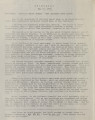
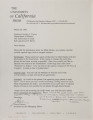
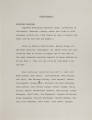
Show INSTRUCTIONS FOR AUTHORS: FINAL PREPARATION OF MANUSCRIPTS To avoid the possible delays and added expenses that result from poorly prepared manuscripts, the University 1 California Press requires that manuscripts accepted for editing and production meet certain reasonable physical standards. A manuscript not prepared according to the following instructions may be returned for appropriate repairs. 1. Use 8~" x u" white paper, type only on one side of the sheet, and leave a margin of no less than x}{" on all four sides of the page. Use paper of standard surface and medium weight; do not use "erasable" (Corrasable) paper, onionskin, or any other stock that is hard to write or erase on. If the manuscript has been prepared on a word processor, do not justify (align) the righthand margin. Provide the Press with two clean copies of the manuscript (retaining an identical copy for yourself); send the ribbon copy, high-quality xeroxes, or copies produced by a letter-quality word-processing printer rather than a lower-quality dot matrix printer. If you have doubts about the quality and acceptability of copies produced by a word-processing printer, please submit a sample to the Press for evaluation. 2. Double-space all material, including quoted matter, supplementary material, notes, captions, text, and bibliography (double-spacing between each line as well as between each entry). Do not type any part 1 the manuscript singlespace or space-and-a-half. 3. Submit all materials to be included in the finished book with the final version of the manuscript. Paginate the manuscript in one consecutive sequence of arabic numbers. Include in proper sequenc~: title page; contents page; list of illustrations or tables (if any); all preliminary material such as dedication, epigraph, preface, acknowledgments; all supplementary nlaterial such as appendixes, glossary, bibliography; notes; legends for illustrations, keyed by number; tables; original illustrations, if any, or xeroxes of the art to con1e. (For special instructions regarding art that you are preparing in camera-ready form, see iten1 7.) 4. Type notes on pages separate from the text and place them at the end of the n1anuscript. Number notes consecutively within each chapter. If a note must be inserted or deleted, renumber all notes following and correct all corresponding text references. Verify the accuracy of documentation and make sure the information given in notes is consistent with that given in the bibliography. Indicate whether you want notes to appear at the foot of the page or at the end of the book. |