| OCR Text |
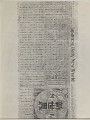
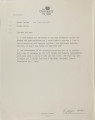
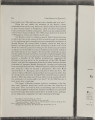
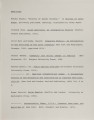
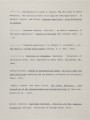
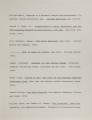
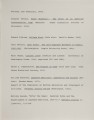
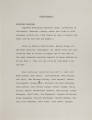
Show S H I N S E K A I May 17, 1906 EDITORIAL: Nihonjin-Machi Mandai (The Japanese Town Issue) One of the questions of the hour would seem to be where Nihonji ~Machi will eventually establish itself here in San Francisco. I believe two different kinds will develop. The first of these will develop hand in hand right alongside Chinatown's growth, having connections with so:-called "bad quarters" catering to the Chinese. The second will be similar to the one which formerly existed around Stevenson and Jessie Streets. It is difficult to detect ju~t P.Xactly where this Nihonjin-~achi will emerge, but considering factors J.ike rentals a.nd means of living~ I think it will very likely ·center itself forl!lctlly around the neighbqrhood of Fillmore Street. As to the first of the·se·- mentioned, it would indeed be an undesirable development, needless to say, and I wish to denounce it. But unless city government policies undergo reform, the forging of this location into a Japanese Town (already coming into public view) by the lawless ones amon~ us Japanese, will certainly take place. It is quite apparent that these disreputable men will be doing business in Chinatown, opening stores as a sidelir1e to their scandalous business, catering to those connected with these shady activities. This is prdbably how Japanese Town will develop along with the growth of Chinatown. The second emergent Japanese .comm~nity which I mentioned will co -:1sist mainly of hotels at first. No doubt, re$taurants, grocery stores and other general merchandise stores will also sood make their appearance. This will become the largest Nihonjin-Machi in San Francisco. This Nihonjin-Machi will not establish itself strictly along the lines of wha~ the Stevenson and Jessie Streets used to be, but will very likely include a mixture of those who were previously engaged in respectable businesses along *oupoi1t Street. Where this latter Nihon..i in-Machi mentioned would establish itself is ' not so easily 9redicted as the former, which we cdncluded would develop along with Chinatown. However, my ·feeling, earlier stated, that it wocld eventually be established in the neighborhood of the Fillmore District is based on the observation that the Japanese here in San Francisco are not financially able to lease new structures which will be built on firewracked sites. They will therefore hav~ little choice but to seek rentals such as those in the Fillmore District that survived the ear.thquake and +=" ~lre. Rents, however, in the Fillmore District are still extremely high as they are on Market Street. Bu~ as new buildings are completed and become available in the city, rents in the Fillmo~e District will be forced down, and the Japanese will gradually occupy the buildings in that area. And for now, it would be a big mistake to pay high rents in this area, or to rent defective buildings in need of much repair. (K.K.) *Now known as Grant Avenue, but still posted on street signs in Chinese characters ( ~~ ;f~ 1JJ ) read "do p,on gai''. Name change occured after the earthquake. |