| Title |
Alan W. Layton, Salt Lake City, Utah: an interview by Winston P. Erickson, August 29, 2000: Saving the Legacy tape nos. 94 & 95 |
| Alternative Title |
Alan W. Layton, Saving the legacy: an oral history of Utah's World War II veterans, ACCN 2070, American West Center, University of Utah |
| Creator |
Layton, Alan W., 1917-2009 |
| Contributor |
Erickson, Winston P., 1943-; University of Utah. American West Center |
| Publisher |
Digitized by J. Willard Marriott Library, University of Utah |
| Date |
2000-08-29 |
| Date Digital |
2015-12-16 |
| Access Rights |
I acknowledge and agree that all information I obtain as a result of accessing any oral history provided by the University of Utah's Marriott Library shall be used only for historical or scholarly or academic research purposes, and not for commercial purposes. I understand that any other use of the materials is not authorized by the University of Utah and may exceed the scope of permission granted to the University of Utah by the interviewer or interviewee. I may request permission for other uses, in writing to Special Collections at the Marriott Library, which the University of Utah may choose grant, in its sole discretion. I agree to defend, indemnify and hold the University of Utah and its Marriott Library harmless for and against any actions or claims that relate to my improper use of materials provided by the University of Utah. |
| Spatial Coverage |
France; Germany; Salt Lake City, Salt Lake County, Utah, United States |
| Subject |
Layton, Alan W., 1917-2009--Interviews; Veterans--Utah--Biography; World War, 1939-1945--Personal narratives, American; World War, 1939-1945--Campaigns--Europe, Northern--Personal narratives, American; World War, 1939-1945--Campaigns--France--Normandy--Personal narratives, American; Ardennes, Battle of the, 1944-1945--Personal narratives, American |
| Keywords |
Battle of the Bulge; POWs' |
| Description |
Transcript (65 pages) of an interview by Winston Erickson with Alan W. Layton on August 29, 2000. From tape numbers 94 and 95 in the "Saving the Legacy" Oral History Project |
| Collection Number and Name |
Accn2070, Saving the Legacy oral history project, 2001-2010 |
| Abstract |
Layton (b. 1917) grew up in Oakley, Idaho. He discusses his early family life, schooling, jobs, and attending the University of Utah, where he participated in ROTC. He was called up to active duty and sent to Fort Ord, California, working on a survey crew. Assigned as a gunnery instructor at Fort Skill, Oklahoma, he joined the 770th Field Artillery Battalion. He entered combat at Brest, France, in late July 1944, and moved across France, Belgium, and to the German border. Injured by an exploding mine, he was evacuated to the States and eventually to Bushnell Hospital in Brigham City, Utah. He was separated from the Army in 1945, and subsequently started the Layton Construction Company. Interviewed by Winston Erickson. 65 pages. |
| Type |
Text |
| Genre |
oral histories (literary works) |
| Format |
application/pdf |
| Extent |
65 pages |
| Language |
eng |
| Rights |
 |
| Scanning Technician |
Mazi Rakhsha |
| Conversion Specifications |
Original scanned with Kirtas 2400 and saved as 400 ppi uncompressed TIFF. PDF generated by Adobe Acrobat Pro X for CONTENTdm display |
| ARK |
ark:/87278/s6g182wq |
| Topic |
Personal narratives--American; Veterans; World War (1939-1945); Ardennes, Battle of the (1944-1945) |
| Setname |
uum_slohp |
| ID |
1035424 |
| Reference URL |
https://collections.lib.utah.edu/ark:/87278/s6g182wq |
| Title |
Page 42 |
| Format |
application/pdf |
| Setname |
uum_slohp |
| ID |
1035400 |
| OCR Text |
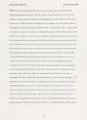
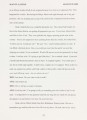
Show L W.L YTO T29 20 WPE: A you were pu hed back, were you aware in any f th cal of th German offen ive being launched again t you? I under tand that during th battl , communications were very confu ed. AWL: They were, but we learned and knew that their strategy was to overrun our area , capture our food, capture our gasoline and supply bases and capture our ammunition dump . That happened in the few areas, until ... let' see. The area we were in wa a quiet sector. Patton wa down south and the British and American in the north were doing a tremendous enveloping action so that the Ardennes Forest area in front of us, which was wooded with few roads, was just going to be by-passed. That's right where the Germans hit. So until the troops were able to come in and get the right and left flank of their breakthrough and pinch in on it, and then I guess it was the first part of January the weather cleared and our Air Corps could come in and disrupt the supply lines of the Germans. [Editor's note: The German strategy for the offensive was to attack with three huge Armies, totaling about 200,000 men, on a fifty-mile wide sector of Allied lines in the Ardennes Fores,t which they knew to be thinly held. After breaking through, the Germans planned to race forward and cross the Meuse River. The German (Jh Panzer Army on the German right was then to wheel northwest and seize Antwerp. This would cut the Western Allied Armies in two, destroy the Allies' main supply port, and trap and surround the northern half of the Allied Armies in Holland. The sth Panzer Army in the center was to drive forward and seize Brussels, preventing Allied counterattacks from the west and protecting the left flank of the (Jh Panzer Army. Meanwhile, the German 7h Army attacking towards Bastogne was to keep Patton's 3rd Army from moving north. It would be Dunkirk all over again. Success of the German plan relied on their being able to seize the Meuse River bridges before they could be destroyed and on the weather being 42 |
| Reference URL |
https://collections.lib.utah.edu/ark:/87278/s6g182wq/1035400 |