| Title |
Robert L. Merrill, West Jordan, Utah: an interview by Frances Merrill |
| Alternative Title |
Robert L. Merrill, Saving the legacy: an oral history of Utah's World War II veterans, ACCN 2070, American West Center, University of Utah |
| Creator |
Merrill, Robert L., 1961- |
| Contributor |
Merrill, Frances; University of Utah. American West Center |
| Publisher |
Digitized by J. Willard Marriott Library, University of Utah |
| Date |
2004-03-22 |
| Date Digital |
2015-12-16 |
| Access Rights |
I acknowledge and agree that all information I obtain as a result of accessing any oral history provided by the University of Utah's Marriott Library shall be used only for historical or scholarly or academic research purposes, and not for commercial purposes. I understand that any other use of the materials is not authorized by the University of Utah and may exceed the scope of permission granted to the University of Utah by the interviewer or interviewee. I may request permission for other uses, in writing to Special Collections at the Marriott Library, which the University of Utah may choose grant, in its sole discretion. I agree to defend, indemnify and hold the University of Utah and its Marriott Library harmless for and against any actions or claims that relate to my improper use of materials provided by the University of Utah. |
| Spatial Coverage |
Saudi Arabia |
| Subject |
Merrill, Robert L., 1961- --Interviews; Veterans--United States--Biography; Persian Gulf War, 1991--Personal narratives, American |
| Description |
Transcript (29 pages) of an interview by Frances Merrill with Robert L. Merrill on March 22, 2004. Part of the "Saving the Legacy" Oral History Project |
| Collection Number and Name |
Accn2070, Saving the Legacy oral history project, 2001-2010 |
| Abstract |
Merrill (b. 1961) enlisted in the U. S. Army Signal Corps in July 1980. He was stationed in Stuttgart, Germany, until December 1990, when his unit shipped out to Saudi Arabia. The ground war portion of Desert Storm began in January 1991. Merrill describes life in the military and talks about his political views. He retired from the military in 2001. Interviewed by Frances Merrill. 29 pages. |
| Type |
Text |
| Genre |
oral histories (literary works) |
| Format |
application/pdf |
| Extent |
29 pages |
| Language |
eng |
| Rights |
 |
| Scanning Technician |
Mazi Rakhsha |
| Conversion Specifications |
Original scanned with Kirtas 2400 and saved as 400 ppi uncompressed TIFF. PDF generated by Adobe Acrobat Pro X for CONTENTdm display |
| ARK |
ark:/87278/s6j69jz4 |
| Topic |
Personal narratives--American; Veterans; Persian Gulf War (1991) |
| Setname |
uum_slohp |
| ID |
1034912 |
| Reference URL |
https://collections.lib.utah.edu/ark:/87278/s6j69jz4 |
| Title |
Page 22 |
| Format |
application/pdf |
| Setname |
uum_slohp |
| ID |
1034903 |
| OCR Text |
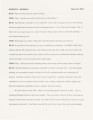
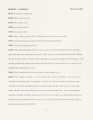
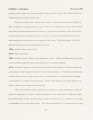
Show ROBERT L. MERRILL March 22 2004 8 o'clock wa usually ur first formation or 7:45a.m., omewh rear und th r whi h w uld your work call formation. And you'd do your job. nd I really liked it becaus [! r th m t part you knew what you were doing. There was times when you 'd definitely had to transiti n t whatever was coming along, or coming down the pike at the time, but it was very- I think it really helped me because I think that if I had not went into the 1nilitary, I think there would have been a good possibility that at the time in my life that I could have been more involved with the law than possibly bettering myself in the 1nilitary. FHM: Okay. Did you keep a personal diary? RLM: I did on and off. And I wish I would have continued it. I would have to go through my papers and things to find different things and the different places. I believe I kept orders on everyplace that I went to, and things like that, all the medals and things that I got. I kept all the awards and things like that. So I do have a little bit to go by. It would be hard to try to remember where I started at in 1980 at Fort Carson, Colorado, and then going until Fort Bliss in '93, and then the 13 years I was at seven different posts other than my training post. So, I knew quite a bit. FHM: So you were in Texas when you were discharged? RLM: Yes, I was. FHM: What did you do in the days and weeks afterwards? RLM: Well, I knew I had to readjust to civilian life. And, so, what I did for the first two weeks was I'd go to the Jordan River Temple because I'd find the peace that I needed. FHM: Were you able to find it out there? 21 |
| Reference URL |
https://collections.lib.utah.edu/ark:/87278/s6j69jz4/1034903 |