| Title |
Robert L. Merrill, West Jordan, Utah: an interview by Frances Merrill |
| Alternative Title |
Robert L. Merrill, Saving the legacy: an oral history of Utah's World War II veterans, ACCN 2070, American West Center, University of Utah |
| Creator |
Merrill, Robert L., 1961- |
| Contributor |
Merrill, Frances; University of Utah. American West Center |
| Publisher |
Digitized by J. Willard Marriott Library, University of Utah |
| Date |
2004-03-22 |
| Date Digital |
2015-12-16 |
| Access Rights |
I acknowledge and agree that all information I obtain as a result of accessing any oral history provided by the University of Utah's Marriott Library shall be used only for historical or scholarly or academic research purposes, and not for commercial purposes. I understand that any other use of the materials is not authorized by the University of Utah and may exceed the scope of permission granted to the University of Utah by the interviewer or interviewee. I may request permission for other uses, in writing to Special Collections at the Marriott Library, which the University of Utah may choose grant, in its sole discretion. I agree to defend, indemnify and hold the University of Utah and its Marriott Library harmless for and against any actions or claims that relate to my improper use of materials provided by the University of Utah. |
| Spatial Coverage |
Saudi Arabia |
| Subject |
Merrill, Robert L., 1961- --Interviews; Veterans--United States--Biography; Persian Gulf War, 1991--Personal narratives, American |
| Description |
Transcript (29 pages) of an interview by Frances Merrill with Robert L. Merrill on March 22, 2004. Part of the "Saving the Legacy" Oral History Project |
| Collection Number and Name |
Accn2070, Saving the Legacy oral history project, 2001-2010 |
| Abstract |
Merrill (b. 1961) enlisted in the U. S. Army Signal Corps in July 1980. He was stationed in Stuttgart, Germany, until December 1990, when his unit shipped out to Saudi Arabia. The ground war portion of Desert Storm began in January 1991. Merrill describes life in the military and talks about his political views. He retired from the military in 2001. Interviewed by Frances Merrill. 29 pages. |
| Type |
Text |
| Genre |
oral histories (literary works) |
| Format |
application/pdf |
| Extent |
29 pages |
| Language |
eng |
| Rights |
 |
| Scanning Technician |
Mazi Rakhsha |
| Conversion Specifications |
Original scanned with Kirtas 2400 and saved as 400 ppi uncompressed TIFF. PDF generated by Adobe Acrobat Pro X for CONTENTdm display |
| ARK |
ark:/87278/s6j69jz4 |
| Topic |
Personal narratives--American; Veterans; Persian Gulf War (1991) |
| Setname |
uum_slohp |
| ID |
1034912 |
| Reference URL |
https://collections.lib.utah.edu/ark:/87278/s6j69jz4 |
| Title |
Page 5 |
| Format |
application/pdf |
| Setname |
uum_slohp |
| ID |
1034886 |
| OCR Text |
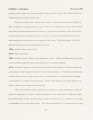
Show ROBERT L. MERRILL March 22, 2004 number. And there was not a lot of people that could get through their social ecurity numb r without coughing, and they had to be taken out of the gas chamber. FHM: Do you remember any of your instructors there? RLM: Vaguely, because after I left basic training I really didn't want to remember them. But I think that they probably did the best job they could for the number of soldiers that they had. Because in my platoon we had- I believe it was 52 soldiers just in our platoon alone- and they had three drill sergeants. And they'd take turns with bed checks and things. We'd have to be in bed by no later than 10:00 o'clock, and we'd be getting up at no later than 4:00 o'clock in the morning. FHM: How did you get through that experience? Was it hard? RLM: I feel- to me it was pretty difficult because, at one time I even went and talked to the drill sergeant and said, "Look, I don't even want to be here." And, also, at that time one of my grandfathers had passed away, and I got notice of that. And then, along with me having a piece of re-bar puncture my leg, it really wasn't a good situation at the time for me. It wasn't easy. But I look back on it now, and I think it was really something that could really build who I am today. FHM: Could you state how old you are today? RLM: I am 42 today. In four days I will be 43. FHM: And what war was it that you served in? RLM: I served in the Gulf War. In fact, at the time I was stationed in Stuggart, Germany at great concern. We got notice that we were going to be leaving the first part of December, and we 4 |
| Reference URL |
https://collections.lib.utah.edu/ark:/87278/s6j69jz4/1034886 |