| Title |
Charles A. "Red" Beam, North Salt Lake, Utah: an interview by Winston Erickson, July 11, 2001, American West Center : Saving the Legacy tape nos. SL-259 & 260 |
| Alternative Title |
Charles Alexander "Red" Beam, Saving the legacy: an oral history of Utah's World War II veterans, ACCN 2070, American West Center, University of Utah |
| Creator |
Beam, Red (Charles Alexander), 1923-2005 |
| Contributor |
Erickson, Winston P., 1943-; University of Utah. American West Center |
| Publisher |
Digitized by J. Willard Marriott Library, University of Utah |
| Date |
2001-07-11 |
| Date Digital |
2015-12-16 |
| Access Rights |
I acknowledge and agree that all information I obtain as a result of accessing any oral history provided by the University of Utah's Marriott Library shall be used only for historical or scholarly or academic research purposes, and not for commercial purposes. I understand that any other use of the materials is not authorized by the University of Utah and may exceed the scope of permission granted to the University of Utah by the interviewer or interviewee. I may request permission for other uses, in writing to Special Collections at the Marriott Library, which the University of Utah may choose grant, in its sole discretion. I agree to defend, indemnify and hold the University of Utah and its Marriott Library harmless for and against any actions or claims that relate to my improper use of materials provided by the University of Utah. |
| Spatial Coverage |
Palau; Guam; Okinawa, Japan |
| Subject |
Beam, Red (Charles Alexander), 1923-2005--Interviews; Veterans--United States--Biography; World War, 1939-1945--Personal narratives, American; World War, 1939-1945--Naval operations, American; World War, 1939-1945--Campaigns--Pacific Area--Personal narratives, American |
| Description |
Transcript (103 pages) of an interview by Winston Erickson with Charles "Red" Beam on July 11, 2001. From tape numbers 259 and 260 in the "Saving the Legacy" Oral History Project |
| Collection Number and Name |
Accn2070, Saving the Legacy oral history project, 2001-2010 |
| Abstract |
Beam (b. 1923) spent his early childhood in Ely, Nevada, where his father was a forest supervisor. The family later moved to Holladay, Utah, where he graduated from Granite High School and attended the University of Utah. He was in the ROTC program at the time of his enlistment in the Navy in May 1941. He served on the Colorado and the Dickerson before entering the Naval Academy in 1942 as a Midshipman in the 20th Company. He later reenlisted as a 3rd Class Bo's'n Mate and joined the crew of a submarine bound for Palau. After being wounded near Tarawa he was assigned to an underwater demolition team and participated in the Guam and Okinawa invasions. He received the Silver Star. Interviewed by Winston Erickson. 103 pages. |
| Type |
Text |
| Genre |
oral histories (literary works) |
| Format |
application/pdf |
| Extent |
103 pages |
| Language |
eng |
| Rights |
 |
| Scanning Technician |
Mazi Rakhsha |
| Conversion Specifications |
Original scanned with Kirtas 2400 and saved as 400 ppi uncompressed TIFF. PDF generated by Adobe Acrobat Pro X for CONTENTdm display |
| ARK |
ark:/87278/s6hd9xs6 |
| Topic |
Personal narratives--American; Veterans; World War (1939-1945); Military operations, Naval--American |
| Setname |
uum_slohp |
| ID |
1033825 |
| Reference URL |
https://collections.lib.utah.edu/ark:/87278/s6hd9xs6 |
| Title |
Page 64 |
| Format |
application/pdf |
| Setname |
uum_slohp |
| ID |
1033783 |
| OCR Text |
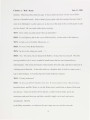
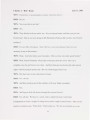
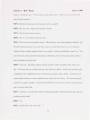
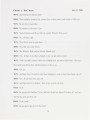
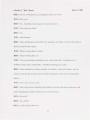
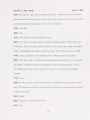
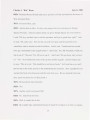
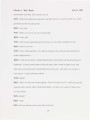
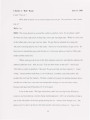
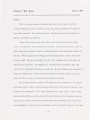
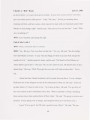
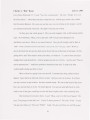
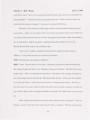
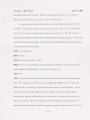
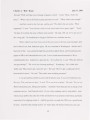
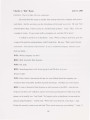
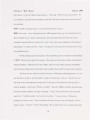
Show harle A. "Red" Beam Jul 11 2001 o he built me a team of about twelve t fifteen guy , and I became a p ciali tin blowing up Japane e radio direction finder . WIN: This i after you'd been in the hospital and recovered? RED: Yes, I'd come back to duty. WIN: What time was this? What year? It must have been getting pretty late in the war. RED: Tarawa was in November. This would be January of '44. WIN: Of '44, or '45 maybe. RED: No, '44. Anyway, you know how a radio direction finder works? It says, I hear something out there. Well, that doesn't help much until this guy down here's-but if I blow him up it ruins their system. So I specialized in that. One of them I hit three times. It was on a little island. And, evidently, it was the one that controlled the bunch of them around to all the other islands because I hit it three times. They were all built the same, which is natural. When the services find something, and they like it, they build it everywhere. It had about a 40 x 40 foot bunk room, half dug into the ground. In the tropics it had a leaf roof and no windows. As you got north, where it would be cold, it would have a tin roof and windows. The kitchen, if you can call it that, was on the outside on the one wall, and there was no mess hall as such. They must have just sat on the ground and ate. There was an officers quarters most often on stilts, so it would be up out of the bugs. They didn't care where the men were with all the bugs, but the officers had to be up there. And then there was an operations room, I guess you'd call it, where the electronics 62 |
| Reference URL |
https://collections.lib.utah.edu/ark:/87278/s6hd9xs6/1033783 |