| Title |
Robert W. Hatch, Bountiful, Utah: an interview by Benjamin Bahlmann, 27 September 2002: Saving the Legacy tape nos. 542-543 |
| Alternative Title |
Robert W. Hatch, Saving the legacy: an oral history of Utah's World War II veterans, ACCN 2070, American West Center, University of Utah |
| Creator |
Hatch, Robert W., 1921- |
| Contributor |
University of Utah. American West Center; Bahlmann, Benjamin J. |
| Publisher |
Digitized by J. Willard Marriott Library, University of Utah |
| Date |
2002-09-27 |
| Date Digital |
2015-12-16 |
| Access Rights |
I acknowledge and agree that all information I obtain as a result of accessing any oral history provided by the University of Utah's Marriott Library shall be used only for historical or scholarly or academic research purposes, and not for commercial purposes. I understand that any other use of the materials is not authorized by the University of Utah and may exceed the scope of permission granted to the University of Utah by the interviewer or interviewee. I may request permission for other uses, in writing to Special Collections at the Marriott Library, which the University of Utah may choose grant, in its sole discretion. I agree to defend, indemnify and hold the University of Utah and its Marriott Library harmless for and against any actions or claims that relate to my improper use of materials provided by the University of Utah. |
| Spatial Coverage |
England; France; Germany |
| Subject |
Hatch, Robert W., 1921- --Interviews; Veterans--Utah--Biography; World War, 1939-1945--Personal narratives, American; World War, 1939-1945--Aerial operations, American; World War, 1939-1945--Campaigns--Europe, Northern--Personal narratives, American |
| Keywords |
Army Air Corps; Fire battalions; Fire marshalls; Firefighting |
| Description |
Transcript (59 pages) of an interview by Benjamin Bahlmann with Robert W. Hatch on September 27, 2002. From tape numbers 542 and 543 in the "Saving the Legacy" Oral History Project |
| Collection Number and Name |
Accn2070, Saving the Legacy oral history project, 2001-2010 |
| Abstract |
Hatch (b. 1921) grew up in Woods Cross, Utah. He recalls family experiences sheep ranching in Utah. A railroad agent, he was deferred from military service, but he turned down the deferment. He was drafted in August 1942. He was placed in the Airs Corps, and speaks of many experiences in the Fire Battalions to which he had been assigned. He rose quickly in rank, eventually attending OCS at Ft. Belvoir, Virginia in 1943. He eventually became the Fire Marshall of the 15th Air Force in Riverside, California. He retired in 1965. Interviewed by Robert Hatch. 59 pages. |
| Type |
Text |
| Genre |
oral histories (literary works) |
| Format |
application/pdf |
| Extent |
59 pages |
| Language |
eng |
| Rights |
 |
| Scanning Technician |
Mazi Rakhsha |
| Conversion Specifications |
Original scanned with Kirtas 2400 and saved as 400 ppi uncompressed TIFF. PDF generated by Adobe Acrobat Pro X for CONTENTdm display |
| ARK |
ark:/87278/s6002472 |
| Topic |
Personal narratives--American; Veterans; World War (1939-1945); Military operations, Aerial--American |
| Setname |
uum_slohp |
| ID |
1033622 |
| Reference URL |
https://collections.lib.utah.edu/ark:/87278/s6002472 |
| Title |
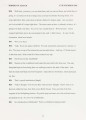
Page 24 |
| Format |
application/pdf |
| Setname |
uum_slohp |
| ID |
1033585 |
| OCR Text |
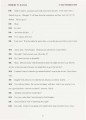
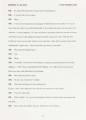
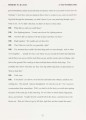
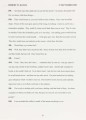
Show ROBERT W. HATCH 27 PT MB R 2002 Getting into that kind of stuff. o you'd try to do your very best to try t get th am guy in the same bag, for shipment to the American cemetery BB: How soon after arrival did you get involved with ... ? RH: Right away, it was happening all the time. BB: So you'd show up, they'd put you in your quarters ... ? RH: Well we had our crew split, one up at the control tower, where the aircraft left and came back. BB: So would the fire trucks have a place to be stored there, or did they just drive up and they're just on call? RH: Just right alongside the tower there, didn't have a building or anything. BB: Okay. RH: And they stayed there all the time, all the time we had aircraft in the air. And then we had the pumper at the main station. We had crews on twenty-four hours. Twentyfour hours on, forty eight hours off. BB: And then, did you get to meet everyone? Like you said, you're in charge, but they know what's going on-how did you adjust to that? RH: Well my office-whatever office it was, it was just a little building there- I' ll show you pictures of it if you want. END SIDE A, TAPE 1 BB: Okay, I was just asking how did you learn what your duties were? RH: Just by on-the-job work, that's it. That's the way I learned it. 23 |
| Reference URL |
https://collections.lib.utah.edu/ark:/87278/s6002472/1033585 |